
Gemstone encyclopedia
Every gemstone, explained
What each stone is, how it wears in jewellery, and what to ask before you choose one. Browse by colour, or go straight to a letter.
This encyclopedia is educational. Inclusion does not confirm current Ralph Jacobs stock, sourcing, availability or suitability for a particular jewellery design.
3 of 27 gemstone entries
-
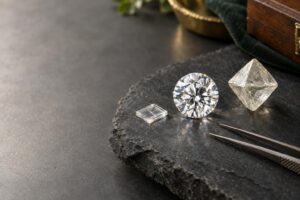 Laboratory-grown
 diamond
Hardness 10
Quick view
-
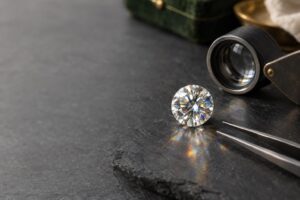 Laboratory-grown
 moissanite
Hardness 9.25
Quick view
-
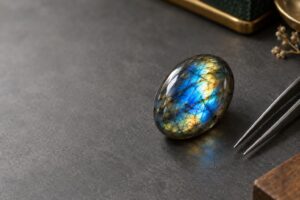 Labradorite
Hardness 6–6.5
Quick view
Quick overview
Laboratory-grown diamond
Laboratory-grownA laboratory-grown diamond is diamond made by people in a laboratory or factory, using the HPHT or CVD growth method, rather than formed by nature.
- Classification
- Laboratory-grown material
- Mohs hardness
- 10 (scratch resistance — one part of durability)
- Wear considerations
- For how diamond holds up in everyday wear, see the diamond entry. The durability section on this page explains, with sources, why that information applies to laboratory-grown diamond.
- Treatment
- HPHT annealing after growth, to change colour (post-growth treatments should be disclosed), Radiation and heating after growth, to change colour (post-growth treatments should be disclosed)
- Care
- If you are unsure how to clean or look after your piece, ask the jeweller who made it for their care and safety guide, and follow it. Keep any grading report with…
Individual gemstones vary. Care depends on treatment, setting and condition. Encyclopedia inclusion does not confirm availability.
Individual gemstones vary · care depends on treatment, setting and condition · birthstone traditions vary · encyclopedia inclusion does not confirm availability.