
The decision in brief
- If you don't yet know the wearer's taste, look at the jewellery they already wear before you look at stones.
- If your budget feels stretched, decide which of the 4Cs matters most, so you know where to spend more and where to compromise.
- If the wearer is active or uses their hands a lot, compare bezel and flush settings, which are less likely to snag, with prongs, which let in the most light.
- If you're drawn to a pear, marquise or princess shape, consider settings that protect the points, such as V-shaped prongs or bezels.
- If you prefer a white metal, weigh white gold's possible rhodium re-plating against platinum, which is white without plating.
- If the ring is a surprise, plan how you'll get a measured size, because tracing a borrowed ring gives only an estimate.
- If you're buying a diamond, ask for an independent lab report and look at the stone in everyday light before you decide.
Editorial guidance — context changes what is right for you.
Start with the wearer and the ring
A ring begins with the person wearing it, not the stone in the tray. Before you compare options, picture the wearer’s day: their work, their hobbies and the jewellery they already reach for.
That picture shapes every later step. It tells you whether sparkle or protection matters more, which metal colour fits, how much upkeep suits them, and whether a surprise or a shared choice makes sense.
Quick checklist
- Which metal colour does the wearer already wear most?
- Do they prefer simple, clean designs or more detail?
- Do they work with their hands or play sport?
- Do they have sensitive skin?
- Is the ring a surprise, or will you choose together?
- Has their ring size been measured with a ring sizer?
- How much upkeep, such as prong checks or re-plating, are they happy with?
The criteria that matter
Style fit
The ring should suit the person who wears it. The setting shapes the ring's overall look, not only the stone.
Why the setting matters: ring settings explainedA budget for the whole ring
It can help to plan one figure for the stone, setting and metal together. Knowing which of the 4Cs matters most shows where to spend more and where to compromise.
Why salary rules don’t fit: how to set an engagement ring budgetStone type and quality
Natural diamonds, laboratory-grown diamonds and simulants differ in what they are. The 4Cs let you compare one diamond with another, and step cuts show colour and clarity more than brilliant cuts.
Why the 4 Cs of diamonds matter: what each grade really changesDurability in daily wear
Hardness is scratch resistance, not chip resistance. Pointed shapes and very thin girdles are more likely to chip, and some settings protect them better.
Why the Mohs scale is not the whole gemstone durability storyMetal and upkeep
14ct and 18ct gold are alloyed for strength. White gold may need rhodium re-plating, while platinum is white without plating and develops a patina.
Why white gold vs platinum differ in colour, wear and weightFit and resizing
A ring sizer is the way to measure size. Most rings can be resized within limits, and solitaires are easier to resize than pavé bands.
Why can’t every ring be resized? How ring resizing worksCompare your options
| Area | What changes visibly | When to prioritise | Reasonable compromise |
|---|---|---|---|
| Prong (claw) setting | Thin metal tips hold the stone and let in the most light. | If maximum light reaching the stone matters most to the wearer. | Prongs can catch on fabric and should be checked from time to time. |
| Bezel setting | A metal rim surrounds the stone. It resists chips well and is less likely to snag. | If the wearer is active or uses their hands a lot. | Lets in slightly less light than prongs. |
| Flush setting | The stone sits level with the band. It is very durable and unlikely to snag. | If durability and a smooth surface matter most. | Lets in less light than bezel or prong settings. |
| Step cut compared with brilliant cut | Step cuts show colour and clarity more than brilliant cuts do. | If the wearer likes the look of a step cut. | A higher colour and clarity grade may be worth considering. |
| White gold | A white metal in gold that may need re-plating with rhodium. | If you want a white metal in gold. | Can start to look warmer in colour as the plating wears. |
| Platinum | Very wear-resistant and white without plating. | If a white colour without re-plating matters to you. | Develops a patina, a softer surface look, over time. |
A practical decision process
- Note the wearer's style: metal colour, simple or detailed designs, and daily routine.
- Set one total budget for the complete ring, worked out from your own finances.
- Rank the 4Cs so you know where to spend more and where to compromise.
- Compare stone types (natural diamond, laboratory-grown diamond, simulant or coloured gemstone) and shapes.
- Compare settings and metals for light, protection and upkeep.
- Measure the ring size with a ring sizer and note which size system the result uses.
- View the stone in everyday light and read its independent laboratory report.
- Check that the prongs or bezel look even and secure.
- Confirm that the stone, setting, metal and size still fit together, then make your decision.
Numbers indicate order, not saved progress.
Ranges are indicative and not a quotation. Ask for a written quote for a specific specification.
Common buying mistakes
- Choosing to your own taste The ring is for the wearer. Looking at the jewellery they already wear first helps you avoid a ring that doesn't feel like theirs. Why it matters: a surprise engagement ring or choosing together
- Budgeting for the stone only Planning one figure for the stone, setting and metal together gives a clearer picture before you look at stones. Engagement Ring Budget Planner
- Judging durability by hardness alone Diamond is the hardest gem, but a hard blow can still break it. Pears, marquises and very thin girdles are more likely to chip, so look at protective settings. Why the Mohs scale is not the whole gemstone durability story
- Trusting showroom lighting Jewellers' white spotlights make most diamonds look dazzling. Ask to see the stone in everyday light too. Why it feels so hard: how to choose an engagement ring diamond
- Guessing the size from a borrowed ring Tracing a ring gives only an estimate, and size differs from finger to finger. A ring sizer is the better way to measure. Why size matters: how to find ring size secretly
- Skipping the grading report A report from an independent lab confirms a diamond's identity and quality, whether it is natural, and whether it has been treated. Ask for one before you decide. Why a GIA report matters: how to read a GIA diamond report
- Forgetting upkeep Prongs should be checked from time to time, and white gold may need re-plating. Factor this into the setting and metal you pick. Why white gold vs platinum differ in colour, wear and weight
Tools that can help
- Ring Size Converter Convert a known size between systems before ordering.
- Engagement Ring Budget Planner See what moving each variable does to a total.
Questions to ask
About the stone
- Does this stone come with a report from an independent laboratory?
- Is the stone natural or laboratory-grown, and has it been treated?
- Can I see the stone in everyday light, away from the spotlights?
- Which of the 4Cs would change most if I adjusted my budget?
About the setting and metal
- How well does this setting protect the stone's corners or edges?
- How often should the prongs on this ring be checked?
- Will this white gold need rhodium re-plating over time?
- What does this gold alloy contain, if the wearer has sensitive skin?
About size and fit
- Can I use a ring sizer to measure the size?
- Can this ring be resized later, and what limits that?
- Which ring size system are you using?
Frequently asked questions
Why choose in a set order rather than all at once?
Because each choice narrows the next. Style guides the budget, the budget guides the stone, and the stone guides the setting. Comparing one thing at a time is easier than weighing everything together.
Why does the setting matter so much?
The setting holds the stone securely. It also shapes the ring’s look, affects how much light reaches the stone, and affects how well the ring stands up to wear.
Why can a diamond chip if it's the hardest gem?
Hardness is resistance to scratches, not to breaking. A hard blow can cleave or fracture a diamond, and pears, marquises and stones with very thin girdles are more likely to chip.
Why measure ring size instead of tracing a borrowed ring?
Tracing only gives an estimate, because size differs from finger to finger. A ring sizer is the better way to measure. Note which size system the result uses.
Why ask for a grading report?
A report from an independent lab confirms a diamond’s identity and quality, whether it is natural, and whether it has been treated. A GIA report number can be looked up through GIA’s Report Check.
Why a set order cuts the overwhelm
Why do so many people stall when they start to choose an engagement ring? There are many stones, shapes, metals and settings, and every choice seems to affect the others. A set order helps because each decision narrows the next. You stop comparing everything with everything.
How does it work? The six steps below move from the wearer’s style, to budget, to the stone, to the setting and metal, to size, and finally to checks before you buy. Each step says what to decide and the pitfall to avoid.
Step 1: why the wearer’s style comes first
Why start with style rather than the stone? The ring is chosen for the person who wears it, so it needs to feel like theirs. Personal style sits alongside durability, upkeep, comfort and budget as things to weigh when choosing a ring metal 3.
How can you read someone’s style? Look at the jewellery they already wear: yellow or white metal, simple or detailed, one stone or many. Notice their daily routine too. The setting (the metal part that holds the stone) also shapes the ring’s overall look 2.
What to decide: a metal colour, a simple or detailed style, and perhaps a favourite shape. The common pitfall is choosing to your own taste rather than the wearer’s. If you are weighing a surprise against choosing together, Buying a Ring as a Surprise vs Choosing Together sets out both sides.
Step 2: why the budget comes before the stone
Why set a budget this early? Every later choice has to fit inside it, so it stops the ring from setting the number for you. It can help to plan one figure for the complete ring, including the setting and metal, rather than for the stone alone.
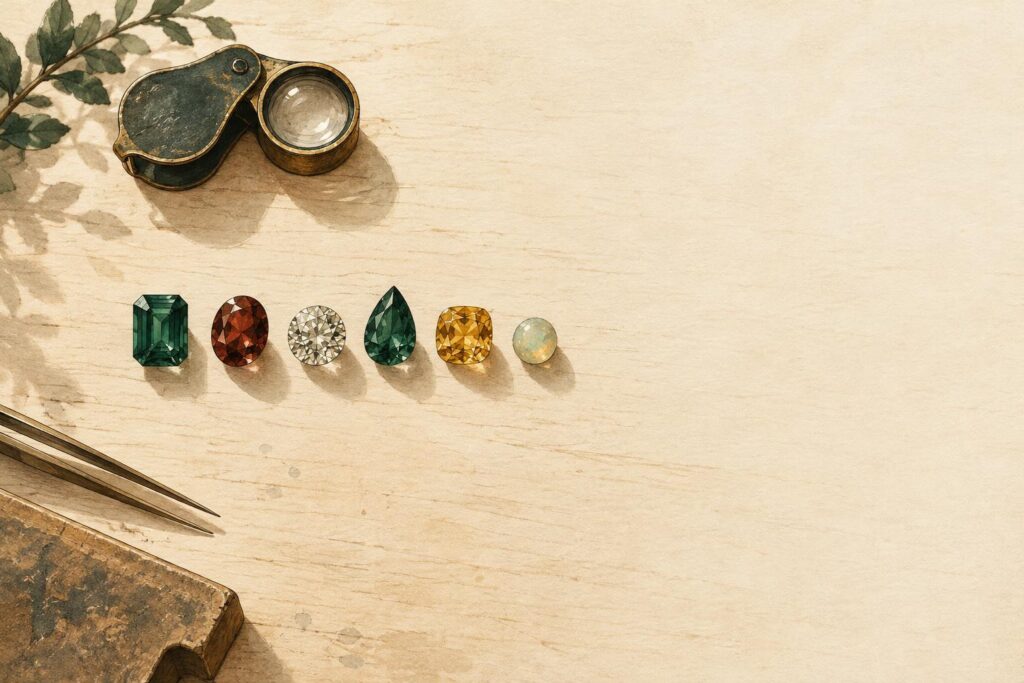
How can a budget go further? The 4Cs are colour, clarity, cut and carat weight (the unit diamonds are weighed in), and they are the global standard for judging diamond quality. Deciding which C matters most to you shows where to spend more and where to compromise 1.
What to decide: one total you are comfortable with, worked out from your own finances. How to Set an Engagement Ring Budget Without Salary Rules can help. The common pitfall is fixing on a carat weight first and stretching the budget to fit it.
Step 3: why the stone needs clear priorities
Why does the stone need clear priorities? Its type, shape and quality grades can pull you in different directions. How do you narrow it down? Start with the type.
A laboratory-grown diamond has the same crystal structure as a natural diamond and nearly the same chemical, optical and physical properties. By eye the two may look the same, but laboratories can tell them apart with advanced instruments. Simulants, stones that imitate diamond such as moissanite and cubic zirconia, are not diamonds, though a simulant can be a good option if it is an informed choice 6. Natural Diamond, Lab-Grown Diamond or Moissanite? compares them.
How are diamonds graded? Colour runs from D (completely colourless) to Z (light yellow or brown), and clarity is graded from Flawless to Included. Shape is the stone’s outline seen face up, while cutting style is how its facets (small flat polished surfaces) are arranged. Step cuts show colour and clarity more than brilliant cuts, so a higher grade may be worth considering for one 1. The 4 Cs of Diamonds explains each grade.
What to decide: the stone type, the shape, and the one or two Cs you will put first. The common pitfall is judging durability by hardness alone. The Mohs scale ranks hardness, or scratch resistance, from 1 to 10, but toughness, or resistance to breaking and chipping, matters too. Diamond is the hardest gem, yet a hard blow can still break it, and pears, marquises and very thin girdles (the stone’s outer edge) are more likely to chip 4.
Step 4: why the setting and metal shape daily wear
Why give the setting and metal a step of their own? The setting holds the stone securely and affects how much light reaches it and how well the ring stands up to wear. It has three parts: the head that holds the stone, the shoulders, and the shank, which is the band 2.
Four settings, compared side by side
The setting holds the stone securely and affects how much light reaches it and how well the ring wears. Switch between four settings to see how each holds a stone.
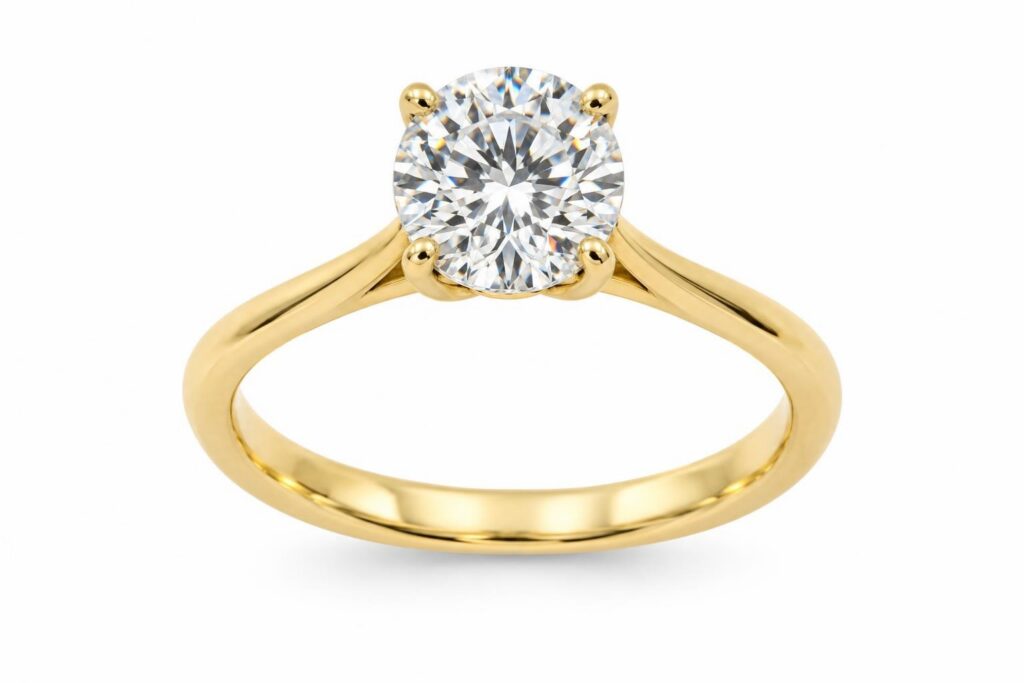
- Prong setting
- Prongs, also called claws, let in the most light. They can catch on fabric, so they should be checked from time to time.
- Bezel setting
- A bezel is a metal rim around the stone. It resists chips well and is less likely to snag, but it lets in slightly less light.
- Flush setting
- A flush setting sits the stone level with the band. It is very durable, but it lets in less light than either a prong or a bezel setting.
- V-shaped prongs
- V-shaped prongs protect the pointed ends of shapes such as pears and marquises.
Each picture shows one typical example. Real settings vary, and the pear shape is shown only because V-shaped prongs are used for pointed stones. Pictures: AI-generated illustrations, checked for accuracy. They are not photographs of a real piece.
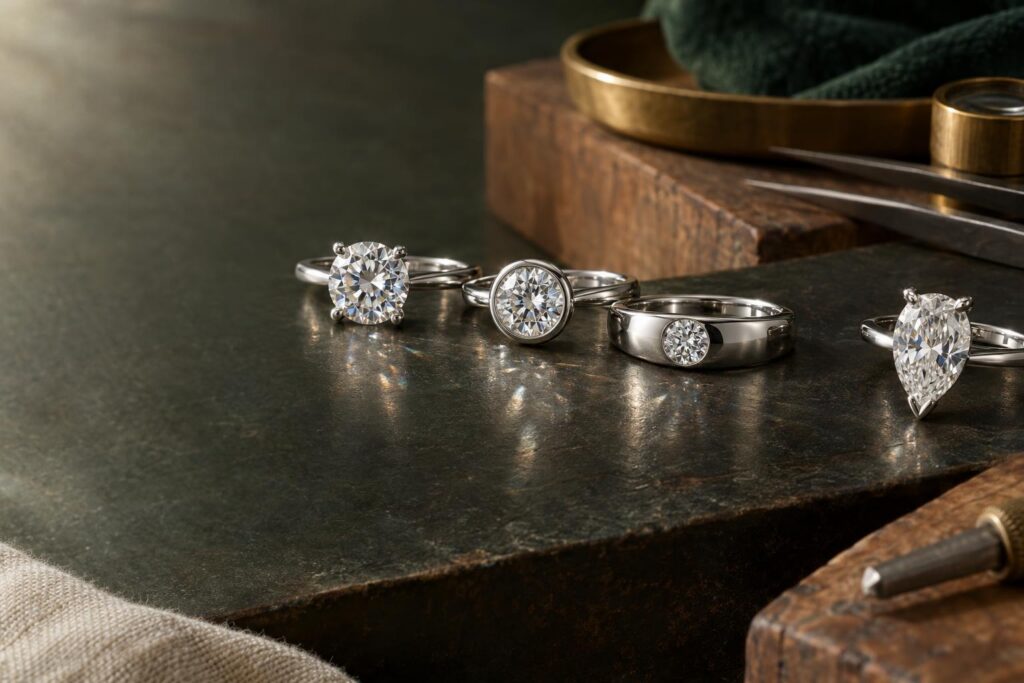
How do settings compare? Prongs, also called claws, let in the most light, but they can catch on fabric and should be checked from time to time. A bezel, a metal rim around the stone, resists chips well and is less likely to snag, but lets in slightly less light. A flush setting sits the stone level with the band; it is very durable but lets in less light than either. V-shaped prongs protect the pointed corners of princess, pear, marquise and heart shapes 2. Ring Settings Explained shows each one.
How do metals compare? 14ct (14K) and 18ct (18K) gold are alloyed, or mixed with other metals, for strength, while pure 24ct gold scratches and dents more easily. White gold may need re-plating with rhodium, a thin white metal coating, because the ring can start to look warmer as the plating wears. Platinum is very wear-resistant, is white without plating, and develops a patina, a softer surface look, over time 3. See White Gold vs Platinum for more.
What to decide: a setting and a metal that suit the wearer’s routine and style. No one metal suits everyone, and skin sensitivity and comfort are worth weighing 3. The common pitfall is choosing for looks alone and forgetting upkeep. If the wearer has sensitive skin, ask the jeweller what the alloy contains.
Step 5: why the size needs a proper measurement
Why not simply guess the size? A ring can only be resized within limits afterwards. Most rings can be resized up or down a little, and a solitaire (a single-stone ring) is easier to resize than a pavé band, where small stones are set closely across the metal 1.
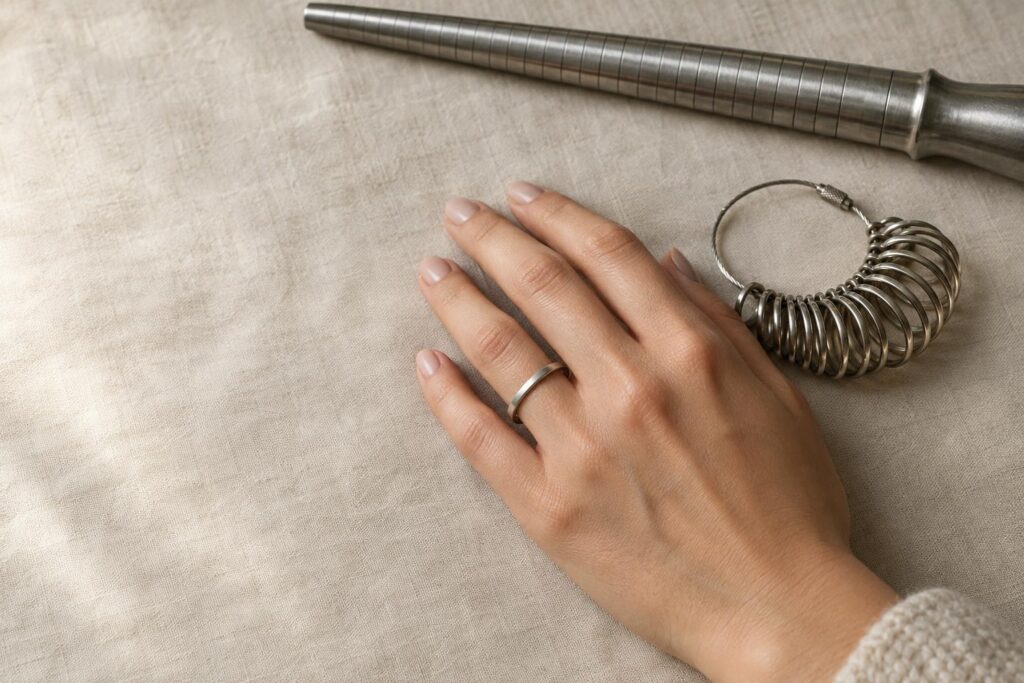
How should you measure? Use a ring sizer, because tracing a borrowed ring only gives an estimate and size differs from finger to finger 1. To compare a size across sizing systems, use the Ring Size Converter.
What to decide: a measured size, noted in the system your jeweller uses. The common pitfall is relying on a borrowed ring alone. How to Find a Ring Size Secretly has ideas for a surprise, and why not every ring can be resized explains the limits.
Step 6: why final checks give you confidence
Why check again before you buy? Jewellers’ white spotlights make most diamonds look dazzling, so it helps to see the stone in everyday light too. Insist, too, on a grading report from an independent laboratory 1.
How does a report help? A GIA Diamond Grading Report records the diamond’s shape, colour, clarity, cut and carat weight, plus its proportions, finish and any treatments. It confirms whether the diamond is natural, and its report number can be looked up through GIA’s Report Check 5. How to Read a GIA Diamond Grading Report walks through one.
What to decide: whether the stone, setting, metal and size still fit together. Check that the prongs look straight and even, because bent or broken prongs leave the stone exposed 4. The common pitfall is rushing this last step because the earlier ones felt finished.
The downsides: when a fixed order isn’t the right fit
Why might a fixed order not suit you? Real choices loop back. A step cut shows colour and clarity more than a brilliant cut, so choosing one may push you towards a higher grade and change your budget 1.
Stone and setting also depend on each other. Pointed shapes such as pears and marquises are better protected by bezels, partial bezels or V-shaped prongs 4. A shape chosen in step 3 may therefore narrow the settings in step 4.
If you already know the exact ring, or you want to try rings on together first, a strict order may feel slow. Treat the steps as a checklist rather than a rule, and go back to any step when a later choice changes it.
Tools that can help
- Engagement Ring Budget Planner: plan one total for the whole ring.
- Carat to Millimetre Estimator: see how carat weight relates to a stone’s size.
- Ring Size Converter: compare ring sizes across sizing systems.
If you would like help working through the six steps, at Ralph Jacobs we offer a free consultation, online at bookings.ralphjacobs.org from any country.
Sources and methodology
This guide draws on published GIA guidance on diamond grading, engagement ring settings, ring metals, gem durability and diamond simulants. Factual claims are cited in the body sections, and the summaries, table, steps, mistakes and FAQ restate those cited facts in plain words. The six-step order is an editorial structure to make the decision easier, not a finding from the sources, and it does not choose any option for the reader.
- 10 Tips for Buying a Diamond Engagement Ring
- Complete Guide to Engagement Ring Settings: Types vs. Styles
- The Best Ring Material For Everyday Wear
- More than the Mohs Scale – Understanding Gem Durability
- GIA Diamond Grading
- Simulants, Moissanite and Lab-Grown Diamonds