
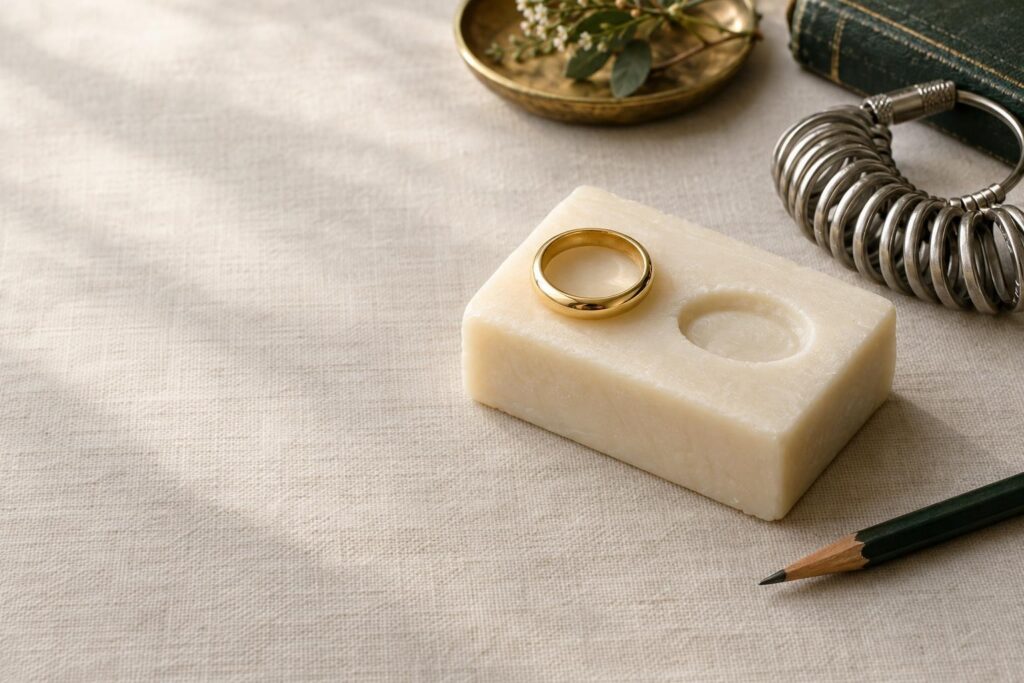
Why the right ring size matters for a surprise
Why think about ring size so early when you are planning a surprise? Because if you want to keep the secret, asking directly may not be an option. Fit also affects comfort and safety. A ring that is too small can be uncomfortable and restrictive, and one that is too large may slip off or be lost 2.
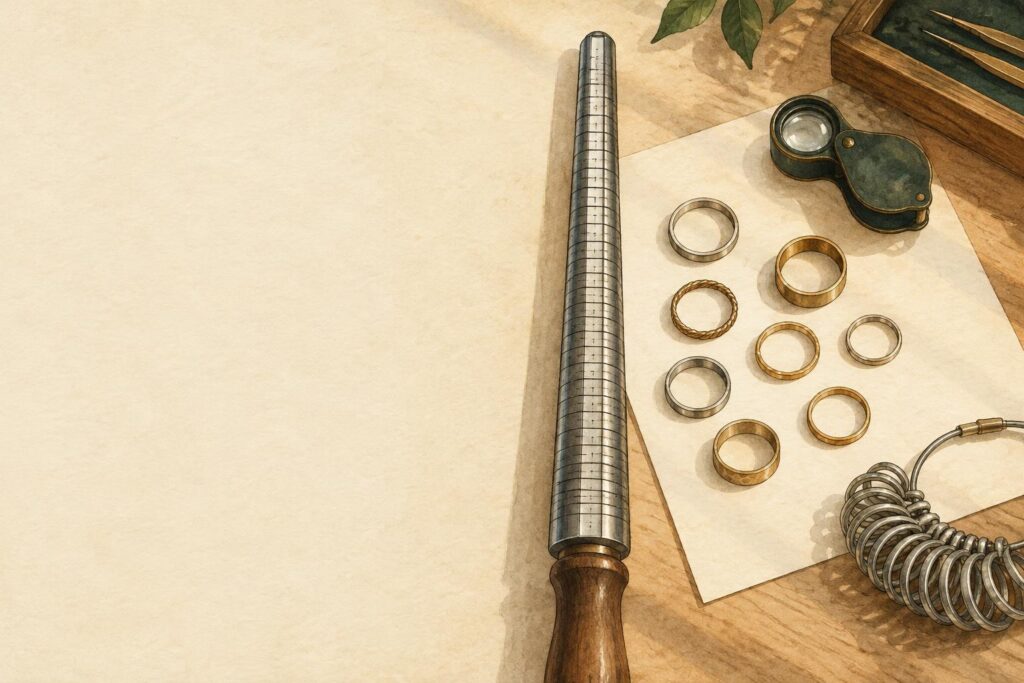
How do you find the size without asking? There are several discreet ways. You can borrow a ring from your partner’s jewellery box, press a ring into a bar of soap, trace the inside of a ring, or ask friends or family 1.
Each method has limits. This guide explains how each one works, why some popular tricks often fail, and what a jeweller can fix if your guess is a little out.
Why borrowing a ring works well
Why borrow a ring rather than guess? Because a jeweller can then measure the ring itself, with tools made for the job. Quietly borrow a ring from your partner’s jewellery box and take it to a jeweller 1.
Which ring you borrow matters. It must be one your partner wears on a ring finger, because other fingers are different sizes. Hands differ too. For a right-handed person, the left ring finger is typically a little smaller than the right, and the reverse is true for left-handers. Tell the jeweller which hand the ring is worn on and which hand your partner uses most 1.
How a jeweller measures a borrowed ring
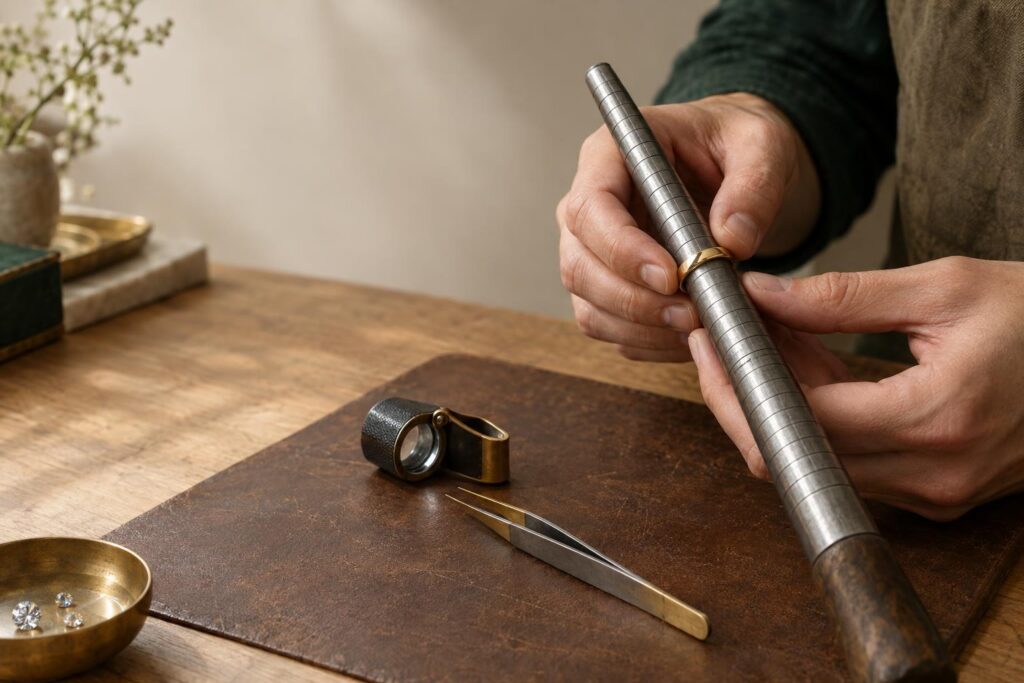
Why is it useful to know how this works? So you know what the jeweller needs from you. The jeweller slides the ring onto a ring mandrel, a tapered tool marked with sizes. For an unusually wide band, the reading is taken from the centre of the band 1.
The international standard ISO 8653 sets out how ring sizes are defined and measured, and it defines this measuring tool, which it calls a ring stick 3. One more check is worth knowing. A ring that is out of round (bent out of its circle shape) can look smaller than it really is 4.
Why a soap impression or tracing can help
Why try these methods? If borrowing a ring isn’t possible for you, they give a jeweller something to work from. There are two options. You can press the ring into a bar of soap for a jeweller to read, or trace the inside of a borrowed ring with a pencil on paper 1.
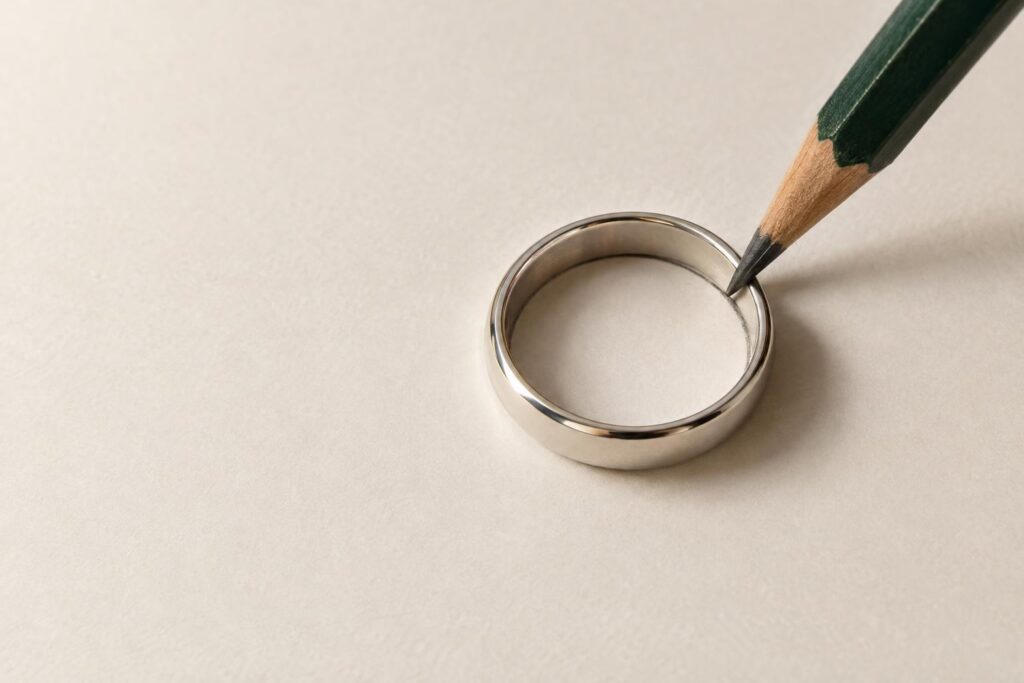
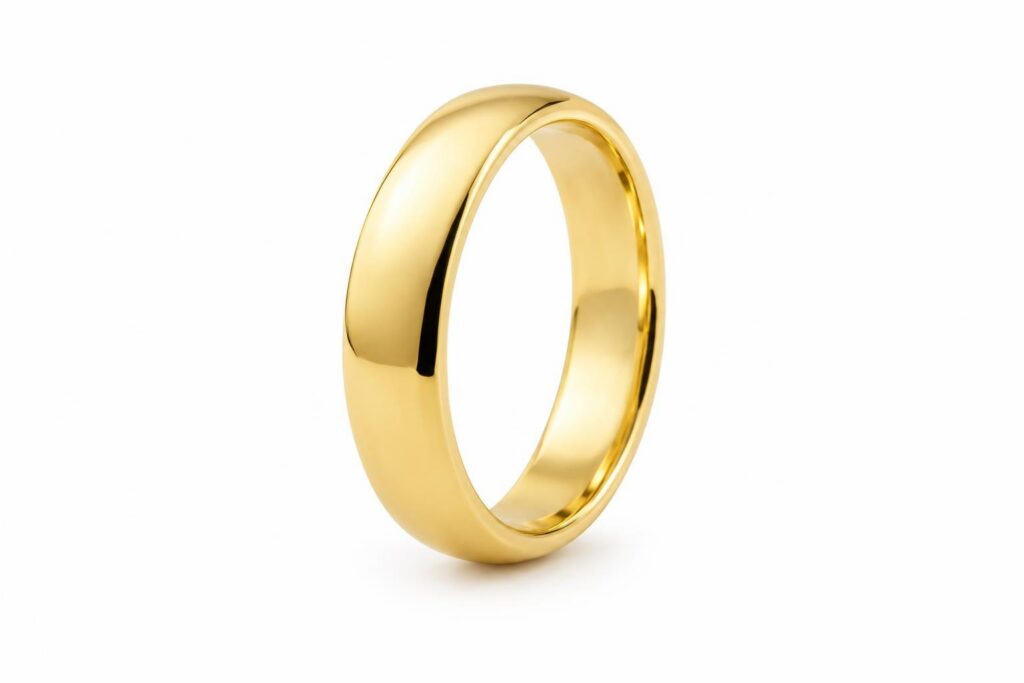
For tracing, a plain band is the ideal ring to use 1. A plain band has no stones or raised details, so its inside edge is simple to follow with a pencil.
Why asking friends or family can lower the risk
Why involve someone else? Because a close friend or relative may know the size, or may be able to help you find it out. Asking friends or family is one of the discreet options 1.
Ask them which finger and which hand the size is for. If they give you a size, check which system it is in. Ring sizes have differed a lot between countries, with different numbering or lettering systems 2. The Ring Size Converter translates between them.
Why comparing with an existing ring needs care
Why can’t any ring your partner owns tell you the size? Because the right size depends on the finger, the hand and the width of the band. A ring worn on another finger gives a different reading, because other fingers are different sizes 1.
Width matters as well. The shank is the band part of the ring that goes around the finger, and wide shanks usually need to be a bit larger 1. So if the ring you compare with is a thin band and you are planning a wide one, tell the jeweller.
Shape can matter too. ISO 8653 covers how to measure particular shapes, such as signet rings, rings with several interlaced circles and square rings 3. If the ring you borrow has an unusual shape, mention it so it can be measured the right way.
Why string and paper strips often give the wrong answer
Why avoid the classic trick of wrapping string or paper around a finger? Because it tends to be inaccurate. String can stretch, and humidity and temperature can make paper shrink and curl 1.
There is a bigger problem. These methods ignore the size needed to slip over the knuckle, and for most people the knuckle is larger than the rest of the finger 1. A ring that fits the base of the finger still has to slide over the knuckle to get there.
Why there is always some margin for error
Why can’t any method give a perfect answer? Because fingers change. They shrink in the cold and swell in the heat, and season, time of day, humidity and altitude can all change finger size 1.
This is also why the jewellery trade cares about consistent measuring. ISO 8653 is an international standard for defining, measuring and naming ring sizes. Its purpose is to reduce conflicts that arise when manufacturers and brands use different methods to control ring size 3. If a size from a friend or a shop uses a system you don’t know, read Ring Size Systems: South Africa, UK, US and Europe.
Why the direction of a wrong guess matters
Why do some people lean towards a larger size when they are unsure? It is easier to remove metal from a ring that’s too big than to add metal to one that’s too small 1. On the other side, a ring that is too large may slip off or be lost 2. Which risk matters more is for you to weigh, and it may depend on whether the ring will be worn straight away.
Why a near miss can often be fixed by resizing
Why is a wrong guess not always the end of the surprise? Because many rings can be resized. The basic process is to cut through the bottom centre of the shank. Then the jeweller removes metal to make the ring smaller, or adds sizing stock (an extra piece of metal) to make it larger 4.
The most common joint for this is the butt joint, where the two cut ends are joined flat together. Done properly, it leaves no sign that the ring was ever sized. Where possible, jewellers also avoid cutting through the karat stamp, trademark or engraving 4.
Not every fix needs a cut. Small gold beads can be added inside a loose ring to tighten the fit 1. A ring with a pattern on the outside can be stretched on a mandrel instead of being cut 4. Platinum has its own quirk: small resizes are in some ways easier than in gold, because heat doesn’t travel through platinum as fast 5. For more detail, read why can’t every ring be resized?
The downsides: when a secret ring size isn’t the right choice
Why think about the downsides before you start? Because some ring styles leave little room to fix a wrong guess. Rings with pavé settings (many small stones set closely across the surface) and channel settings (stones held in a row between two metal walls) generally can’t be resized easily. Eternity rings, with diamonds around the whole band, can be very difficult to resize, and twisted, triple-band and stone-set thicker bands take more work 1.
Which ring styles leave little room for a wrong guess?
Switch between five ring styles to see how the stones and the shape of the band affect resizing if your secret guess is out.
- Plain band
- A plain band has no stones or raised details, so its inside edge is simple to follow with a pencil. That makes it the ideal ring to trace.
- Pavé setting
- Pavé means many small stones set closely across the surface. Rings with pavé settings generally can't be resized easily.
- Channel setting
- In a channel setting the stones are held in a row between two metal walls. Rings with channel settings generally can't be resized easily.
- Eternity ring
- An eternity ring has diamonds around the whole band. It can be very difficult to resize.
- Twisted band
- Twisted, triple-band and stone-set thicker bands take more work to resize than a simple band.
The pictures show typical examples of each style. Real rings vary in width, stone size and how the stones are set. Pictures: AI-generated illustrations, checked for accuracy. They are not photographs of a real piece.
Resizing carries its own risks. On platinum, low-temperature solders without platinum can polish out of the seam and leave a visible dent or a dark line 5. Every discreet method also has limits, as the sections above show. String and paper can mislead, and a ring from another finger gives a different reading 1.
If you have your heart set on a pavé, channel or eternity style, keep in mind that these styles are difficult to resize 1. Choosing the ring together is another route. Buying a ring as a surprise vs choosing together sets out the trade-offs, so you can decide what fits your plans.
Why a second pair of eyes can help before you buy
Why talk it through before ordering? Because band width affects the size needed, and setting style affects how easily a ring can be resized later 1. If you’d like to discuss sizing and ring styles before a surprise, Ralph Jacobs offers a free consultation, online at bookings.ralphjacobs.org from any country, by WhatsApp, or at our showroom in Secunda.
Frequently asked questions
Why does the finger matter? Because other fingers are different sizes. Borrow a ring your partner wears on a ring finger, and tell the jeweller which hand it is worn on and which hand is dominant 1.
Why not? Some styles make it hard. Pavé and channel-set rings generally can’t be resized easily, and eternity rings can be very difficult 1. Read why can’t every ring be resized? for more.
Why does fit change? Fingers swell in the heat and shrink in the cold, and time of day, season, humidity and altitude can all play a part 1. A single reading is a snapshot, not a fixed number.
Why might it? A seam is made where the ring is cut and joined. Done properly, a butt joint leaves no sign that the ring was ever sized 4.