
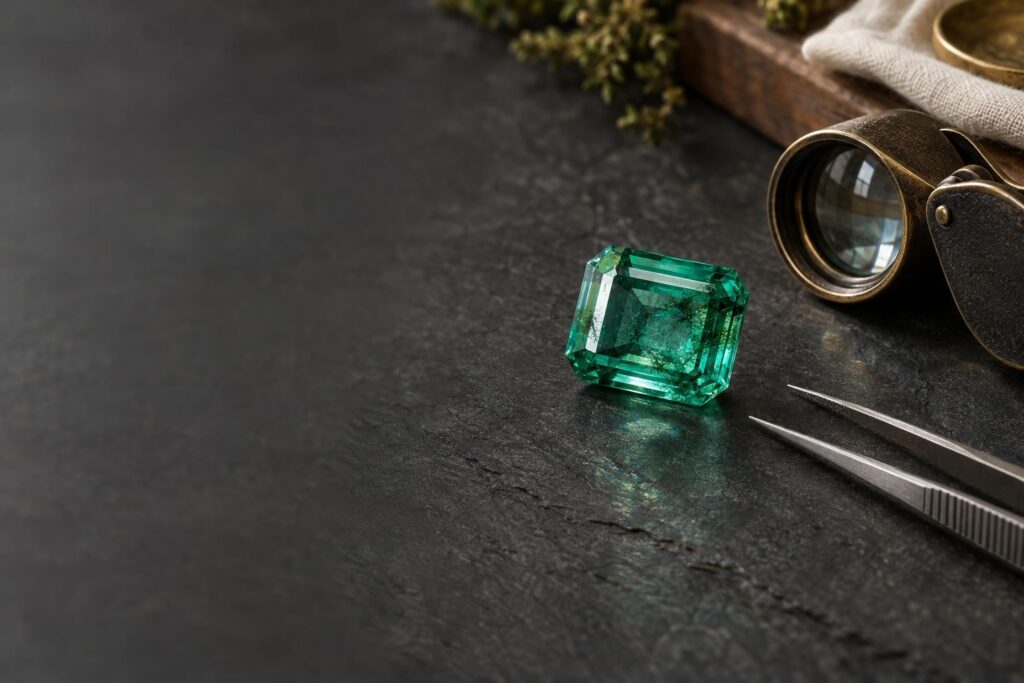
The decision in brief
- If a clean look matters most to you, know that eye-clean emeralds are rare and especially valued, and that most emeralds show some inclusions.
- If you want to know exactly what you are buying, ask for the treatment in writing, next to the stone's name on the invoice.
- If the stone comes with a lab report, check its date, because a report describes the emerald only at the time of testing.
- If the kind of filler matters to you, ask whether oil or resin was used, since the high-end trade prefers emeralds filled only with oil.
- If colour is your priority, look for bluish green to pure green with vivid saturation and a tone that is not too dark.
- If you work with your hands or often knock your rings, weigh emerald's fractures and brittleness, and look at cuts that protect the corners.
- If you prefer simple cleaning, note that warm soapy water and gentle brushing is the safest method, and ultrasonic or steam cleaners are risky.
Editorial guidance — context changes what is right for you.
Start with the wearer and the ring
Start with the person who will wear the emerald and how they live. Emerald can be damaged in careless daily wear, and heat, light and chemicals can affect the fillers in its cracks. So it helps to think about where, how and how often the piece will be worn.
Think about what you expect to see. Emeralds usually have inclusions you can see without magnification, and most have been clarity enhanced. If that sounds acceptable, the next questions are about colour, how the stone has been treated, and how it will be protected in its setting.
Quick checklist
- How often will the emerald be worn: every day or for special occasions?
- Will it be a ring, earrings or a pendant?
- Does the wearer work with their hands, cook often or use cleaning chemicals?
- Are visible inclusions acceptable to the wearer?
- Does the wearer mind if the stone's cracks are filled with oil, wax or resin?
- Is the wearer happy to clean the stone gently by hand?
- Which greens does the wearer like: more bluish or pure green?
The criteria that matter
Colour
Emeralds are, most of all, about colour. Bluish green to pure green, with vivid saturation and a tone that is not too dark, is the most desired.
Why hue, tone and saturation matter in gemstonesClarity and transparency
Inclusions you can see are typical and accepted by the trade. When inclusions harm transparency and clarity, they dramatically reduce value.
Treatment type and amount
Most emeralds are clarity enhanced. How much filler is present can directly affect price, and oil, wax and resin fillers are all classed as unstable.
Disclosure and lab report
Trade guidance says treatment should be stated before the sale and written next to the stone's name on the invoice. A report only covers the stone at the time it was tested.
Why gemstone treatment disclosure matters, and how it’s doneCut and setting
The emerald cut's faceted corners help protect the stone and give a comparatively safe place for the claws that hold it.
Why the setting matters: ring settings explainedDurability and care
Emerald is 7.5 to 8 on the Mohs scale with fair to good toughness, and almost all emeralds have significant fractures, so it needs gentle wear and cleaning.
Why the Mohs scale is not the whole gemstone durability storyCompare your options
| Area | What changes visibly | When to prioritise | Reasonable compromise |
|---|---|---|---|
| No clarity enhancement reported | Untreated emerald is listed as occurring very rarely. A GRS report may say non-enhanced clarity features are present, meaning empty or dried-out fissures were seen. | If having no added substance in the stone matters most to you. | Very hard to find. A stone with empty cracks can be filled after testing, so check the report date. |
| Filled with oil or wax | These are presumed natural fillers, such as cedarwood oil. They are listed as commonly used and classed as unstable. | If the kind of filler matters to you. The high-end trade prefers emeralds filled only with oil. | Not permanent. Keep the stone away from solvents, chemicals and heat. |
| Filled with artificial resin | These include epoxy prepolymers and other polymers. Resins are also listed as commonly used and classed as unstable. | If you want to know which filler is present. At moderate or higher levels, GRS reports state if the filler is resin. | Light and chemicals can make fillers change or deteriorate, and steam can make unhardened resin sweat out. |
| Level of clarity enhancement | GIA's scale: minor, moderate or significant. SSEF wording states the amount of filler. GRS uses a longer scale from None to Prominent. | If you want to compare how each stone has been treated. | A level rates the treatment only, not overall clarity, and the wording differs between labs. |
| Dyed with coloured oil or resin | Dyeing with coloured oils or resins is occasional, not common. | If you want to know whether colour was added, ask whether the stone is dyed. | Dye treatment is not permanent, and treatment should be disclosed before the sale. |
A practical decision process
- Decide how the emerald will be worn, and how often.
- Decide which greens you like and how many visible inclusions you accept.
- Compare several stones side by side for colour and transparency.
- Compare the treatment level and filler type of each stone you are considering.
- Ask for the treatment in writing, next to the stone's name on the invoice.
- Check the lab report and its date, and ask for a recheck if the report is old and the stone looks very clean.
- Check that the cut and setting protect the stone's corners.
- Weigh the stone's care needs against the wearer's daily life, then make your own choice.
Numbers indicate order, not saved progress.
Common buying mistakes
- Expecting an emerald to look flawless Visible inclusions are typical in emerald and the trade accepts them. Look at whether the inclusions harm the stone's transparency.
- Asking only whether the stone is treated Labs estimate about 90% of the emeralds they see are clarity enhanced. Ask how much filler there is and what kind.
- Leaving the treatment off the invoice The treatment description belongs next to the gemstone name on the invoice. Ask for it to be written there. Why gemstone treatment disclosure matters, and how it’s done
- Trusting an old report on a very clean stone Fissures can be filled in a few minutes, even after testing. If the report is old and the stone looks very clean, ask for a recheck.
- Reading a treatment level as a clarity grade On GIA's Emerald Report, minor, moderate and significant rate the treatment only, not overall clarity. Judge clarity and transparency separately. What makes one stone better? How to evaluate coloured gemstones
- Cleaning an emerald in an ultrasonic or steam cleaner Vibrations can weaken a fractured stone, and steam can make oil or unhardened resin sweat out. Warm, soapy water and gentle scrubbing is safest.
- Judging durability by hardness alone Almost all emeralds have significant fractures and can be damaged in careless daily wear. Think about the setting and the wearer's daily life too. Why the Mohs scale is not the whole gemstone durability story
Questions to ask
About treatment
- What filler is in this emerald: oil, wax or resin?
- What level of clarity enhancement does it have?
- Has the stone been dyed with coloured oil or resin?
- Will the treatment be written next to the stone's name on the invoice?
About the lab report
- Does this emerald come with an independent lab report?
- Which lab tested it, and what scale does that lab use?
- When was the stone tested?
- Can the stone be rechecked before I buy?
About wear and care
- How does this setting protect the stone's corners?
- How should I clean this emerald at home?
- What should the wearer avoid, such as heat, solvents or chemicals?
Frequently asked questions
Is it normal for an emerald to have flaws?
Yes. Emeralds typically contain inclusions you can see without magnification, and the trade accepts this. Their mossy look is sometimes called jardin, French for garden. When inclusions harm transparency and clarity, they dramatically reduce value.
Does a treated emerald mean it is fake?
No. Clarity enhancement means open cracks in the emerald have been filled with a colourless oil, wax or resin to make them less visible. Labs estimate about 90% of the emeralds they see have been clarity enhanced in some way.
What do minor, moderate and significant mean on a report?
On GIA’s Emerald Report, they describe the level of clarity enhancement. They rate the treatment only, not the stone’s overall clarity. Other labs use their own wording: SSEF states the amount of filler, and GRS has extra steps such as insignificant and minor to moderate.
Can an emerald be treated after its lab report?
Yes. Fissures can be refilled in a few minutes at any time, even after testing. A report always describes the stone at the time it was tested, so SSEF urges a recheck if the report is old and the emerald looks very clean.
How should I clean an emerald?
Warm, soapy water and gentle scrubbing is the safest way. Ultrasonic and steam cleaners are risky: vibrations can weaken fractured stones, and steam can make oil or unhardened resin sweat out. Keep it away from solvents, chemicals and heat.
Why emeralds are bought differently from other gems
Why does an emerald need a different approach from a diamond? Because with emerald, visible inclusions are expected and treatment is common. Labs estimate that about 90% of the emeralds they see have been clarity enhanced in some way 6. Knowing what is normal helps you spot what is unusual, and ask a seller the right questions.
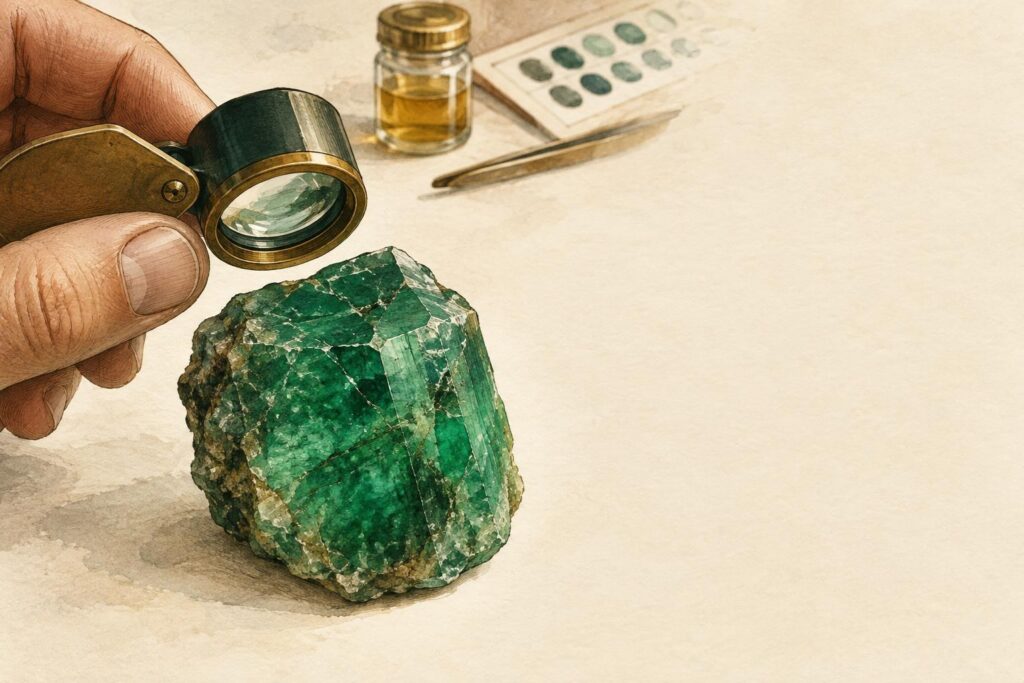
Most emeralds contain inclusions, the tiny crystals, cracks and other features trapped inside a gem. In emerald, they are typically visible to the unaided eye, and the trade accepts this. Their mossy look has earned them the name jardin, French for garden 1.
Why are cracks so common? Most emeralds have many fissures, or open cracks, when they are mined. Fillers make those fissures less noticeable, especially to the unaided eye 6. Emeralds with no fissures at all are very rare 3.
Why most emeralds are treated, and how filling works
Why would anyone put something into a gem? Because a filled crack is harder to see than an empty one. The trade has a long tradition of filling open fissures with colourless oil, wax or artificial resin to make them less visible 3. This is called fracture filling, or clarity enhancement.
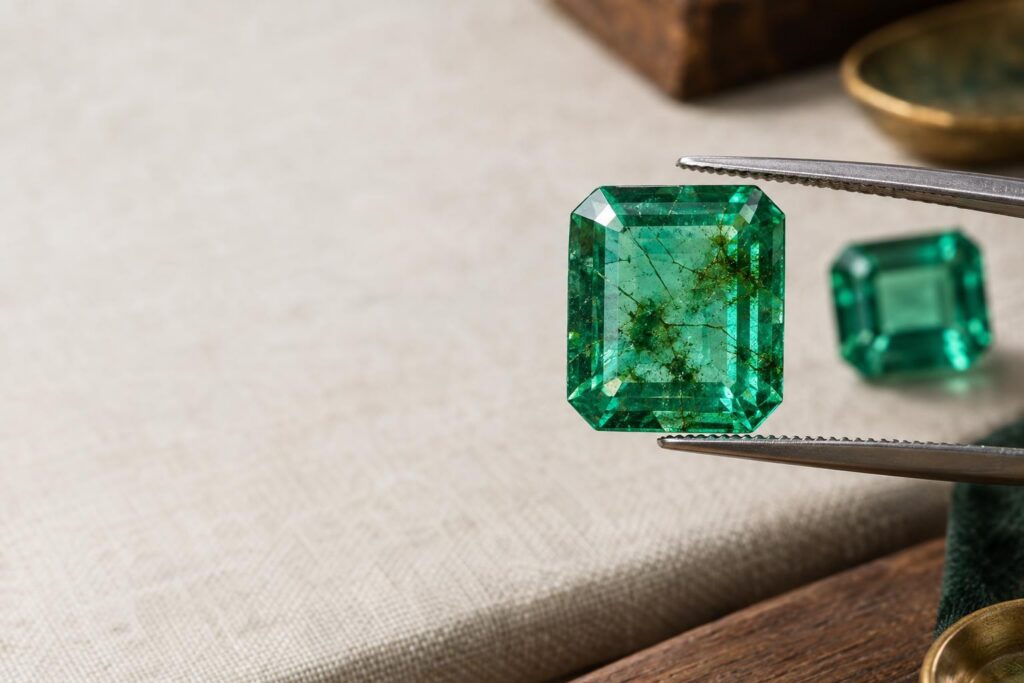
How does it work? A filler with a refractive index (how strongly a material bends light) close to emerald’s makes a crack less noticeable. Even a colourless filler improves how the colour looks, because light no longer scatters from the cracks 6.
How common is it? Some estimates state that 90% or more of emeralds are fracture-filled 2. The CIBJO gemstone book, written by the international jewellery trade body, lists untreated emerald as occurring very rarely. It lists both oils and resins as commonly used, classes both as unstable, and lists dyeing with coloured oils or resins as occasional 5.
What are fillers made of? They fall into two groups. Presumed natural fillers include cedarwood oil, other oils and waxes, while artificial resin fillers include epoxy prepolymers and other polymers 6. The high-end trade prefers emeralds filled only with oil rather than artificial resin 3.
Why the amount and type of filler is worth asking about
Why ask how much, not just whether? Because most emeralds are treated, so a simple yes tells you little on its own. CIBJO makes disclosure of these treatments mandatory, including how much filler is present, because this can directly affect price 3.
How do labs describe it? GIA’s Emerald Report describes clarity enhancement as minor, moderate or significant. This rates the level of treatment only. It is not an overall clarity grade 1.
Other labs use their own wording. SSEF and other labs agreed common terms for the amount of filler. A typical line reads: "Minor (or moderate, significant) amount of oil (or artificial resin etc.) in fissures at the time of testing" 3.
Some scales have more steps. GRS grades emerald enhancement on a scale that runs from None through Insignificant, Minor, Minor to Moderate and Moderate, up to Prominent. At moderate or higher levels, its report states if the filler is resin. On a GRS report, "non-enhanced clarity features present" means empty or dried-out fissures were seen 4.
Why disclosure matters when you buy an emerald, and how to ask
Why get the treatment in writing? Because the trade’s own guidance asks for it. Under the CIBJO Gemstone Book, sellers shall tell customers what treatment a gem has had before a sale closes. The treatment description shall also appear next to the gemstone name on the invoice 5.
Why check the date on a report? Fissures can be refilled in a few minutes at any time, even after lab testing. A report always refers to the stone at the time of testing. SSEF urges buyers to have a stone rechecked before buying if the report is old and the emerald looks very clean 3.
The same applies to a stone reported as untreated. An emerald with clearly visible empty cracks may be treated after testing, making it look cleaner and brighter 4. When you talk to a seller, these questions cover the essentials:
- What filler was used: oil, wax or resin?
- What level of clarity enhancement does the stone have?
- Has the stone been dyed with coloured oil or resin?
- Will the treatment be written next to the stone’s name on the invoice?
- Is there a lab report, which lab issued it, and when was the stone tested?
For how treatment disclosure works across all gems, see how gemstone treatments should be disclosed.
Why colour comes first, and how the cut protects the stone
Why judge colour before anything else? Because emeralds are, most of all, about colour. The most desired colours are bluish green to pure green, with vivid saturation and a tone that is not too dark 1. Saturation is the strength of the colour, and tone is how light or dark it looks. See hue, tone and saturation for more.
How far can the colour go? Emerald is a variety of the mineral beryl. If the hue is too yellowish or too bluish, the stone is a different variety of beryl, not emerald. Clarity still counts: inclusions that harm transparency and clarity dramatically reduce value, and eye-clean emeralds are especially valuable because they are so rare 1.
Why is the emerald cut so common? The emerald cut, a rectangle with cut-off corners, is the most common cut for this stone. Its faceted corners help protect the stone. They also give a comparatively safe place for prongs, the small metal claws that hold a gem 1.
Why emeralds need gentle wear and careful cleaning
Why does a fairly hard stone need gentle handling? Because hardness is only part of durability. Emerald is 7.5 to 8 on the Mohs scale of scratch resistance. Its toughness, or resistance to chipping and breaking, is fair to good, so it needs more care in wear than ruby or sapphire 2. Almost all emeralds have significant fractures and are more brittle than corundum, the mineral of ruby and sapphire. They can be damaged in cutting, setting or careless daily wear 1.

How do fillers change things? Light and chemicals can make the oils, resins and polymers in filled fractures change in appearance or deteriorate. Heat can also damage emeralds, especially by extending existing fractures 2. Treatments with dye, oil, resin, wax or plastic are not permanent. Keep them away from solvents, including some dish-washing liquids, and from chemicals and heat 5.
What is safe for cleaning? Ultrasonic and steam cleaning are risky. Vibrations can weaken fractured stones, and steam can make oil or unhardened resin sweat out. Warm, soapy water and gentle scrubbing is the safest way to clean emeralds 2.
When an emerald may not be the right choice
Why think about the downsides before you fall for a stone? Because some expectations and lifestyles clash with emerald’s nature. Knowing them early can save disappointment later.
- If you want a stone with no visible inclusions, eye-clean emeralds exist but are especially valuable because they are so rare 1.
- If the wearer is hard on their rings, emerald needs more care in wear than ruby or sapphire 2.
- If you want a look that never changes, oil, wax and resin fillers are all classed as unstable 5.
- If you want lasting proof of treatment, a report describes the stone only at the time it was tested 3.
To compare other stones for daily wear, see which gemstones suit everyday rings, or read how to buy a sapphire.
Why plan the whole piece: tools that can help
Why use tools once you know the stone? They help with the parts of the decision that are not about the emerald itself. The Ring Size Converter compares ring sizes across countries. The Engagement Ring Budget Planner helps you plan the whole piece, and ring settings explained shows how different settings hold a stone. If you would like to look at emeralds with someone, Ralph Jacobs offers a free consultation, online from any country at bookings.ralphjacobs.org.
Sources and methodology
This guide draws on gemmological sources from GIA, SSEF, GRS and the CIBJO gemstone book, including peer-reviewed research on emerald fillers. Lab wording for treatment differs, so each scale is described in that lab’s own terms. The guide explains what is normal in emeralds and what to ask, but it does not grade, value or recommend any stone.
- Emerald Quality Factors
- Emerald Care and Cleaning Guide
- Emeralds and the Saga of Cleaning and Filling Fissures
- Gemstone Enhancement Disclosure
- The Gemstone Book (CIBJO Blue Book)
- On the Identification of Various Emerald Filling Substances