
Why does a gem description give a Mohs number? It tells you how well the stone’s surface resists scratching, which is one clue to how it copes with frequent wear 1. The scale uses ten reference minerals: talc 1, gypsum 2, calcite 3, fluorite 4, apatite 5, feldspar 6, quartz 7, topaz 8, sapphire 9 (some lists name its mineral, corundum) and diamond 10 3. Harder minerals scratch softer ones. Corundum can scratch topaz, quartz and anything softer, and only a diamond can scratch a diamond 2.
Climbing the Mohs scale
The scale puts ten reference minerals in order of scratch resistance. Step through eight of them, from talc to diamond, and remember that the steps between numbers are not equal.
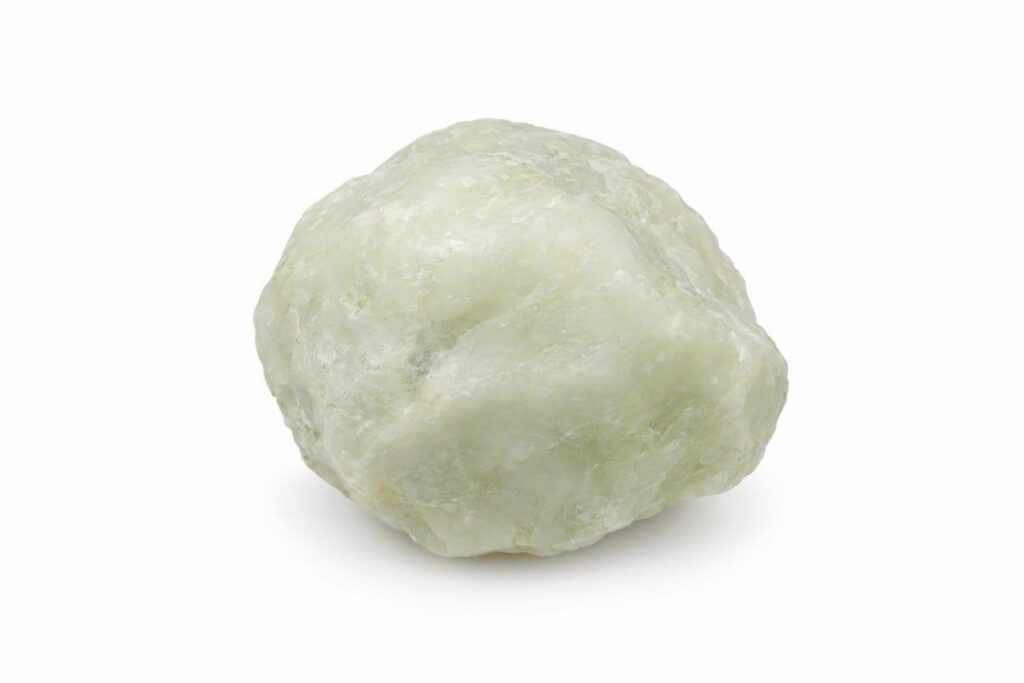
- Talc, 1
- Talc is 1 on the Mohs scale, the first of the ten reference minerals. Harder minerals scratch softer ones, so every mineral above it can scratch it.
- Calcite, 3
- Calcite is 3 on the scale. It sits well below quartz at 7, and any harder mineral will scratch it.
- Fluorite, 4
- Fluorite is 4. Calcite at 3 cannot scratch it in the other direction, because harder minerals scratch softer ones.
- Feldspar, 6
- Feldspar is 6 on the scale, one step below quartz. Apatite at 5 and everything softer sit beneath it.
- Quartz, 7
- Quartz is 7. Corundum can scratch quartz, as it can topaz and anything softer.
- Topaz, 8
- Topaz is 8. It is harder than quartz, but corundum can still scratch it.
- Sapphire, 9
- Sapphire is 9 on the scale; some lists name its mineral, corundum. It can scratch topaz, quartz and anything softer.
- Diamond, 10
- Diamond is 10, the top of the scale. Only a diamond can scratch a diamond, and it is many times harder than ruby and sapphire.
Gypsum (2) and apatite (5) are left out to keep the sequence to eight. The numbers show order only, so the gaps between steps are not equal. Specimen colours vary. Pictures: AI-generated illustrations, checked for accuracy. They are not photographs of a real piece.
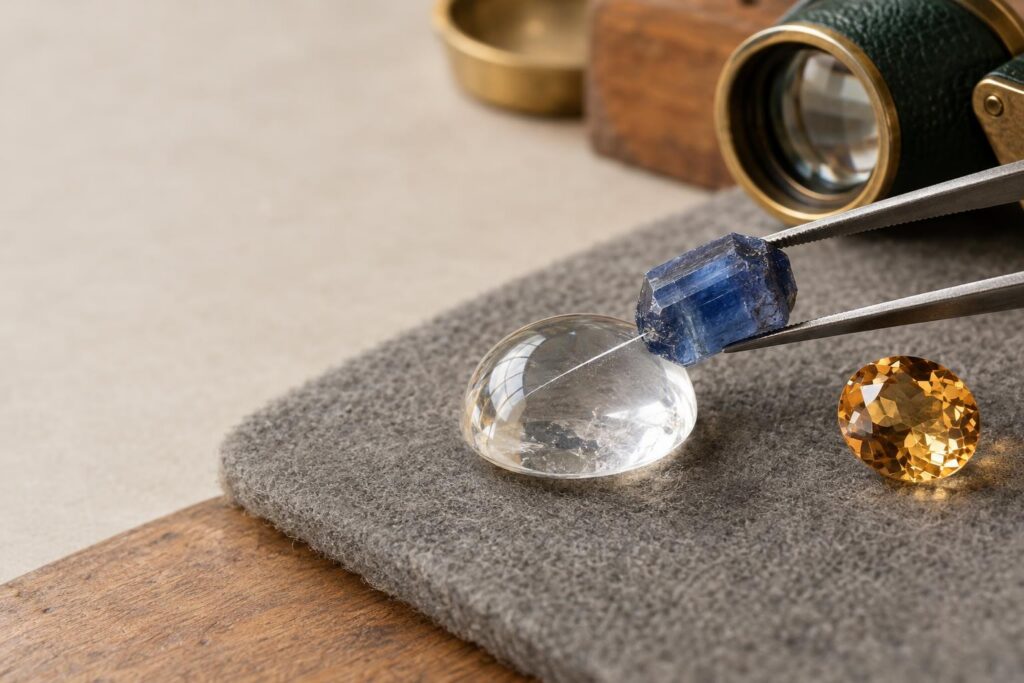
Why can’t you read the numbers like a ruler? The scale only puts minerals in order, and the steps between them are not equal 1. So a diamond is many times harder than ruby and sapphire, even though they sit just one number below it at 9 2.
Why can a very hard stone still break? Hardness is not the same as toughness, which is how well a gem survives a knock without chipping or cracking 1. Diamond is the hardest gem, but a hard blow can still split it 2. To see how hardness fits with other factors, read why the Mohs scale is not the whole durability story.
Example: Say a ring description lists topaz at 8 on the Mohs scale. Corundum, at 9, can scratch it, and so can diamond at 10 2. Quartz sits at 7, one place below topaz, so topaz ranks as the harder of the two 3.