
Why a ring you wear every day needs a durable stone
You want a ring you can wear every day without worrying about it. So why do some stones cope with that and others don’t? The answer starts with what experts mean by durability.
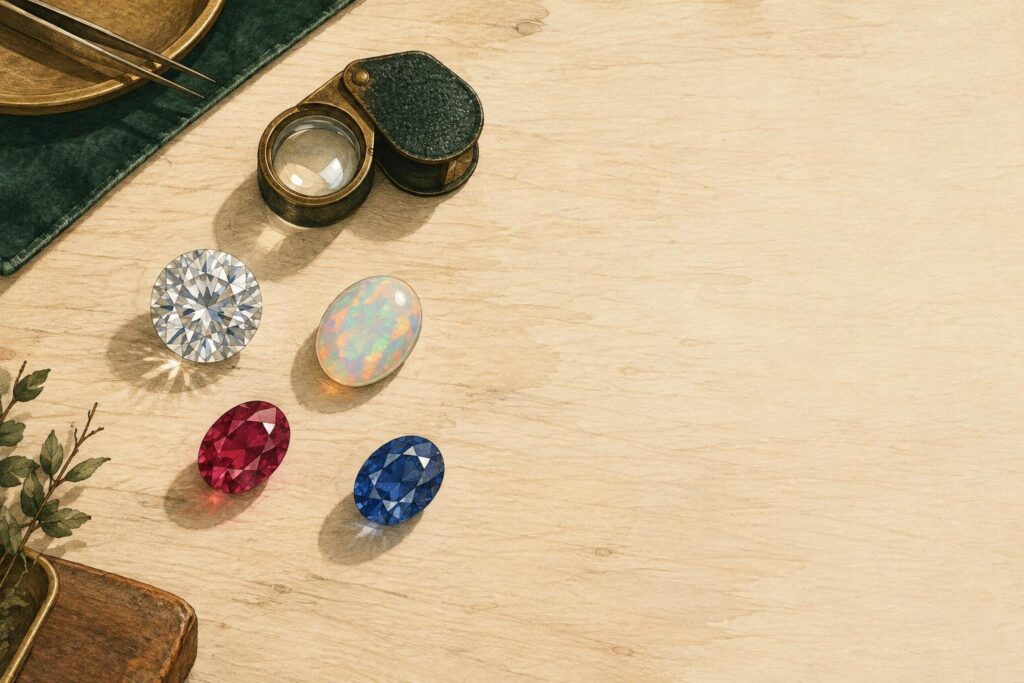
Gemmologists, the specialists who study gems, define durability as a gem’s ability to withstand wear, heat, light, household chemicals and low or high humidity 1. Everyday risks include household cleaners, chlorinated pools, hairspray and lotion 6. So the real question is not only "is this stone hard?" but "how does it cope with these things?"
- Durability depends on hardness, toughness and stability, not hardness alone 1.
- Sapphire and ruby combine high hardness, excellent toughness and no cleavage 2.
- Diamond is the hardest gem, yet a hard blow can cleave it, even while it is being worn 3.
- Emerald needs more care in wear than ruby or sapphire, but with proper care it suits all types of jewellery 4.
- Treated gems can be harmed by heat, solvents, steam and ultrasonic cleaners 6.
How gemstone durability works: hardness, toughness and stability
Why can a very hard stone still break? Because experts judge durability on three separate factors: hardness, toughness and stability, and no gem scores a "perfect 10" 1. The sections below take each one in turn.
Hardness: why scratch resistance matters
Why does hardness matter on a ring? It tells you how well a stone resists scratches. Hardness means resistance to scratches and abrasion, and it is ranked on the Mohs scale, a 1-to-10 scale of scratch resistance. The scale isn’t even: corundum is 9, but diamond at 10 is many times harder 1.
Diamond sits at the top, and only a diamond can scratch a diamond 3. For a fuller picture of why one number isn’t enough, see The Mohs Scale Is Not the Whole Durability Story.
Toughness and cleavage: why hard stones can still chip
Why do hard stones still chip? Because hardness and toughness are different things. Toughness means resistance to breaking and chipping. On GIA’s comparison, nephrite (225,000) and jadeite (120,000), two kinds of jade, are very tough, while corundum (600) is less so 1.
Sources describe this differently, so it helps to know why. GIA’s sapphire guide calls corundum’s toughness excellent and calls it "a great choice for rings and other mountings subject to daily wear" 2. Read together, the two GIA sources show that toughness is relative: corundum is far less tough than jade 1.
Cleavage is a direction inside a crystal along which it can split cleanly, a little like wood splitting along its grain. Diamond breaks most easily along its cleavage directions, and a hard blow can cleave it even while you’re wearing it 3. Topaz has cleavage too, which is why its toughness is poor despite a hardness of 8 5.
Stability: why heat, light and chemicals matter
Why does stability matter? Because durability also covers how a gem withstands heat, light and household chemicals 1. Corundum is stable in normal wear and resists heat, light and common chemicals 2. Emerald is different: heat can damage it, especially by extending fractures that are already there 4.
Why there is no single best gemstone for everyday rings
Why can’t one list settle it? Because no gem scores a "perfect 10" on durability 1. A treatment can also change how a stone copes, because treated gems can be harmed by heat, solvents, steam and ultrasonic cleaners 6. A treatment is a process, such as heating or filling cracks, used to improve a stone’s look.
The groups below follow the sources cited for each gem. They describe how a stone tends to cope; the choice stays with you.
Why sapphire, ruby and diamond cope well with scratches
Why do sapphire and ruby suit daily wear? Both are corundum, the same mineral in different colours. Corundum is 9 on the Mohs scale, has excellent toughness and no cleavage, and GIA calls it "a great choice for rings and other mountings subject to daily wear" 2. See How to Buy a Sapphire for more.
Diamond resists scratches very well, but knocks are its weak point. It is the hardest gem but not necessarily the toughest, and pear and marquise points are prone to chipping 1. It resists virtually all acids, yet sudden extreme temperature changes can cause thermal shock, the stress of a fast change in temperature 3.
Why emerald, topaz and porous gems need more care
Why is emerald treated with more caution? Emerald is 7.5 to 8 on the Mohs scale with fair to good toughness, so it needs more care in wear than ruby or sapphire. Even so, with proper care emeralds suit all types of jewellery and will last for generations 4.
Most cut natural emeralds have filled fractures, which means cracks have been filled to improve their look. This is called fracture filling, and it makes ultrasonic or steam cleaning risky 4. See How to Buy an Emerald for how this affects buying.
Why is topaz in this group despite a hardness of 8? Its cleavage makes its toughness poor. A hard blow might split it, and sharp temperature changes might break it. Jewellers prefer protective mountings for valuable topaz, or use it in low-wear pieces like pendants and pins 5.
Coated topaz, which has a thin layer on its surface, can withstand daily wear, but abrasive cleaners remove the coating 5. Pearls and porous gems such as turquoise, which have tiny pores that soak up liquids, need care too. Hairspray, lotion, perfume and cosmetics can permanently damage them 6.
Why some stones are kept for special occasions
Why keep some stones for special days? Protect not-so-tough gems like opal or tanzanite, and keep rings set with them for special occasions. Softer gems, too, are better worn on special occasions than every day 1.
Choosing one of these stones for a ring is still your decision. The advice above is about how to protect them. This article covers only the stones GIA’s care guides discuss. For others, see each stone’s own page, such as Spinel, Aquamarine or Garnet, and How Coloured Gemstones Are Evaluated.
Why the setting affects how a stone copes with daily wear
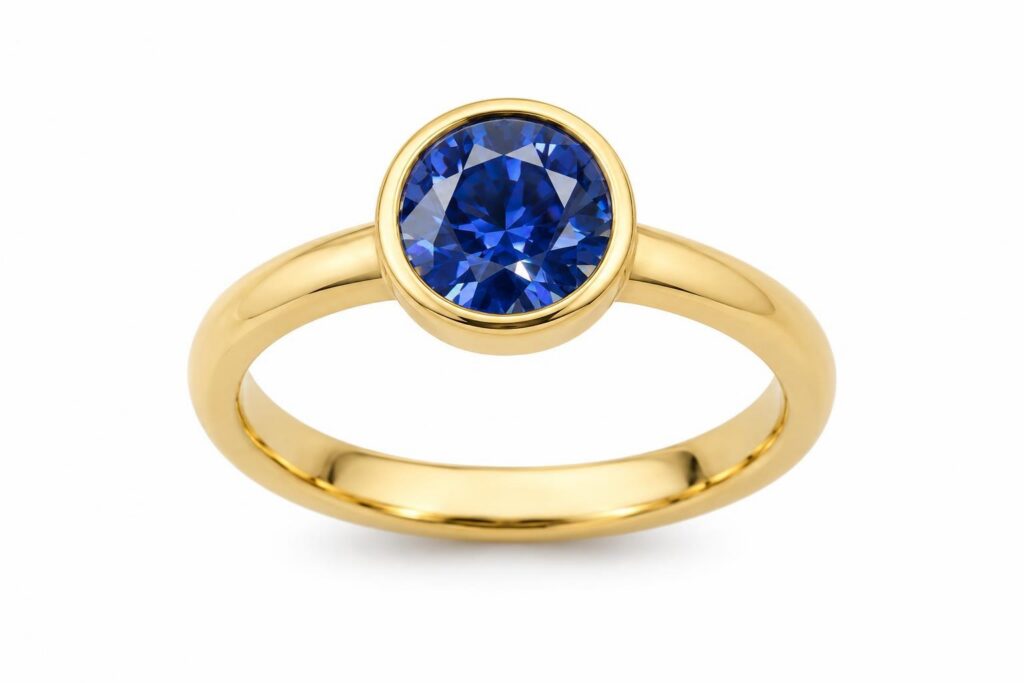
Why can a setting protect a stone? Because some stones have vulnerable points, and metal can shield them. A bezel is a rim of metal around the stone’s edge, and a partial bezel covers only part of it. Prongs, also called claws, are small metal tips that grip the stone. Bezels, partial bezels or V-shaped prongs protect vulnerable points, while bent or broken prongs expose the gem to chips 1.
How different settings protect a stone
Metal can shield a stone's vulnerable points. Switch between the settings to see how much of the stone each one covers.
- Bezel
- A bezel is a rim of metal around the stone's edge. Bezels, partial bezels or V-shaped prongs protect vulnerable points.
- Partial bezel
- A partial bezel covers only part of the stone's edge. It still protects vulnerable points with metal.
- Prongs (claws)
- Prongs, also called claws, are small metal tips that grip the stone. Cuts with pointed corners are often set with prongs to protect the corners from chipping.
- V-shaped prongs
- V-shaped prongs protect vulnerable points. They suit stones with pointed corners, which are prone to chipping.
- Bent or broken prong
- Bent or broken prongs expose the gem to chips. A loose diamond can also wear through a prong over time.
The pictures show typical examples. Real settings vary in shape and in how much metal covers the stone. Pictures: AI-generated illustrations, checked for accuracy. They are not photographs of a real piece.
Cuts with pointed corners are often set with prongs to protect the corners from chipping. The metal matters too: diamond can scratch any precious setting metal, so a loose diamond can wear through a prong over time 3. For the options, see Ring Settings Explained: A Visual Guide and Four Claws vs Six Claws.
Why everyday care matters for a ring you wear daily
Why does care matter even for a durable stone? Because cleaning methods and chemicals can harm a stone, its treatment or its metal. Chlorine bleach can pit or damage gold alloys, and treated gems can be harmed by heat, solvents, steam and ultrasonic cleaners 6. An ultrasonic cleaner shakes dirt loose with sound waves, and a steam cleaner uses hot steam. The advice on them differs from stone to stone, as the list below shows.
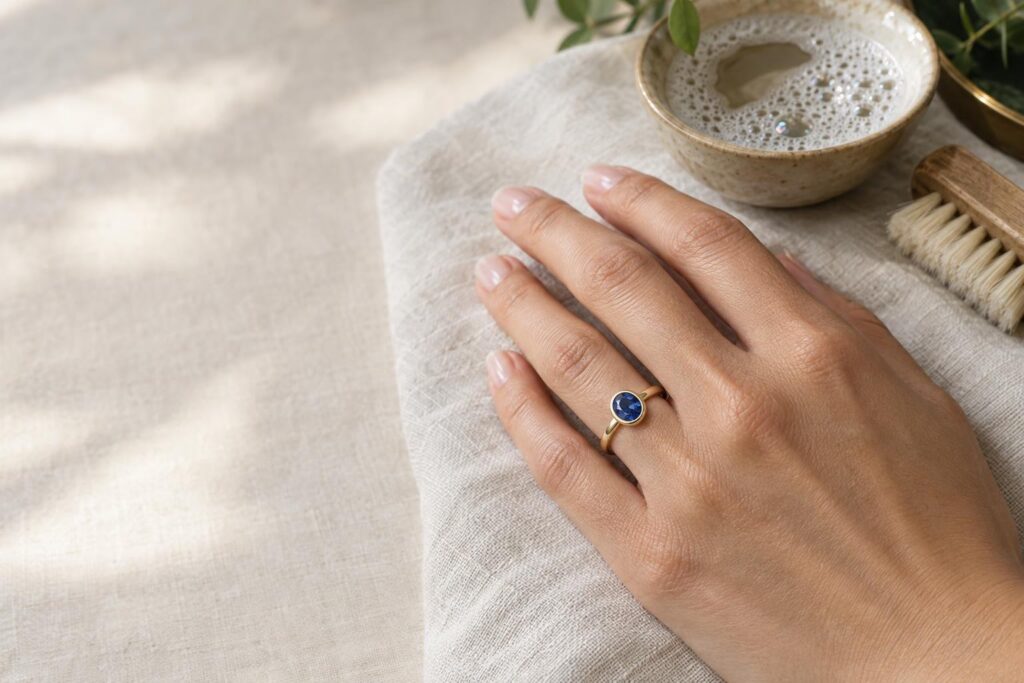
- Most coloured gems can be cleaned with warm water, mild dish soap and a soft brush. Rinse in a glass of water, not over the sink. Take jewellery off before swimming in chlorinated pools or using household cleaners 6.
- For ruby and sapphire, warm, soapy water is always safe. Ultrasonic and steam cleaners are usually safe for untreated and heat-treated stones, but clean fracture-filled, cavity-filled or dyed stones only with a damp cloth 2.
- For emerald, use warm, soapy water with gentle scrubbing, because ultrasonic or steam cleaning is risky for filled stones 4.
- For topaz, avoid steam and ultrasonic cleaning and use warm, soapy water 5.
- For diamond, use lint-free cloths, jewellery cleaning solutions or household detergents. Ultrasonic and steam cleaners can loosen stones in their settings 3.
Store each piece in a padded, separate compartment rather than a drawer, and have jewellery checked every six months 6. Keep a diamond away from other gems such as topaz, because the diamond could scratch them 1.
The downsides of choosing a stone on durability alone
Why look at the other side? Because no gem scores a "perfect 10" on durability 1. Even a durable stone has limits, and durability may be only one of the things you care about.
- Even the hardest stone can break. Any stone, including diamond, will break if hit hard enough in the right place 3.
- A treatment can change the care a stone needs. Fracture-filled, cavity-filled or dyed corundum can be damaged even by mild acids like lemon juice 2. See How Gemstone Treatments Should Be Disclosed.
- Ruling a stone out can mean giving up a colour you love. With proper care, emeralds are suitable for all types of jewellery 4.
- A durable stone is not maintenance-free. Bent or broken prongs expose any gem to chips 1.
The choice is yours. It may help to think about how often you plan to wear the ring and how much care you are happy to give it. If you’d like to talk through a stone and setting for the way you live, we offer a free consultation, online from any country at bookings.ralphjacobs.org.
Frequently asked questions
Not necessarily. Diamond is the hardest gem, but not necessarily the toughest. A hard blow can cleave or fracture it, and the points of pear and marquise shapes are prone to chipping 1.
Corundum, the mineral that forms sapphire and ruby, is a great choice for rings subject to daily wear. It is 9 on the Mohs scale, with excellent toughness and no cleavage 2. Ask whether your stone is treated, because that changes how it can be cleaned.
Emerald needs more care in wear than ruby or sapphire, but with proper care it suits all types of jewellery. Most cut natural emeralds have filled fractures, so heat, ultrasonic and steam cleaning are risks 4.
Topaz is 8 on the Mohs scale, but its cleavage makes its toughness poor. A hard blow might split it, and sharp temperature changes might break it 5.