
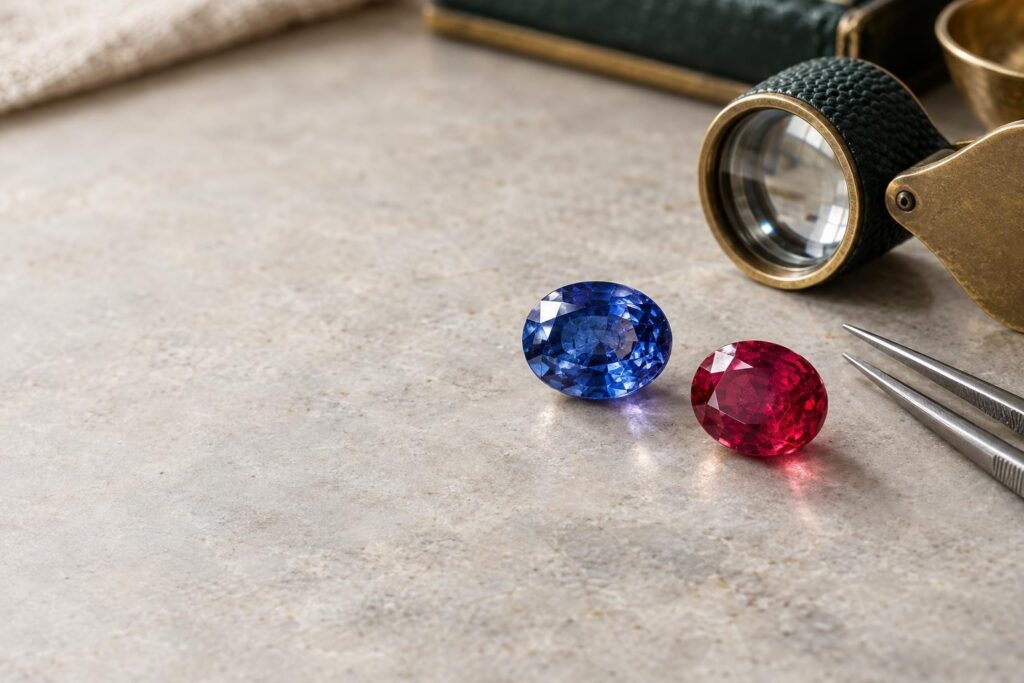
Why gemstone treatment disclosure protects you
Why should you need to know about treatments at all? Because you may not be able to see them. A treatment is any process, beyond cutting and polishing, that changes a gem’s colour or clarity (how clean it looks inside). Treatments are not always visible to an untrained eye, and even experts sometimes find them hard to spot 2.
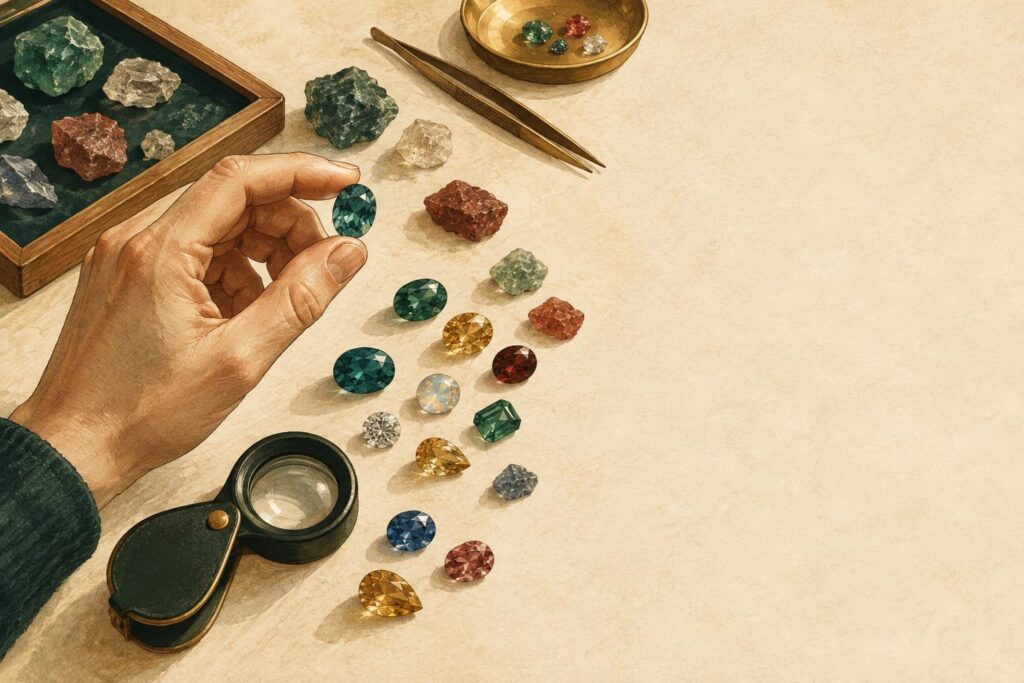
That gap is where a buyer can be misled. Without disclosure, you may believe a gem is naturally of higher quality, and so worth more, than it really is 2. Disclosure means the seller tells you clearly what has been done to the stone. It turns a guess into information you can check.
Treatments also matter after you buy. They can improve, or sometimes reduce, a gem’s durability. Some are permanent, some are long-lasting and some are short-lived in normal wear, so a treated gem may need special care 2.
What should an honest seller tell you?
Why look at an industry standard? Because it shows what good disclosure looks like, so you know what to expect. CIBJO, the World Jewellery Confederation, publishes guidance for the coloured stone trade. It says a seller should give you:
- All material information, whether or not you ask, and whatever the effect on the stone’s value.
- "Material information" means anything that would change the stone’s value, saleability or desirability if you knew it. That includes its care, cleaning or maintenance needs.
- Spoken disclosure in clear, understandable language, before the sale is completed.
- A written record, with the treatment description next to the gemstone’s name on the invoice and other sales documents.
- Suspected treatments too, when a treatment can’t be confirmed, can’t be detected scientifically, or isn’t economically feasible to test 1.
The same guidance explains the reason. Treatments may affect a gemstone’s value, are often not permanent, or may need special care. So the seller should tell you about the treatment and any special care it needs 1.
Why it helps to know the common treatment types
Why learn the names? Because once you know the main types, you can ask exactly which one was used. Here are several of them:
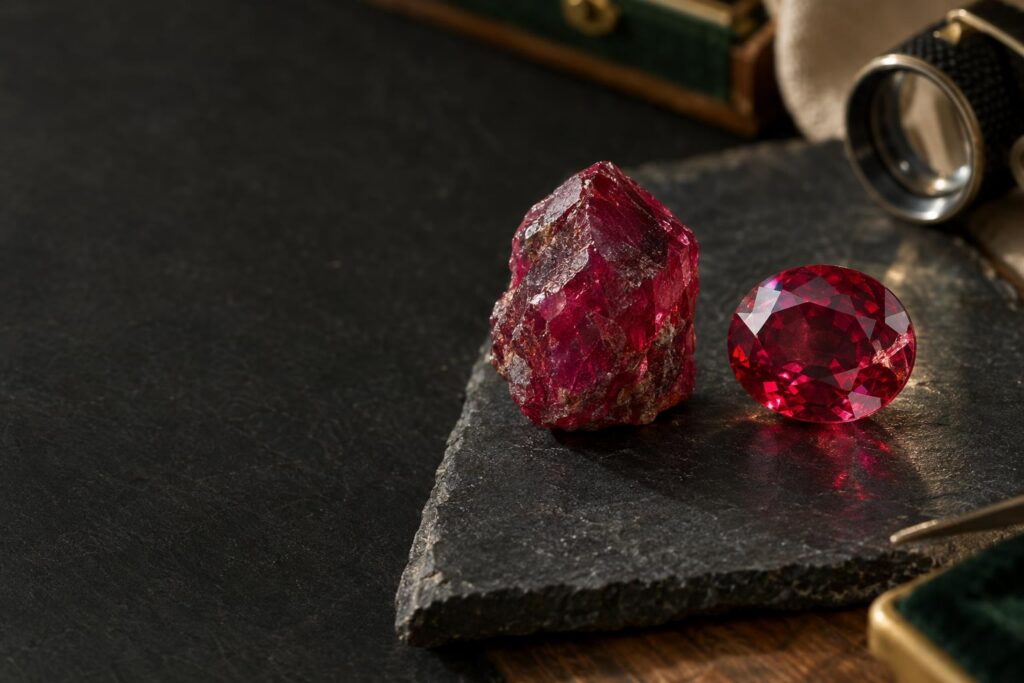
- Heating: the gem is exposed to high temperatures to change its colour and/or clarity. For gems such as ruby, sapphire, tanzanite and aquamarine, it is considered durable and permanent under normal handling. Read more in heat treatment in gemstones.
- Fracture or cavity filling: glass, resin, wax or oil is used to hide cracks that reach the surface, so the stone looks cleaner. See fracture filling.
- Surface coating: a thin film is added to the surface. Thin-film coatings can scratch easily, especially along facet edges (where two flat polished faces meet).
- HPHT treatment of diamonds: HPHT stands for high pressure, high temperature. It is hard to identify, even for seasoned gemmologists, and only a qualified lab can confirm it 2.
CIBJO’s list is longer, and it sets out how each treatment should be described to customers. It names waxed, fissure filled with oil, fissure filled with resin, fracture or glass filled, heated, heated with pressure, heated in flux, bleached, artificially irradiated (exposed to radiation), diffusion treated, dyed, impregnated and coated 1. For how diffusion works, see lattice diffusion.
Which treatments do labs look for? The Gemological Institute of America (GIA) tests diamonds for laser drilling, glass filling, surface coating, HPHT processing and irradiation. It tests coloured gemstones for heating, irradiation, fracture filling or clarity enhancement, coating, dyeing and diffusion. Pearls have their own list, including bleaching, heating, dyeing and filling 3.
How to read a lab report and a seller’s description
Why read the paperwork closely? Because the exact words tell you what was found, and what wasn’t. A lab report is a document from a gemmological laboratory that describes a stone and any treatments it detected.
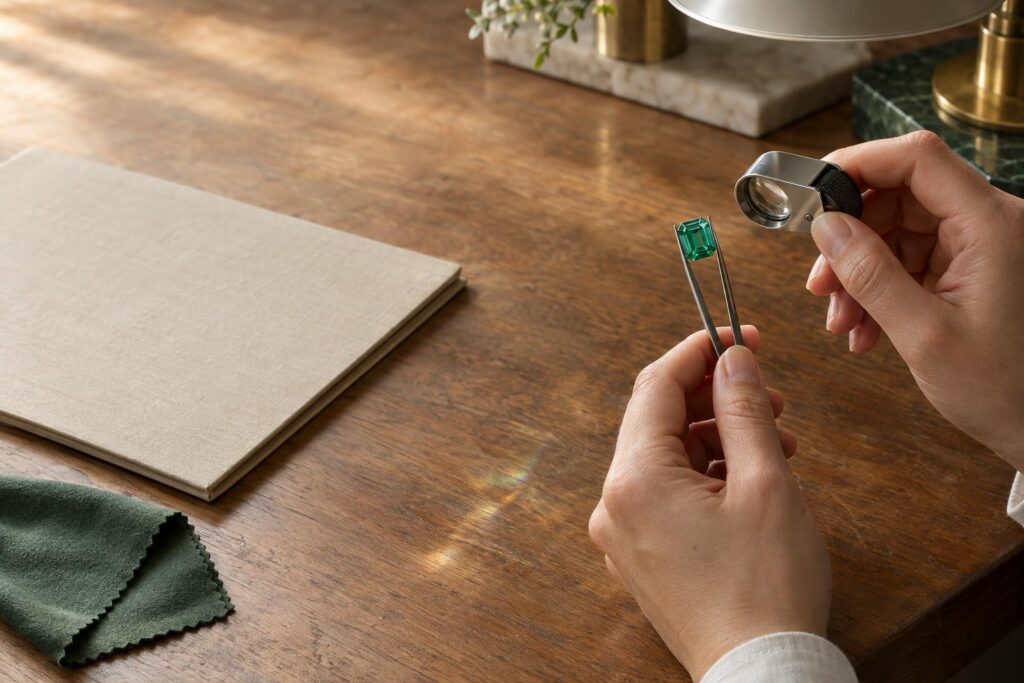
What a lab report says about treatments
The Laboratory Manual Harmonisation Committee (LMHC) is a group of labs that agree on shared report wording. It says all detected treatments must appear on the front of the report. All findings are the lab’s opinions, given according to the best knowledge available. A report’s content never reflects the value of a gemstone 4. For diamonds, see how to read a GIA diamond grading report.
Wording for ruby and sapphire
Why does wording matter here? Because labs use set phrases for heating in corundum, the mineral that ruby and sapphire belong to. Corundum with no signs of heating is reported as "no indications of heating (NH)". Heated corundum is reported as "Indications of heating (to modify the colour or transparency of the stone) (H)". If heat-altered inclusions (tiny features inside the stone) are seen, the comment may read "indications of (low temperature) heating" 5.
The name itself carries meaning too. "Sapphire" alone means the blue variety, and other colours take a colour word, such as "yellow sapphire" or "pink sapphire" 5. For more, see how to buy a sapphire.
Wording for emerald
Why does emerald get its own wording? Because labs grade how much filler sits in an emerald’s fissures (small cracks), and that grade tells you a lot. Emeralds with fissures filled with colourless to near-colourless oils, resins, wax or other fillers are reported as "Fissure filling" or "Indications of clarity enhancement / modification". The amount of filler is graded F1 (minor), F2 (moderate) or F3 (significant), and filled cavities are graded C1, C2 or C3 6.
Naming the filler is optional, so a report may not say which substance was used. An unfilled emerald with visible fissures may carry a note that the fissures could be filled at any time 6. See how to buy an emerald for more.
Reading an invoice or product description
What should the sales paperwork say? The treatment description should sit next to the gemstone’s name. You may also see short trade codes, such as H for heated or N for not treated. Under CIBJO’s guidance, these codes are for use inside the industry only, and "N" may only be used for stones with no known treatment 1. If you only see a code, ask what it means in plain words.
The downsides and limits of disclosure and lab reports
Why look at the limits? Because the labs themselves say some treatments can’t be detected, and that a report is an opinion. Knowing these gaps helps you ask better questions.
- Some treatments can’t be detected. Some common heating and irradiation treatments can’t be detected, for example in some tourmaline, tanzanite, aquamarine and topaz. And a report is an opinion, never a statement of value 4.
- A report is a snapshot. Emerald clarity enhancement can usually be reversed and repeated at any time. So the report only states the stone’s condition when it was examined 6.
- Some treatments need a lab. HPHT treatment of diamonds is hard to identify, even for seasoned gemmologists, and only a qualified lab can confirm it 2.
Care needs also continue after the sale. Oil and resin fillers may be unstable at high temperatures and with chemicals. So special care is needed when repairing jewellery set with filled emeralds, and removing the stone before repair is recommended 6.
These limits are why CIBJO’s guidance asks sellers to disclose suspected treatments, not only confirmed ones 1.
Why the right questions get you a clear answer
Why ask, if the seller should tell you anyway? Because a direct question gives the seller a clear chance to tell you everything, and the answers give you something to check and compare. These questions follow the CIBJO guidance and the lab wording above:
- Has this stone been treated, and exactly how? Ask for the treatment name in words, not a code.
- Is the treatment permanent, and does it need special care, cleaning or maintenance?
- Is any treatment suspected but not confirmed?
- Will the treatment be written next to the stone’s name on the invoice?
- Is there a lab report, which lab issued it, and what does the front say about treatments?
- For emerald: what is the filling grade, and was the filler named?
- For ruby or sapphire: does the report say "no indications of heating" or "indications of heating"?
If you’d like to talk through treatments before choosing a coloured centre stone, we offer a free consultation. You can book it online from any country at bookings.ralphjacobs.org, or visit our showroom in Secunda.
A treated stone and an untreated stone can each suit different people. What disclosure gives you is the facts, so you can decide which things matter most to you.
Frequently asked questions
Not necessarily. Treatments change colour or clarity, and can improve or sometimes reduce durability. What matters is knowing which treatment was used, whether it lasts, and what care it needs. Then you can weigh that against the stone’s look and value for yourself 2.
No. The LMHC says a report’s content never reflects a gemstone’s value. It records the lab’s opinions on the stone, including detected treatments, based on the best knowledge available 4.
It stands for "no indications of heating". LMHC member labs use it for corundum, the mineral of ruby and sapphire, that shows no signs of heat treatment. Heated stones are reported with "H" 5.
Some treatments can’t be detected. The trade code "N" may only be used for stones with no known treatment, and suspected treatments should be disclosed even when they can’t be confirmed 1.
These grades describe how much filler is in the emerald’s fissures: F1 is minor, F2 moderate and F3 significant. Filling can usually be reversed and repeated, so the grade reflects the stone when it was examined 6.