
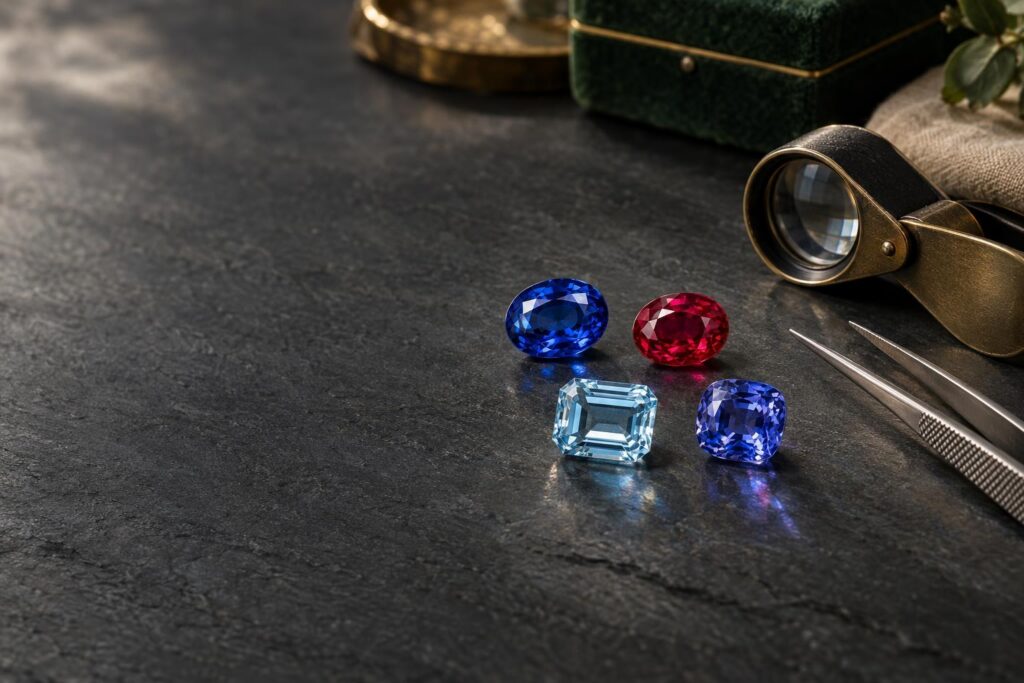
Why heat treated gemstones are so common
Have you been told your stone is heated, and now wonder whether something is wrong with it? Heating is a treatment, not an imitation. It means exposing a gem to high temperatures to change its colour, its clarity, or both 1. It can still affect value. That is why the trade standard of the World Jewellery Confederation (CIBJO) requires the seller to tell you about it 5.
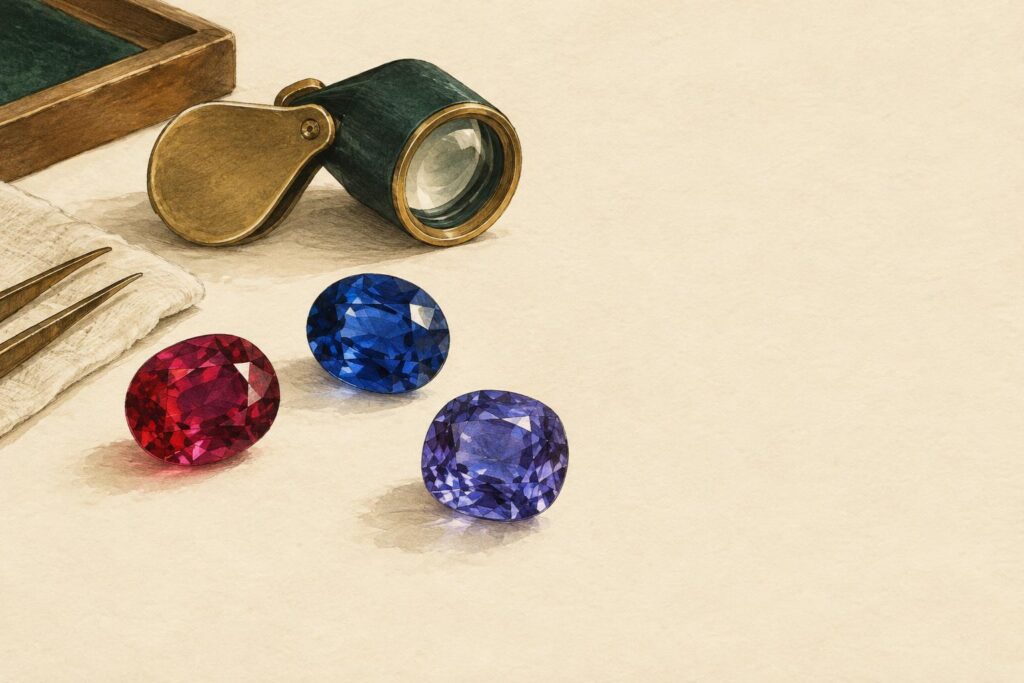
Why has heating lasted so long? Gemstones have historically and traditionally been treated 5. Heating gems was described and practised many centuries ago. The scholar Al-Biruni (AD 973–1048) wrote about heating rubies 6.
Heating is very common for aquamarine, amethyst, copper-bearing tourmaline, tanzanite and every colour of corundum 6. Corundum is the mineral that forms ruby and sapphire. For ruby, the Gemological Institute of America (GIA) goes further: most rubies have been heated 3.
Why heating changes a stone’s colour and clarity
Why heat a stone at all? To change how it looks. Heat treatment means exposing a gem to high temperatures to change its colour and/or clarity 1. It is a thermal process, for example in a furnace or kiln. Its trade code is "H", for "Heated" 5.
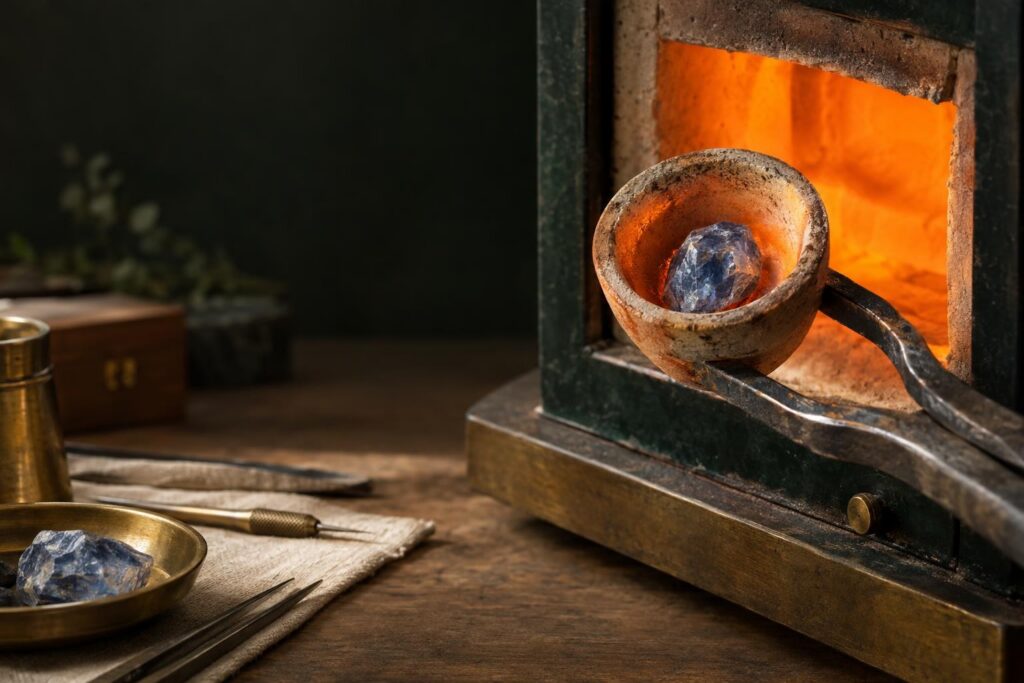
How hot does it get? Most gem materials are heated well below 1000 °C (1832 °F). Ruby and other corundum are usually heated at 700 to 1800 °C (1292 to 3272 °F). Heating has been done with a simple blow-pipe, and it is often done under controlled conditions 6.
What does it actually change? Results range from no visible change to a clear improvement in colour 6. In sapphire and ruby, heat can also remove "silk". Silk is a mass of tiny, needle-like inclusions, which are small features trapped inside a gem. Removing it can make the stone look more transparent 1.
Which gemstones are heated, and why each one is
Why does it help to know your stone’s type? The list below shows what heat can do in each stone, so you can see what heating may have done to yours:
What heating does to each gemstone
Heating changes a stone's colour, its clarity, or both. Switch between five commonly heated gems to see the colour each one is heated towards.
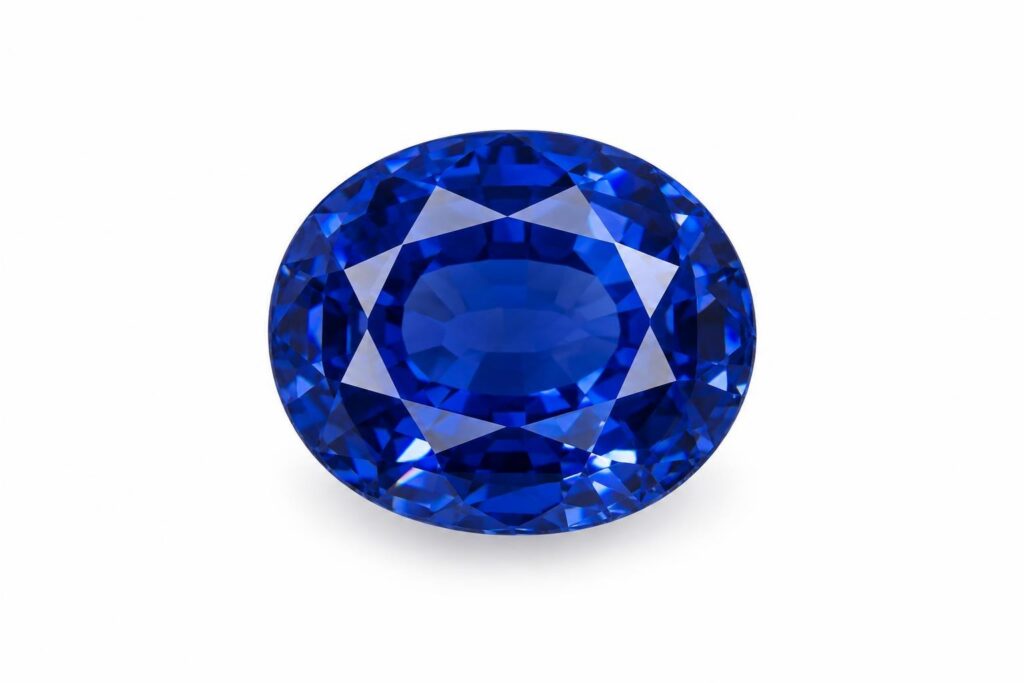
- Sapphire
- Heat can deepen, or even create, a blue colour in sapphire. It can also remove silk. Heating is an accepted treatment for sapphire.
- Ruby
- Heat can remove a purplish tint from ruby and leave a purer red. It can also remove silk. Ruby is commonly heated, and you should assume a ruby is heated.
- Aquamarine
- Heat can remove the greenish part of aquamarine's colour, so the stone looks bluer. Aquamarine is almost always heated.
- Amethyst to citrine
- Some amethyst can be heated and turned into citrine.
- Tanzanite
- Tanzanite is often heated at low temperatures to remove a brownish component. It is almost always heated, and the heating is stable, with no extra durability concerns.
These pictures show typical finished colours only. Results range from no visible change to a clear improvement, and heating is not always visible to the untrained eye, so you cannot tell by looking whether a stone has been heated. Pictures: AI-generated illustrations, checked for accuracy. They are not photographs of a real piece.
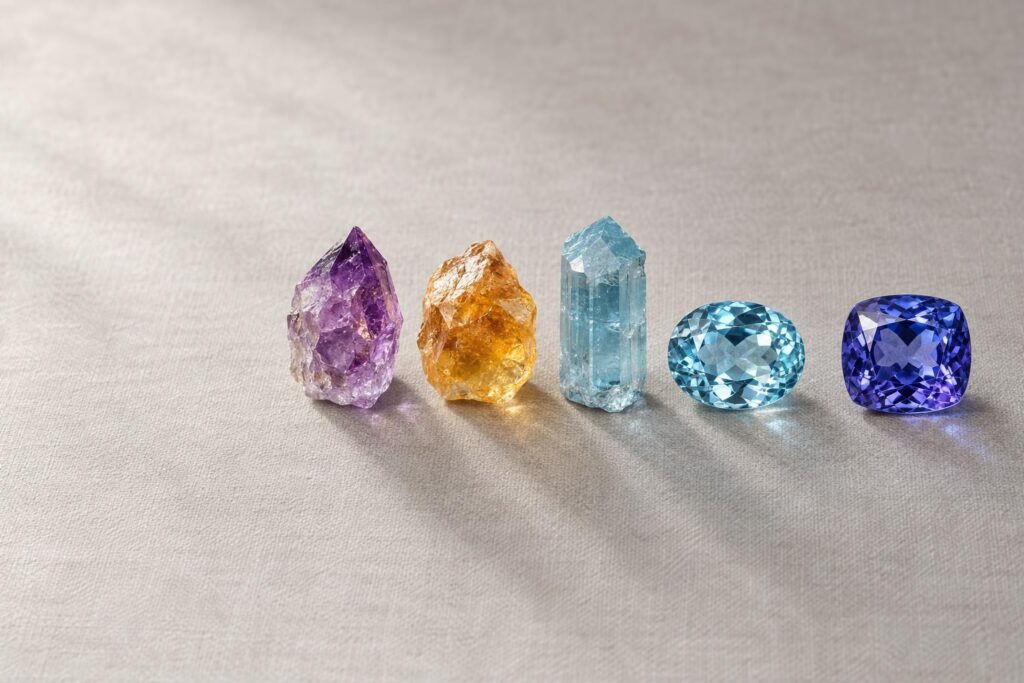
- Sapphire: heat can deepen, or even create, a blue colour, and can remove silk.
- Ruby: heat can remove a purplish tint to leave a purer red, and can remove silk.
- Aquamarine: heat can remove the greenish part of the colour, so the stone looks bluer.
- Amethyst: some amethyst can be heated and turned into citrine.
- Tanzanite: often heated at low temperatures to remove a brownish component.
- Zircon, topaz and tourmaline: these are also heated. 1
Tanzanite and aquamarine are almost always heated, and ruby commonly is 5. Tanzanite is routinely heat-treated, which turns it from mostly brownish to mostly blue to purple 4. If your stone is one of these, being told it is heated is what you would expect.
Why heat treatment is considered stable, and what care it needs
Why does stability matter? You want the colour you chose to stay. Heat treatment in all the gems listed above is considered durable and permanent under normal handling conditions 1. Heating in tanzanite, aquamarine and ruby counts as stable too 5.
How does that compare with other treatments? Some are less stable. In tanzanite, heating is stable, with no extra durability concerns. Rare coatings on tanzanite, by contrast, are not permanent and can be scratched in normal wear 4.
What care does a heated stone need? Intense heat may leave a stone slightly more brittle, meaning more likely to chip. So take care with pointed corners and edges 1. Tanzanite is stable in normal wear, but should not meet very high temperatures or sudden temperature changes 4. Rubies, as corundum, are fairly tough and typically resist heat, light and common chemicals 3.
Why heating affects a gemstone’s value
Why should a treatment change value if the stone looks beautiful? Treatments may affect a gemstone’s value. That is why the CIBJO trade standard requires the seller to tell the buyer about the treatment and any special care it needs 5. For ruby, all types of treatment affect value, and you should assume a ruby is heated 3.
How is a heated stone seen in the trade? Heating is an accepted treatment for sapphire. For fine-quality sapphire, a laboratory confirming no evidence of heat adds to its rarity and value 2. The same pattern holds for ruby: rubies with a lab report confirming no evidence of heat command a premium because they are rare 3.
What about other treatments? Lattice-diffused sapphire often has vivid colour, but is less valuable than heated sapphire 2. Diffused or glass-filled rubies are worth less than heated rubies 3. You can read how these treatments work under lattice diffusion and fracture filling.
Treatment is one thing to weigh. To see how the other qualities of a coloured stone are judged, read how coloured gemstones are evaluated.
The downsides: when a heated stone may not suit you
Why look at the other side? A heated stone is not the right fit for every buyer. These are the facts worth weighing.
- If a sapphire with no evidence of heat matters to you: for fine-quality sapphire, lab confirmation of no evidence of heat adds to its rarity and value. 2
- If a ruby with no evidence of heat matters to you: rubies with a lab report confirming no evidence of heat command a premium. A lab report also says whether there is evidence of any treatment. 3
- Heating does not always work: it can cause cracking or, if a stone is overheated, degrade it. 6
- Edges need more care: intense heat may leave a stone slightly more brittle, so pointed corners and edges need care. 1
- Some stones are more sensitive: tanzanite should not meet very high temperatures or sudden temperature changes. 4
Note that "no evidence of heat" speaks to heating only, so it is worth asking about other treatments too. Which of these facts matters depends on how you will wear the stone and what you value in it.
Why you should ask about heat, and how to ask
Why ask, if heating is so common? Because you can’t always see it. Treatments aren’t always visible to the untrained eye, which is why sellers need to disclose them 1. CIBJO’s trade standard, written for members of the jewellery trade, requires disclosure whether or not the buyer asks, and whatever the effect on value 5.
How should it be written down? Under CIBJO’s standard, the treatment description must appear next to the gem’s name on the invoice 5. Ask for treatment information in writing, too 3. Useful questions to ask a seller:
- Has this stone been heated, or treated in any other way?
- Can I have the treatment details in writing, next to the stone’s name?
- Does the treatment mean the stone needs any special care?
- Is there an independent laboratory report for this stone?
What does a lab report add? A lab report is a laboratory’s written findings about a stone. GIA identification reports state detectable treatments, and it is worth getting one when in doubt 2. Note the word "detectable": low-temperature heating in corundum can be hard to detect, and the main lab methods have limits 6.
For more on what good disclosure looks like, see how gemstone treatments should be disclosed. If you’d like to talk through treatments before choosing a coloured centre stone, Ralph Jacobs offers a free consultation, online from any country at bookings.ralphjacobs.org.
Frequently asked questions
No. Heating is a treatment, not an imitation. It exposes a gem to high temperatures to change its colour or clarity, and it is used on sapphire, ruby, aquamarine and tanzanite, among others 1.
Heating is accepted for sapphire. For fine-quality sapphire, a lab confirming no evidence of heat adds to its rarity and value 2.