Why zircon is not the same as cubic zirconia
If you have mixed up zircon and cubic zirconia, you are not alone. The two names sound almost the same, yet one is a natural mineral and the other is a man-made material. Zircon is a colourful gem, unfairly confused with cubic zirconia.1
How different are they? The two resemble each other only superficially. Both contain the element zirconium, but in every other important way they are completely different materials.5 Zircon is a natural mineral called zirconium silicate, written ZrSiO₄.1
So what is cubic zirconia? Cubic zirconia (CZ) is a man-made simulant. A simulant is a material that looks like another gem but has a very different chemistry, crystal structure and properties. CZ was introduced in the late 1970s. It is made by heating powdered zirconium oxide to its melting point in a metal chamber, then letting crystals grow as the melt solidifies.4
Why zircon shows so much sparkle and colour
Why does zircon catch the eye so readily? It bends light strongly and splits it into colours. Brilliance is the white light a stone returns to your eye, and dispersion, often called fire, is light split into rainbow flashes. Zircon’s very high lustre (surface shine), refractive indices (how much it bends light) and dispersion give it plenty of both.1
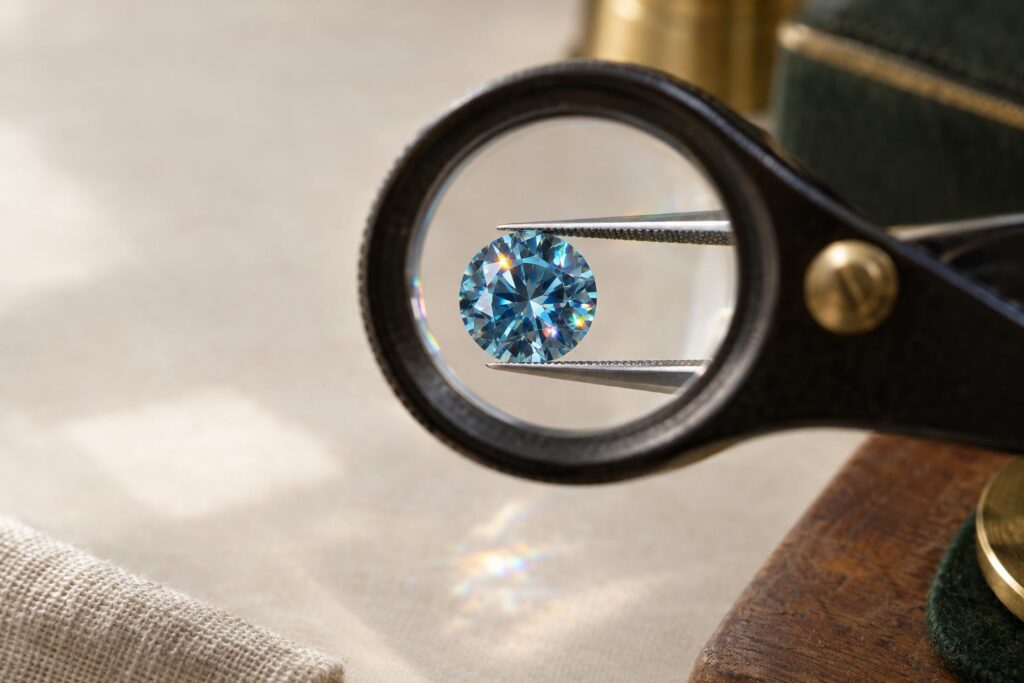
How strong is the effect? Zircon has strong double refraction, which means light splits into two rays inside the stone. As a result, you can see twice as many facets (the flat polished faces) and twice as much fire.1 Zircon’s fire comes close to that of diamond.5
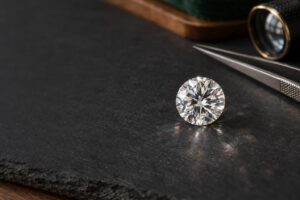
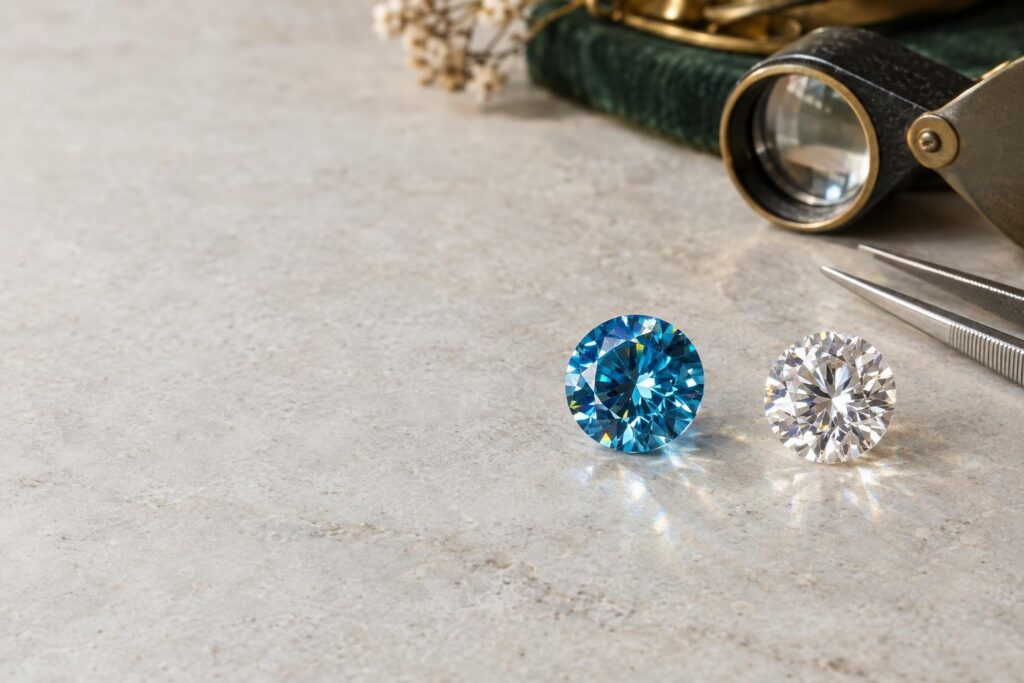
This is why colourless zircon has a long history alongside diamond. Its brilliance and fire are close enough to diamond’s to explain centuries of confusion between the two.1 It was widely used as a diamond alternative in the 19th century,3 until synthetics such as cubic zirconia replaced it.6 Natural zircon is a classic diamond simulant, alongside glass and synthetic spinel.4
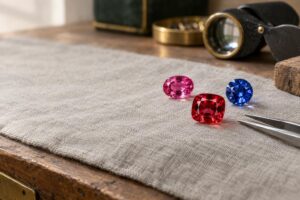
What colours does zircon come in? Zircon can be colourless, yellow, orange, brown, pink, red, green or blue. These colours come from traces of rare radioactive elements at different stages of breakdown.6 There are also earth tones such as cinnamon and sherry, and zircon is especially admired for its blues.3
Why most blue and colourless zircon has been heated
Why ask about treatment? Because the colour you see may not be the colour the stone had when it came out of the ground. Most blue, white and golden-yellow zircons are brown when mined, and heat treatment turns some blue and others white or yellow.5
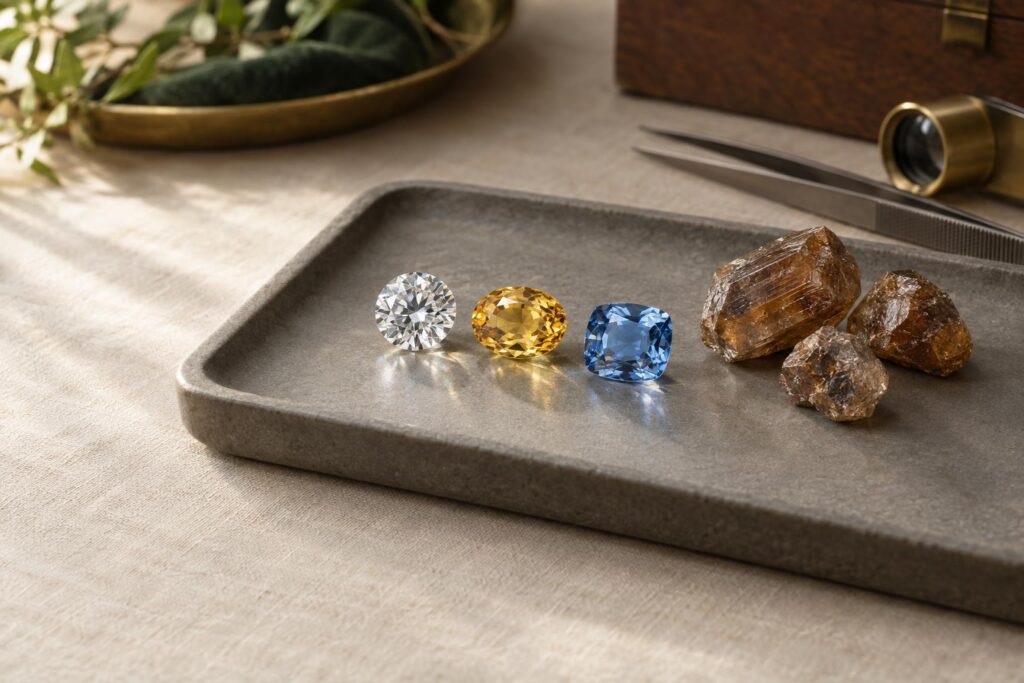
How common is it? Zircon is commonly heat-treated to produce blue and colourless stones.2 Blue zircon is almost always the result of heat treatment.3 Colourless and blue zircons are rare in nature, so those used in jewellery have usually been heated.6
What else should you know? Fracture filling, where a substance is put into cracks to make them less visible, is possible but rarely used on zircon. Some heat-treated stones may also go back to their original colour, usually light brown, after long exposure to bright light.2
Why name treatments at all? Knowing about a treatment helps you understand a stone and how to look after it. This guide follows a simple editorial standard: common treatments are always named. Disclosure rules differ between countries, so you can ask any seller whether a zircon has been treated. How gemstone treatments should be disclosed and Heat treatment in gemstones explain more.
Why zircon needs gentle wear despite its hardness
Why can a fairly hard stone still chip? Hardness and toughness are different things. The Mohs scale measures how well a stone resists scratching, while toughness is how well it resists breaking or chipping. GIA rates zircon 6 to 7.5 on the Mohs scale, with fair to good toughness.2 The Australian Museum gives a hardness of 7 to 7.5, so the figures vary slightly by source.6
How does wear show? Zircon can be brittle, so wear and store it so it does not rub hard against other materials.2 Zircons, especially heat-treated stones, will chip along facet edges (the sharp lines where facets meet) if they are not worn and handled carefully. Sapphire, ruby and diamond can scratch zircon, and so can some household abrasives.5
What about chemicals, light and cleaning? Zircon is stable when exposed to chemicals. Clean it with warm, soapy water; ultrasonic and steam cleaners are not recommended.2 Some heat-treated stones may discolour under ultraviolet light, so it is best not to leave them in sunlight for long periods.5
Why some zircon is older than almost anything on Earth
Why does zircon fascinate people beyond jewellery? Zircon found in Australia is the oldest mineral on Earth, at 4.4 billion years old.1 A crystal of the same mineral that sparkles in a ring has also helped tell the story of our planet’s earliest days.
Why zircon is linked with December
Looking for a December birthday gem? Zircon is a December birthstone.1 Because zircon occurs in many colours, from colourless to blue and warm browns, a December piece need not be one single shade.6
Why cut, clarity and colour matter when buying zircon
Why look closely at the cut? Zircon is hard to cut because it is brittle. Cutters usually choose the brilliant style, a facet pattern they use to show off its lustre and fire. The "zircon cut" adds eight extra facets around the pavilion, the lower part of the stone.3
The colours of zircon
Zircon comes in far more than one shade. Switch between the colours to see the range and learn which ones are usually the result of heating.
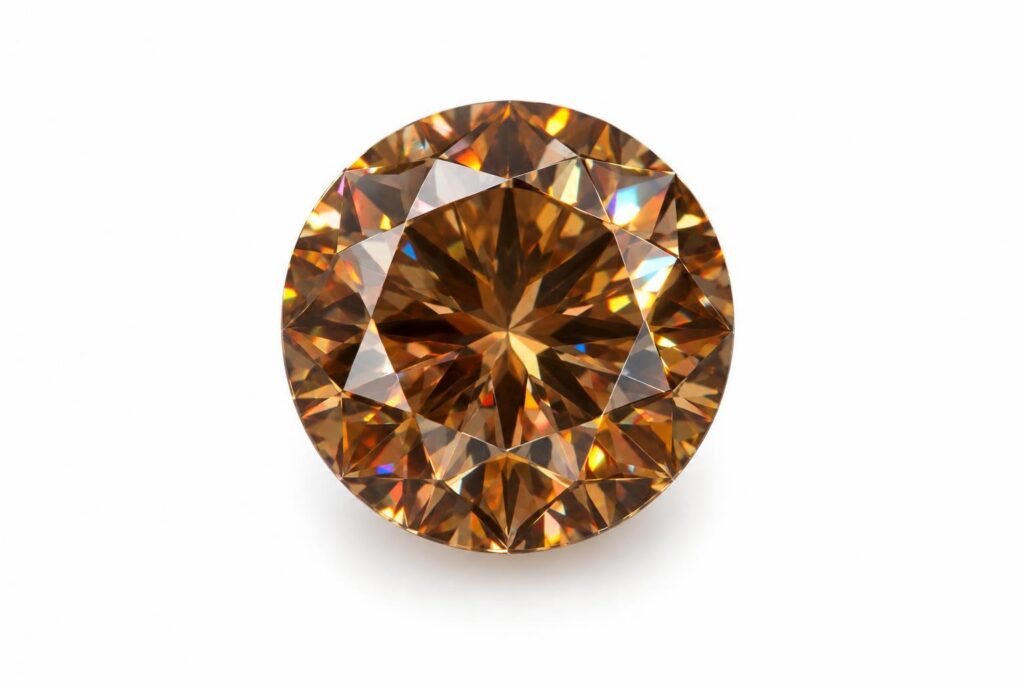
- Warm brown zircon
- Warm browns are part of zircon's natural range. Most blue, white and golden-yellow zircons start out brown when they are mined.
- Golden-yellow zircon
- Most golden-yellow zircons are brown when mined. Heat treatment turns some of them yellow.
- Colourless zircon
- Colourless zircons are rare in nature, so those used in jewellery have usually been heated. Zircon's fire comes close to that of diamond.
- Blue zircon
- Blue zircon is almost always the result of heat treatment. It ranges from very slightly to very strongly greenish blue. Some heat-treated stones may go back to their original colour, often light brown, after long exposure to bright light.
- Red zircon
- Red zircons are valued as collectors' stones.
- Green zircon
- Green zircons are also valued as collectors' stones.
The pictures show one typical shade for each colour. Individual stones vary, and blue zircon in particular ranges from very slightly to very strongly greenish blue. Pictures: AI-generated illustrations, checked for accuracy. They are not photographs of a real piece.
What about clarity and colour? Most faceted zircon is free of inclusions (internal features) that you can see with the eye, while many untreated zircons look cloudy or smoky. Blue zircon ranges from very slightly to very strongly greenish blue. Red and green zircons are valued as collectors’ stones, and cat’s-eye zircons appear occasionally.3 How coloured gemstones are evaluated explains these factors in more detail.
Why check size as well as weight? Zircon weighs more than most gems of the same size.1 Carat is a measure of weight, not size, so it can help to ask for a zircon’s measurements in millimetres too.
Is cubic zirconia a lab-made version of zircon? No. It is a different material: a man-made simulant. CZ has a Mohs hardness of 8.5, can be produced in almost any colour, and will yellow over time. It has slightly more fire but less brilliance than diamond.4 If you are unsure what a stone is, you can ask the seller to name the material in writing.
Why the setting and the way you wear it matter
Does zircon suit jewellery you wear often? It can be worn in all types of jewellery if you avoid rough wear and hard blows.2 With reasonable care, zircon is suitable for all kinds of jewellery and will last a lifetime of wear.5
Since zircon’s facet edges can chip with careless wear, you may want to ask a jeweller how a setting holds and surrounds the stone. Ring settings explained shows the main styles, and Which gemstones suit everyday rings? looks at durability across different stones.
Why this entry is here to help you learn
This entry describes zircon so you can understand it before you decide anything. Inclusion in this guide does not confirm that Ralph Jacobs stocks this gemstone. If you would like to talk through zircon or another coloured stone, we offer a free consultation, online from any country at bookings.ralphjacobs.org.