
Why do two stones of the same size look so different? Brilliance is often the reason. For some people in the trade, brilliance simply means the life a gem has 4. Others describe a stone as lively, dull or dead, and definitions of brilliance vary. GIA, a gem laboratory, prefers the word brightness for the white light seen when you look at a stone face-up (from the top). It avoids "brilliance" because many people also include contrast in that word 2.
Cut: what proportions do to light
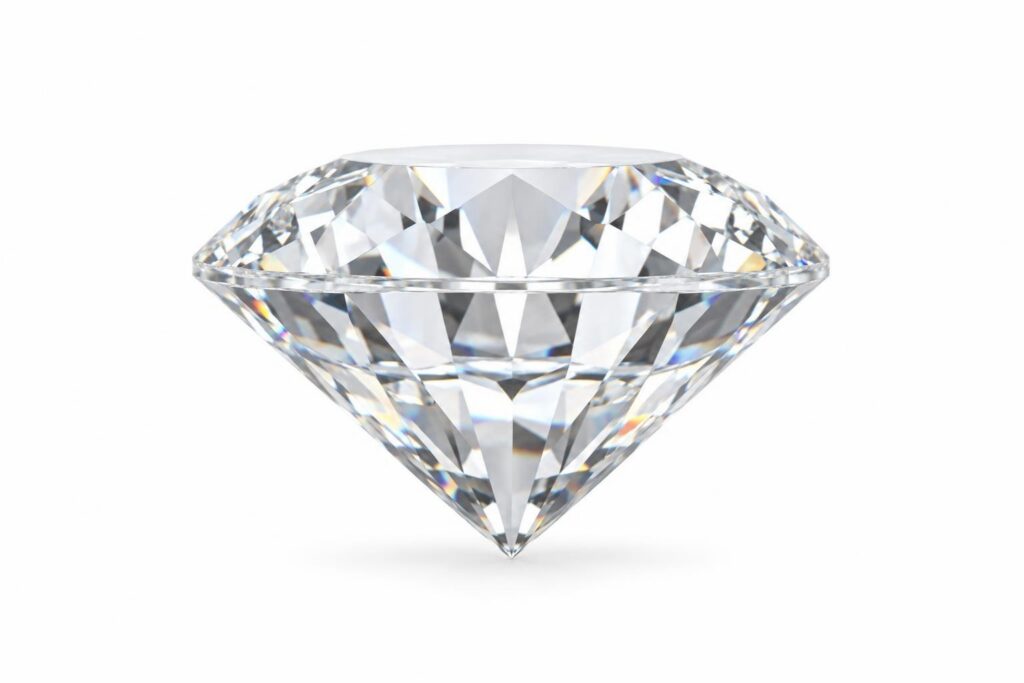
Cut grades for round brilliants run: Excellent, Very good, Good, Fair, Poor.
Pictures: one AI-generated illustration of a diamond, adjusted for each grade. They show how the grades differ; they are not a grading of any stone.
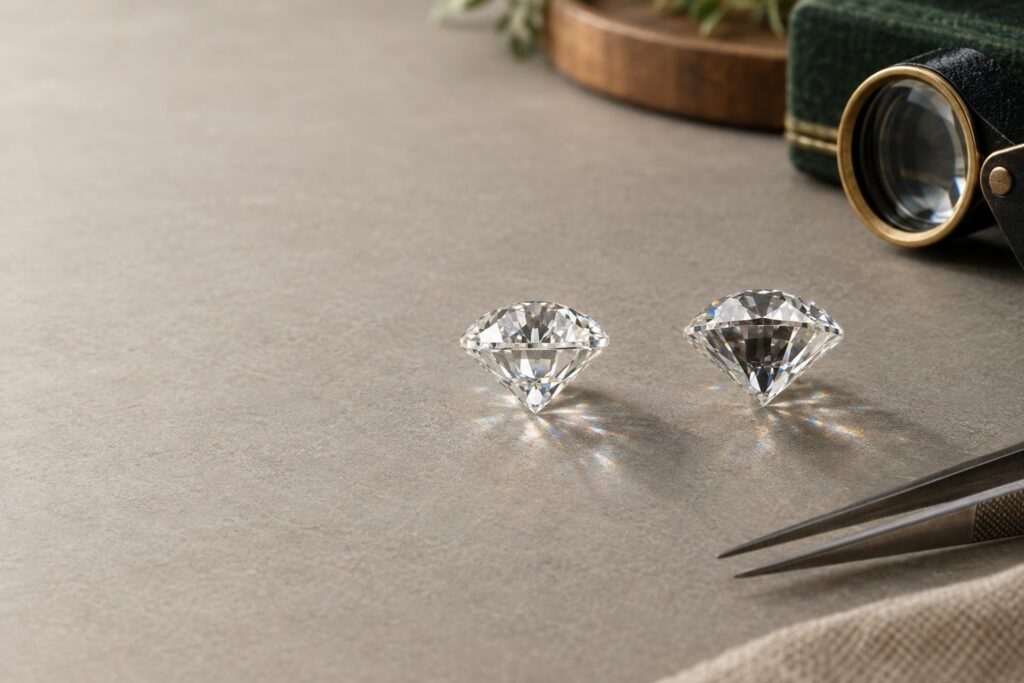
How does a stone return light? Its cut decides how light enters the stone, reflects inside it and exits again. A pavilion (the lower part of the stone) that is too shallow or too deep can let light leak away 1. Refractive index measures how far a material bends light. The higher it is, the shallower a gem can be cut without windowing, a see-through patch in the middle 4. Diamond has a large refractive index, so light that enters has trouble getting back out and leaves through only a few exits 6.
What else affects it? Polish is the smoothness of each facet (the small flat faces cut on a gem). Smooth polish lets light travel cleanly through a diamond, which enhances brilliance 1. In the lowest clarity grades, obvious inclusions (tiny features inside the stone) may affect brilliance 5. Brilliance is also different from fire, the flashes of rainbow colour (see dispersion), and from scintillation, the sparkle and light-and-dark pattern you see as the stone moves 2. Read more in Brilliance, Fire and Scintillation Explained.
Example: Picture two gems of the same type and size side by side. One is cut too deep and shows too many dark areas, while the other returns more light and looks brighter 4. That difference in white light return is what people mean by brilliance.