
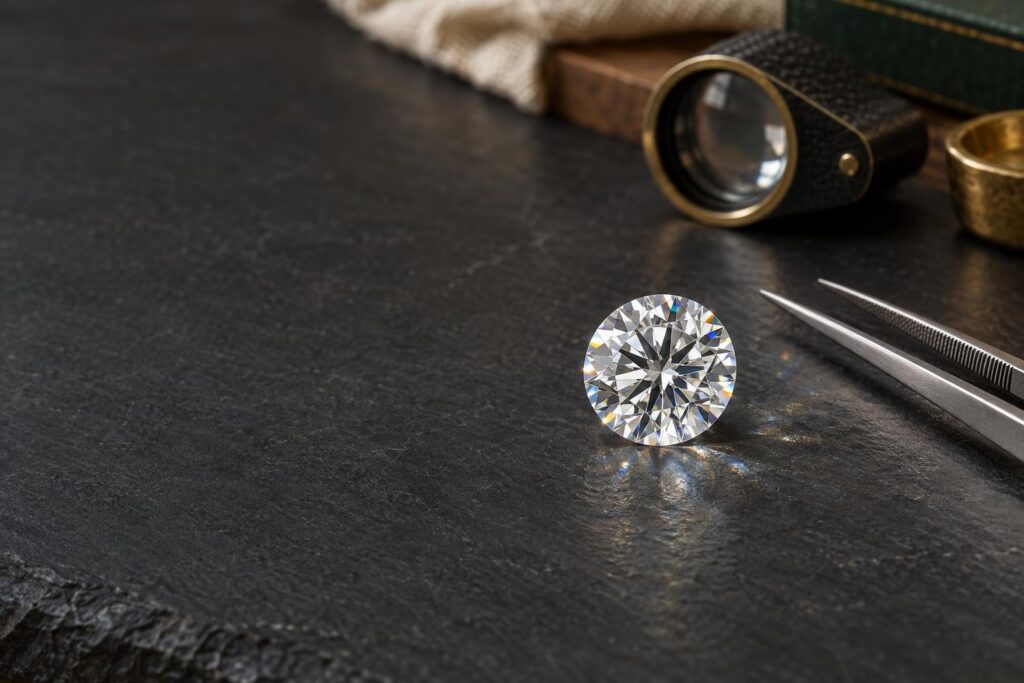
Why cut is said to matter most of the 4 Cs
Have you been told that cut is the most important of the 4 Cs? If you are comparing diamonds, it helps to know why one sparkles and another looks flat. Of the 4 Cs (cut, colour, clarity and carat), cut is said to have the greatest impact on a diamond’s beauty. A well-cut diamond can look brilliant even with lower colour and clarity grades, while a poorly cut one can look dull even with top grades 1.
Cut: what proportions do to light
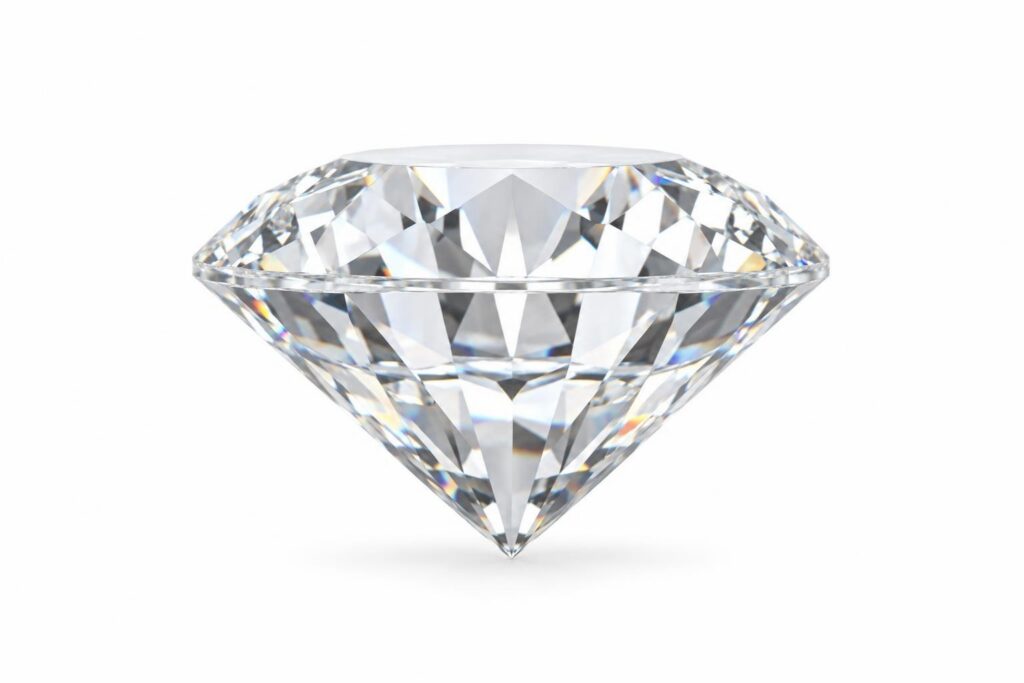
Cut grades for round brilliants run: Excellent, Very good, Good, Fair, Poor.
Pictures: one AI-generated illustration of a diamond, adjusted for each grade. They show how the grades differ; they are not a grading of any stone.
Why separate cut from shape? Shape is the outline, such as round or oval. In grading, diamond cut means the combined proportions, polish and symmetry of a stone, and it isn’t the same thing as shape 4. This article explains how those three affect light, what goes wrong in shallow or deep stones, how cut grades work and what you can check.
Why light decides how a diamond looks
Why talk about light at all? The sparkle you see is light coming back out of the stone. Cut determines how light enters, reflects and exits a diamond, and that creates brightness, fire and scintillation 1.
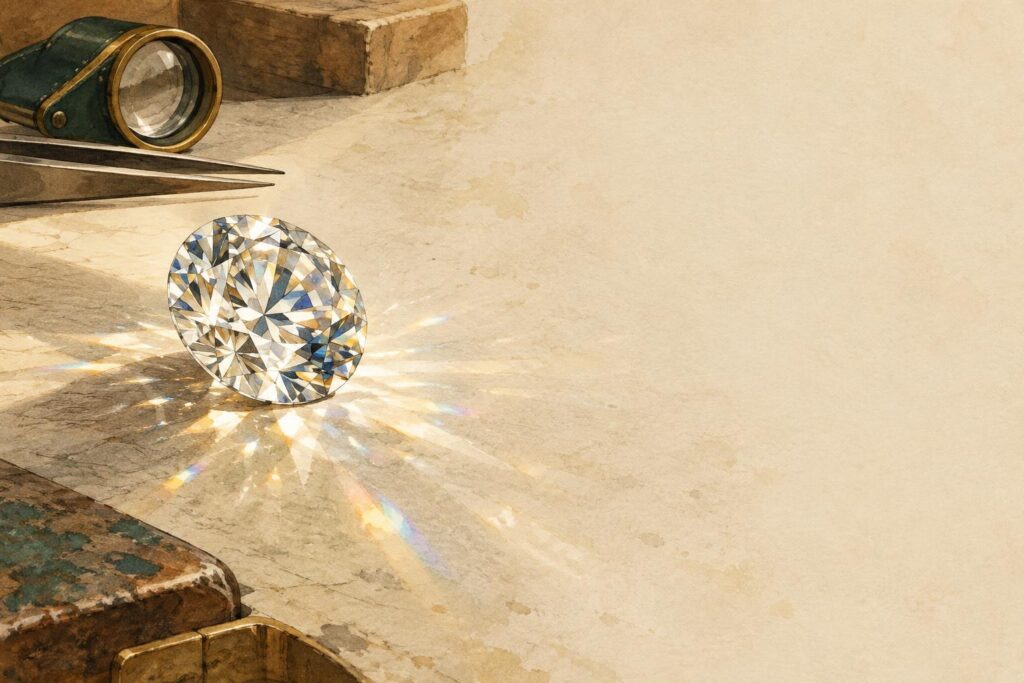
How does it work? Light that enters a diamond is refracted, which means it bends. Facets are the small flat polished surfaces on the stone, and a full-cut diamond has 57 or 58 of them. Dispersion splits white light into spectral colours, like a prism 4.
- Brightness, also called brilliance: the light the stone returns to your eye. A well-cut diamond sends more light out through its top part, the crown 2.
- Fire, from dispersion: flashes of rainbow colour as white light is split.
- Scintillation: the sparkle, plus the pattern of bright and dark areas you see as the stone or your eye moves 3.
IGI, another grading laboratory, names the elements of diamond beauty as brilliance, brightness, fire, contrast and scintillation 4. For more on each one, see Brilliance, Fire and Scintillation Explained.
Why proportions, symmetry and polish steer the light
Why do three separate qualities matter? Together they shape what the light does. The planning, proportions, cutting precision and finish decide how brilliant, dispersive and scintillating a diamond will be 4.
Why the parts of a diamond have names
Why learn these names? The grading facts later in this article refer to them. Picture a round diamond from the side. The table is the large flat facet on top, and the crown is the upper part. The girdle is the thin outer edge around the widest point.
Below the girdle sits the pavilion, the lower part that narrows to a point. Pavilion depth is the distance from the bottom edge of the girdle to the culet, the tip at the bottom 2.
Why symmetry and polish fine-tune it
Why look at the finish as well? Symmetry is how neatly the facets line up, and polish is how smooth each facet surface is 1. Every GIA grading report includes both. Each is graded from Excellent to Poor, based on features visible under 10x magnification 6.
- Polish features include scratches, abrasions, burns, pits, nicks and polish lines.
- They also include ‘lizard skin’, an uneven texture from polishing against the grain.
- Symmetry features include uneven crown angles and a crown height that varies around the stone.
- They also include an off-centre culet and extra facets placed without regard for symmetry 6.
Why shallow and deep diamonds lose sparkle
Why should you care about depth? If the pavilion is too shallow or too deep, light escapes from the side of the stone or leaks out of the bottom 2. Light that leaks away is light you don’t see as sparkle from above.
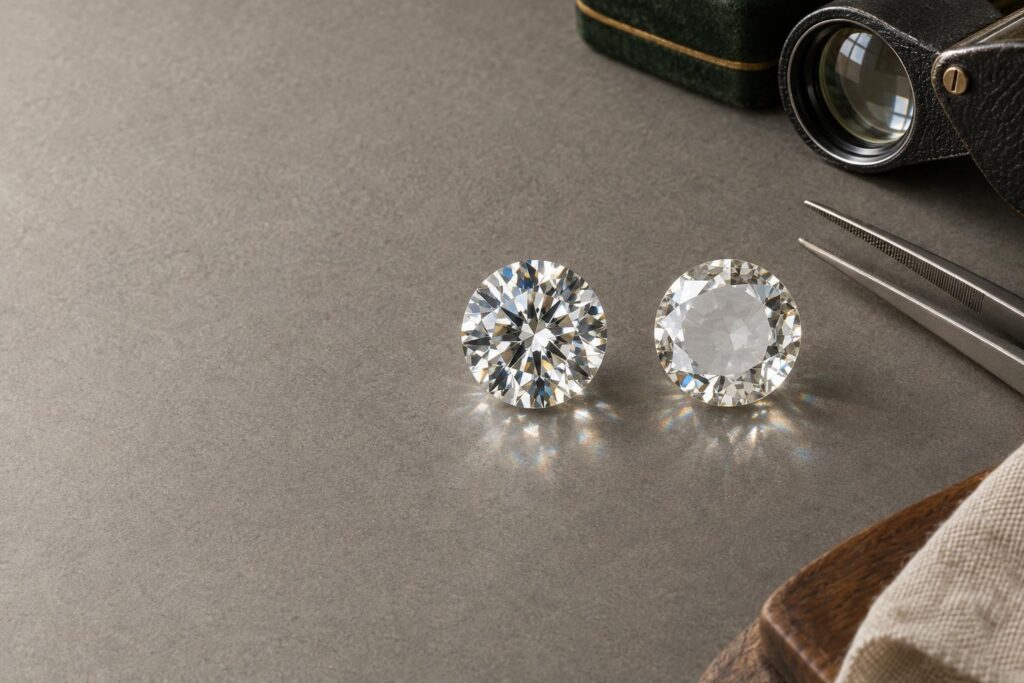
GIA’s research downgraded stones with very shallow or very deep pavilion angles. Experienced observers found their face-up look, meaning how the diamond looks from above, less desirable. GIA’s weight ratio also flags stones so deep that they look smaller face-up than their carat weight would suggest 3. For how weight and size relate, see Diamond Carat Weight vs Visible Size.
Why does the thin outer edge matter? The girdle shouldn’t be too thick or too thin. A thin girdle can chip, and a thick one hides weight 1. Stones with extremely thin girdles carry more risk of damage and get a lower durability rating 3.
Why cut grades help: how they work
Why rely on a grade and not only your eyes? A grade sums up many measurements in one word you can compare. GIA’s cut grade looks at seven things: brightness, fire, scintillation, weight ratio, durability, polish and symmetry. Round brilliants are graded Excellent, Very Good, Good, Fair or Poor 1.
How is the overall grade set? It is the lowest rating among five of those components: brightness, fire, scintillation, weight ratio and durability. So a stone with Very Good polish or symmetry can still get an Excellent cut grade 1.
How was the system built? GIA spent 15 years on it, using computer modelling plus more than 70,000 observations of real diamonds 1. The models of light inside a round brilliant were checked against what trade members and consumers actually saw 3.
How is a stone measured? GIA measures the facets with optical devices. It compares the results with a database of more than 38.5 million proportion sets, and expert graders check polish and symmetry by eye 2.
What do the lower grades mean? Cut grades below Very Good usually show clearly less brightness or symmetry. Those stones may look darker, less fiery or smaller face-up 1. In a Good grade, some light may escape out of the bottom 4. For how the two laboratories differ, see GIA vs IGI Diamond Reports.
Why some reports show a light map
Why look at a picture of light? It shows where a stone returns light and where it doesn’t. Some reports include an ASET (Angular Spectrum Evaluation Tool) map, made by software that traces individual rays of light. It shows optical and physical symmetry and how efficiently the stone handles light 5.
- Red marks the brightest areas, which pick up the strongest light from above.
- Green also shows returned light, but from a dimmer, indirect source.
- Blue shows the pattern of dark reflections that gives contrast 5.
Why a cut grade has limits: the downsides to know
Why not rely on the grade alone? Not every diamond can get one. GIA has no cut grade for fancy shapes, such as oval, pear or emerald, because setting standards for them is far more complex than for rounds 2. If you prefer a fancy shape, Choosing a Diamond Shape covers what changes.
Why read past the headline word? The overall grade is the lowest of five components, so one weaker component sets it. Polish or symmetry can also sit at Very Good under an Excellent grade 1. Every GIA report lists polish and symmetry separately, and together they describe the quality of the stone’s finish 6.
Why know how the grade was reached? A grade comes from a laboratory’s own method. For GIA, that means optical measurements compared against a large database, with expert graders checking polish and symmetry by eye 2. Other laboratories may describe and grade cut in their own way.
What to check when you compare diamonds
Why make a checklist? It turns the ideas above into simple questions you can ask about any diamond, wherever you buy it.
The overall cut grade. For a round brilliant, note where it sits on the Excellent to Poor scale. Grades below Very Good usually show clearly less brightness or symmetry 1.
Polish and symmetry. Read these separate grades, not only the headline grade. Every GIA report includes them, graded from Excellent to Poor 6.
Depth and face-up size. GIA downgraded stones with very shallow or very deep pavilion angles, and its weight ratio flags stones that look small for their carat weight 3. The Carat to Millimetre Estimator can help you compare sizes.
The girdle. Check how the edge is described. A thin girdle can chip, and a thick one hides weight 1.
Dark areas. Some dark is normal, because scintillation includes a pattern of bright and dark areas 3. On an ASET map, blue shows the dark reflections that give contrast 5. Stones with lower cut grades, though, may look darker overall 1.
Fancy shapes. There is no GIA cut grade for these 2. A GIA report still includes polish and symmetry, but those describe the quality of the finish, not the whole cut 6.
To see where these details appear, read How to Read a GIA Diamond Grading Report. For a visual guide, watch the video What Cut Quality Actually Looks Like.
If you’d like to compare cut grades and stones with someone beside you, Ralph Jacobs offers a free consultation. You can book online from anywhere at bookings.ralphjacobs.org, or reach us on WhatsApp or at our showroom.
Frequently asked questions
Cut is said to have the greatest impact on a diamond’s beauty. A well-cut diamond can look brilliant with lower colour and clarity grades, while a poorly cut one can look dull even with top grades 1.
No. Shape is the outline, such as round or oval. Cut means the combined proportions, polish and symmetry of the stone 4.
GIA has no cut grade for fancy shapes because setting standards for them is far more complex than for round diamonds 2. A GIA report still lists polish and symmetry, which describe the quality of the finish.
Yes. GIA’s overall grade is the lowest rating among brightness, fire, scintillation, weight ratio and durability. A stone with Very Good polish or symmetry can still get an Excellent cut grade 1.
Yes. GIA’s weight ratio flags stones so deep that they look smaller face-up than their carat weight would suggest, and its research downgraded very deep pavilion angles 3.