
Why does a grading report mention the culet? It is part of the cut, not something inside the stone like an inclusion, and its size can change how the diamond looks. The culet sits at the tip of the pavilion, the lower part of the stone. When it is a facet, it is polished flat and parallel to the table, the large top facet. Reports grade its size as None, Very Small, Small, Medium, Slightly Large, Large, Very Large or Extremely Large 1. None means there is no facet, which the trade sometimes calls a pointed culet 3.
The parts of a diamond
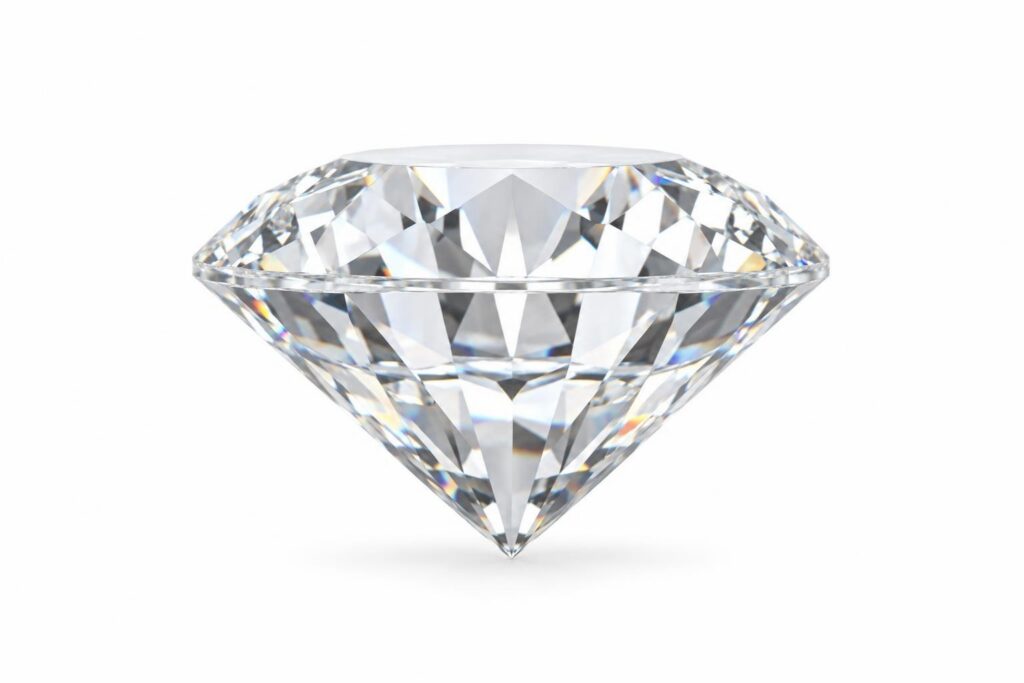
- Table
- The large flat facet on top. Most light enters the stone here.
- Crown
- The upper part, between the table and the girdle. Its angled facets help split light into flashes of colour (fire).
- Girdle
- The thin outer edge at the widest point. The setting usually grips the stone here.
- Pavilion
- The lower part, below the girdle. Its angle decides how much light reflects back up through the top.
- Culet
- The point, or tiny facet, at the very bottom of the pavilion.
- Total depth
- The height from the table to the culet, compared with the diameter. It is one of the measurements behind the cut grade.
Pictures: one AI-generated illustration of a diamond, adjusted for each grade. They show how the grades differ; they are not a grading of any stone.
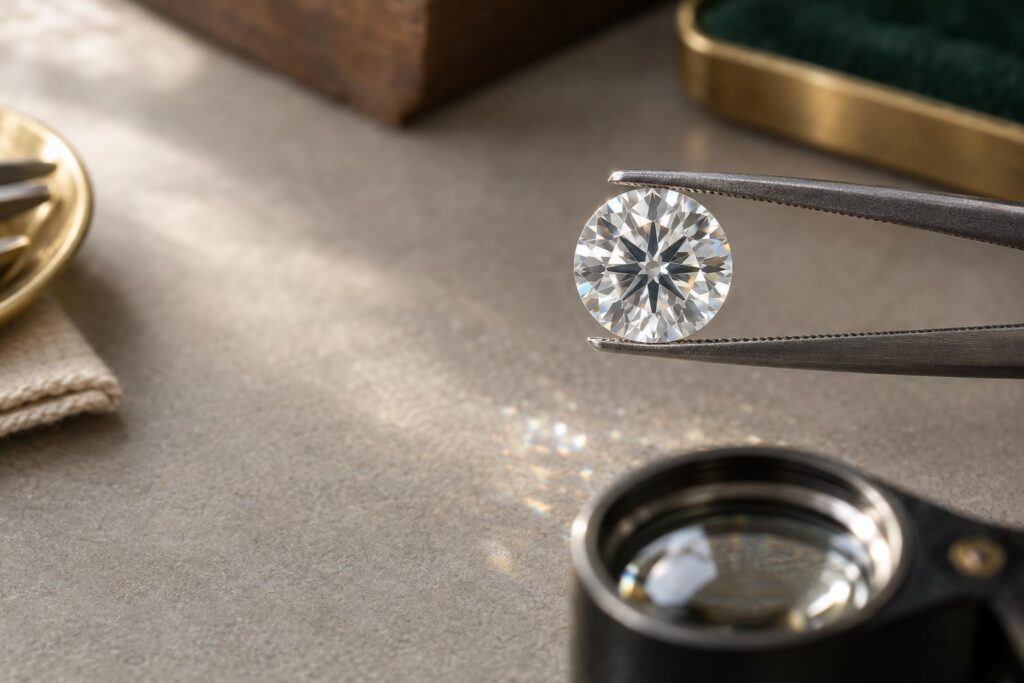
Why does size matter? Graders judge culet size by looking down through the table at 10x magnification 1. A larger culet can spoil the pattern you see from the top and lower the cut grade 3. Ideally the culet cannot be seen with the unaided eye, and None, Very Small or Small fall in the excellent range on a GIA report 2. Older styles, such as old European cuts, often have larger culets, so GIA does not judge them by standards they were never cut to meet 5.
Why do pointed culets need care? A culet facet was meant to protect the point from chipping 2. Most diamonds come to a sharp point, which can chip when loose stones knock together in stone papers, the folded packets dealers store them in. Once a diamond is set in jewellery, there is little risk of damaging the culet 4.
Example: Picture two reports side by side. One lists the culet as None, so that diamond ends in a sharp point. The other lists it as Large, so its flat bottom facet may be visible when you look down through the top. Our guide on how to read a GIA diamond grading report shows where this line appears.