Why aquamarine is named after seawater
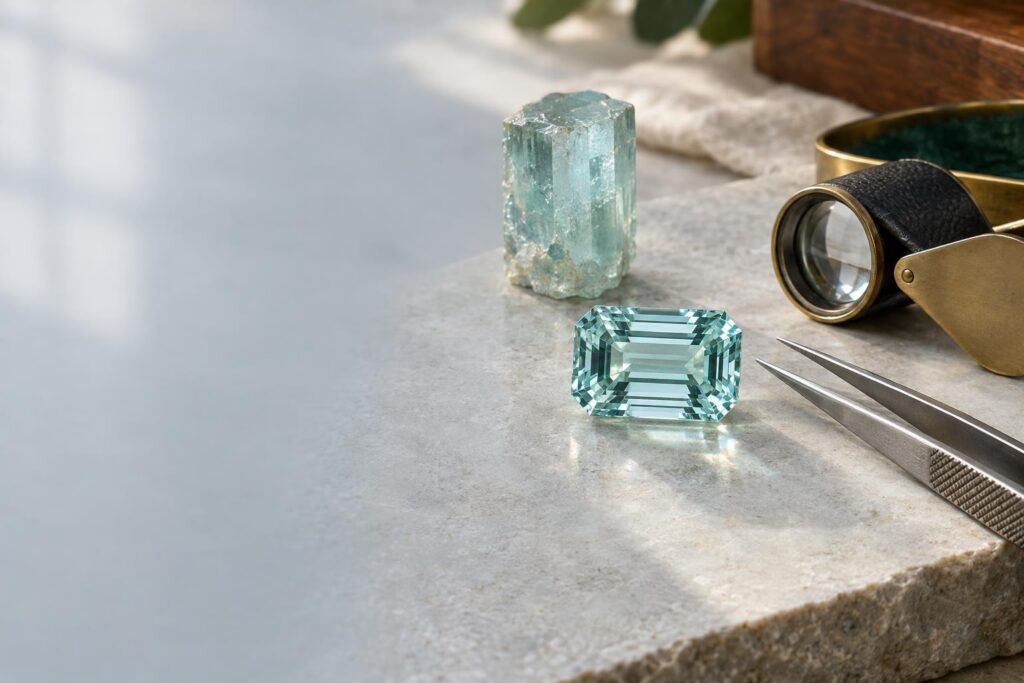
If you love a calm, clean blue and want a stone you can wear every day, aquamarine is worth understanding. Its name comes from the Latin for seawater, and its gentle colour often matches that idea 4.
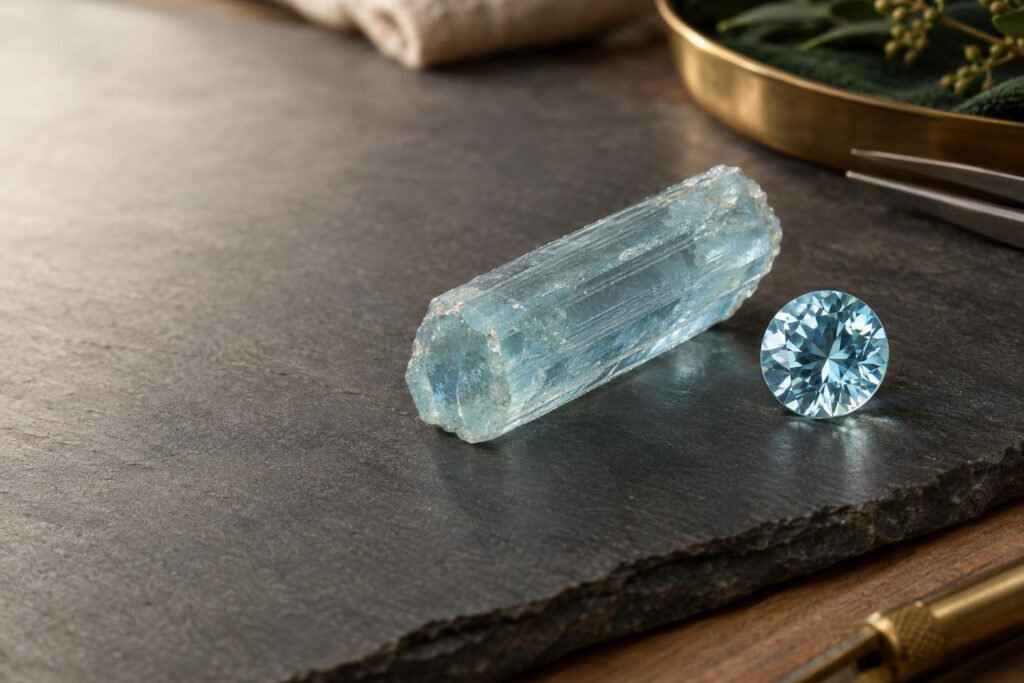
So what is it? Aquamarine is the green-blue to blue variety of beryl, a natural mineral. Emerald is the green to bluish green variety of the same mineral 1. Beryl is a silicate mineral with a hexagonal, or six-sided, crystal structure 6.
How does beryl get its colour? Research points mainly to iron, which absorbs some of the light passing through the crystal. As the iron content rises, the stone grows darker and its colour becomes more saturated, meaning stronger and richer 6.
Why aquamarine’s blue looks soft and clear
Why does aquamarine read as a gentle colour rather than a deep one? Its colour is usually a light pastel greenish blue 1. The full range is very narrow: blue, very slightly greenish blue, greenish blue, very strongly greenish blue, or green-blue 2. Our guide to hue, tone and saturation explains how these colour words work.
The aquamarine colour range
Aquamarine's colour range is narrow. Step through it from blue to green-blue and compare the same stone in each shade.
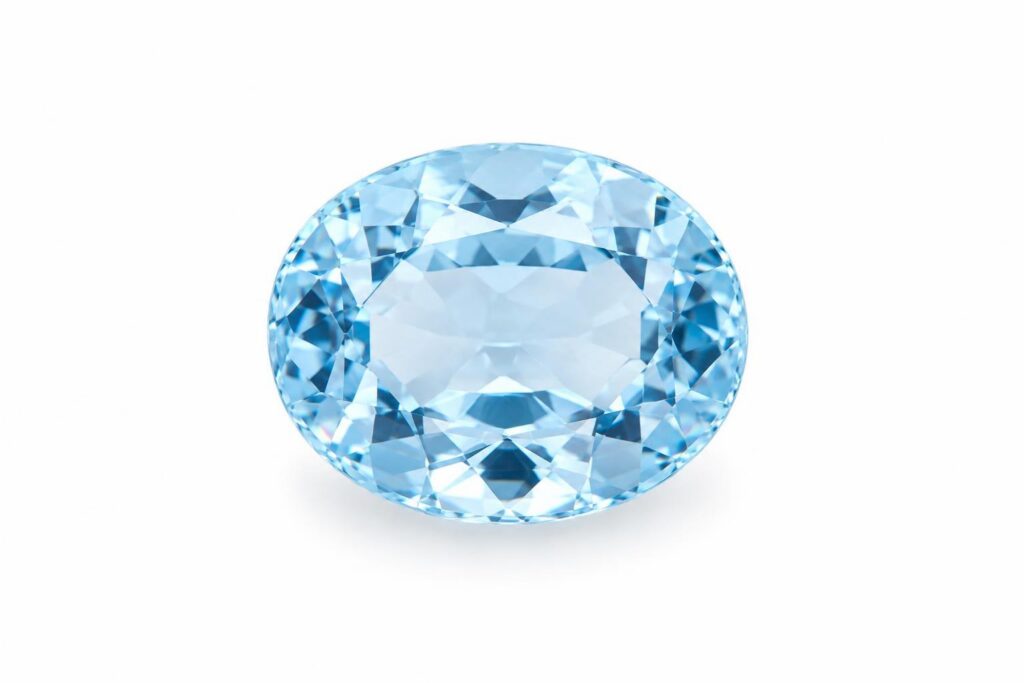
- Blue
- This is the purest end of the range. Heating can remove the greenish part of the colour so the stone looks more blue, and most aquamarine on the market has been heated to give a purer blue.
- Very slightly greenish blue
- Still clearly blue, with only a trace of green. The most valuable colour is a dark blue to slightly greenish blue with moderately strong intensity.
- Greenish blue
- The middle of the range. The colour of aquamarine is usually a light pastel greenish blue.
- Very strongly greenish blue
- The green is now strong. Without treatment, much aquamarine is blue-green, and some buyers prefer the more greenish natural colour.
- Green-blue
- The greenest end of the range. Aquamarine is the green-blue to blue variety of beryl, and research points mainly to iron as the source of its colour.
Screen colours are approximate, and real stones also vary in depth of colour. These pictures show only the steps in hue. Pictures: AI-generated illustrations, checked for accuracy. They are not photographs of a real piece.
Turn an aquamarine and its colour can change. It shows pleochroism, which means it shows different colours in different crystal directions: near-colourless one way and strong blue another 2.
How clear is it? Aquamarine crystals are known to be large, relatively clean and well formed 1. Most faceted aquamarines, meaning stones cut with flat polished surfaces, are eye-clean. That means you see no inclusions, the tiny features trapped inside a gem, without magnification 2.
Stones with inclusions you can see are usually made into cabochons (smooth, domed stones without facets), beads or carvings. When there are enough parallel inclusions, usually long hollow or liquid-filled tubes, a cat’s-eye effect becomes possible: a bright line of light across the dome 2.
Why most aquamarine has been heated
Why does treatment matter to you? It changes the colour you see. Without treatment, much aquamarine is blue-green. Heating in a controlled environment can remove the greenish part of the colour, so the stone looks more blue 5.
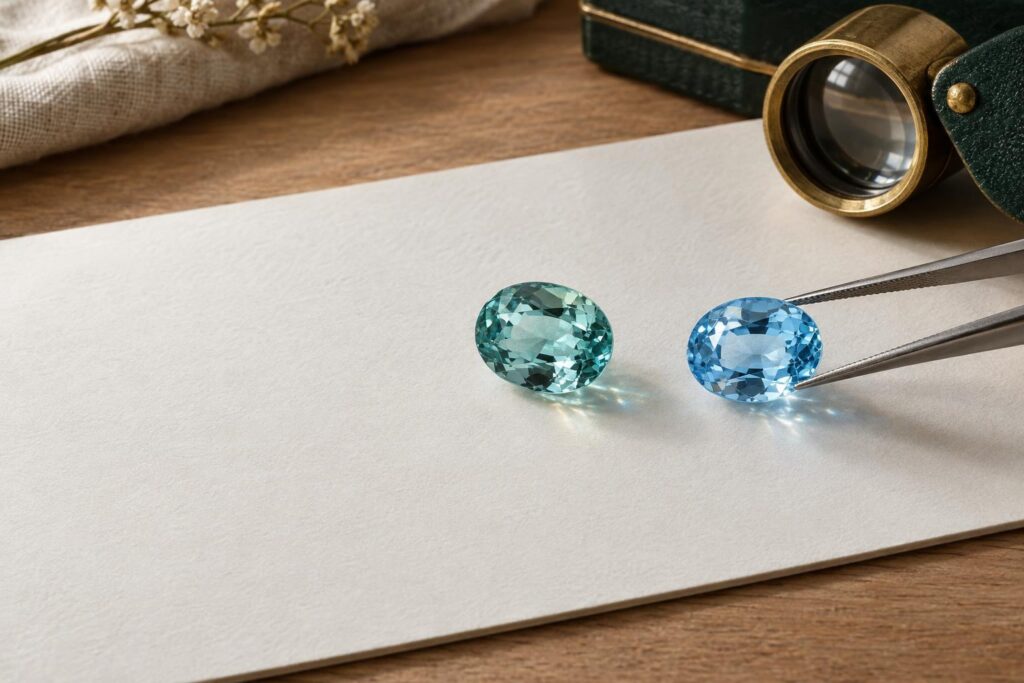
Most aquamarine on the market has been heat-treated to give it a purer blue. Some buyers, though, prefer the more greenish natural colour 2. Heat treatment in aquamarine is considered durable and permanent under normal handling 5. Read more in heat treatment in gemstones.
A rarer treatment is fracture filling: filling cracks in the stone with resin or glass. It can be used on aquamarine, but it is less common than other treatments 5. A filled stone should only be cleaned with warm soapy water, so this treatment also changes how you care for the stone 3.
This guide names every known treatment as an editorial standard. Disclosure rules differ between countries, so you can ask the seller to state in writing whether a stone has been heated or filled. Our guide on how gemstone treatments should be disclosed explains what to ask.
Why aquamarine can handle daily wear, with care
Is aquamarine tough enough for every day? For a ring, this is often the deciding question. Aquamarine is 7.5 to 8 on the Mohs scale, which ranks how well a material resists scratching 3. It is durable enough for everyday wear 4.
How do you keep it that way? It stays durable as long as it is protected against scratching and hard knocks 3. Intense heat may make gems slightly more brittle, so the pointed corners and edges of a heated stone need care 5. Our article the Mohs scale is not the whole durability story looks at durability beyond scratch resistance.
What about cleaning? Warm soapy water is always a safe way to clean aquamarine. Ultrasonic and steam cleaners are usually safe, unless the stone has liquid inclusions or fractures. Heat exposure is not recommended, but the colour is stable in light. The stone can be attacked by hydrofluoric acid 3.
For a simple routine, scrub behind the stone with warm water, mild dish soap and a toothbrush 4.
Why sailors and couples have treasured aquamarine
Why has this stone carried so much meaning? Ancient mariners claimed it would calm waves and keep sailors safe at sea, and it was thought to bring happiness in marriage. Faceted aquamarines are often "as clear as water", which came to symbolise purity of spirit and soul. Aquamarine is the March birthstone and the gem for the 19th wedding anniversary 4. These are traditions and beliefs, not proven effects.
Why colour and size matter when you buy aquamarine
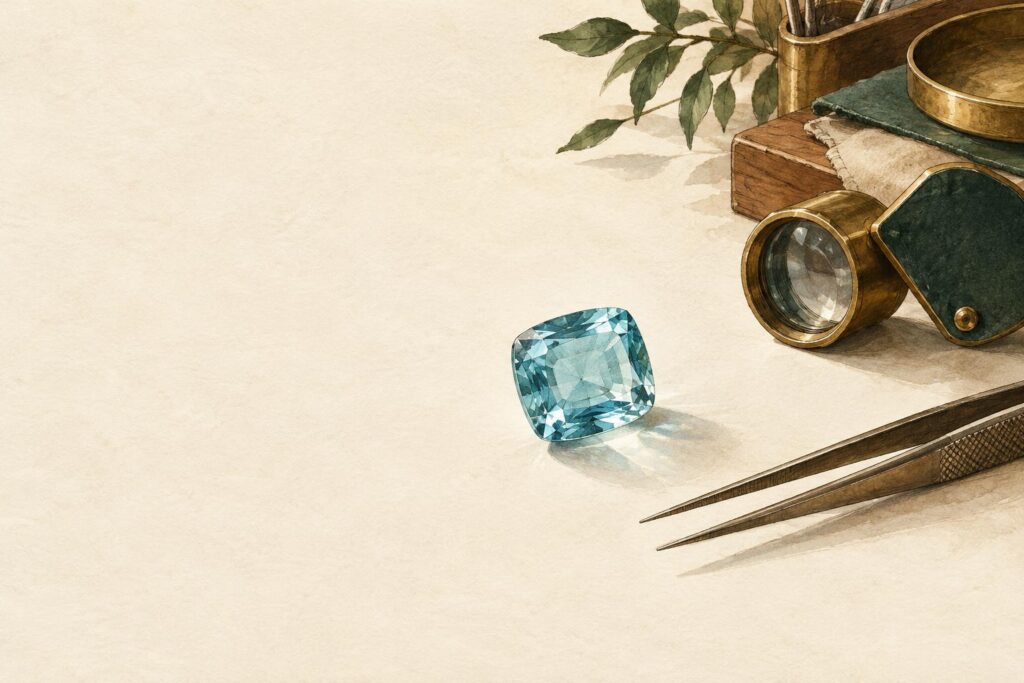
Why does colour matter so much to value? The most valuable colour is a dark blue to slightly greenish blue with moderately strong intensity. In general, the purer and more intense the blue, the more valuable the stone 2.
Size plays a part too. Faceted stones often need to be fairly large, generally over 5 carats, to show an intense, dark colour 2. A carat is the unit used to weigh gems. For the wider picture, see how coloured gemstones are evaluated.
This entry describes natural aquamarine. The sources used here do not discuss laboratory-grown or imitation aquamarine, so if that matters to you, you can ask a seller to confirm in writing what a stone is.
- Has the stone been heated, and has it been fracture filled?
- Is it eye-clean, or can you see inclusions without magnification?
- Do you prefer a purer blue, or the more greenish natural colour that some buyers choose?
- Is there a laboratory report that describes any treatments?
Why aquamarine lends itself to so many cuts
Why does aquamarine appear in so many shapes? It can be cut into almost any shape, but emerald cuts and round or oval brilliants are common. A brilliant is a cut with many facets arranged to return light. Its hardness and transparency also make it popular for carvings and fantasy cuts, which are artistic, freeform designs 2.
One striking example is the Dom Pedro Aquamarine, a 10,363 ct stone fantasy cut by Bernd Munsteiner. It is believed to be the largest faceted aquamarine in the world 4.
How does this affect the setting? Heated stones can be slightly more brittle, so pointed corners and edges need protecting 5. When you look at designs, it may help to ask how a setting guards those points. Our visual guide to ring settings shows the main styles.
Why this entry is a starting point
Why stop here? This entry describes aquamarine as a material, not any single stone. Inclusion in this guide does not confirm that Ralph Jacobs stocks this gemstone. If you’d like to talk through aquamarine or a wide range of coloured gemstones, we offer a free consultation, online at bookings.ralphjacobs.org from any country.
Frequently asked questions
Without treatment, much aquamarine is blue-green. Controlled heating can remove the greenish part, so the stone looks more blue. The result is considered durable and permanent under normal handling 5.
Aquamarine is pleochroic. It shows different colours in different crystal directions, from near-colourless to strong blue 2. So the colour you see can shift as the stone turns.