
The decision in brief
- If sparkle matters most to you, look at cut early, because a well-cut diamond can look bright even with lower colour and clarity grades.
- If you want the diamond to look as large as possible, compare cut and proportions as well as carat weight, since well-proportioned stones often look larger face up.
- If the ring will be white gold or platinum, note that D to J colour grades tend to suit these metals, while yellow claws can make a colourless diamond look yellower.
- If an eye-clean stone is enough for you, a lower clarity grade may suit you, as long as you also check where the inclusions sit.
- If you love step-cut shapes such as emerald, consider a higher colour and clarity grade, because these shapes tend to show both more.
- If the wearer uses their hands a lot, look at how a shape's points or corners will be protected, for example by a bezel or V-shaped claws.
- If you want to know exactly what you are buying, ask for an independent lab report and check that it matches the stone.
Editorial guidance — context changes what is right for you.
Start with the wearer and the ring
If the ring is meant for everyday wear, the most useful place to start is the person who will wear it. The metal colour they like changes how white a diamond looks, and how they use their hands changes how much protection a shape may need.
If you are choosing as a surprise, look at the jewellery they already wear. If you are choosing together, talk about what matters most to each of you: sparkle, size, a very white colour, or a shape that feels like them.
Quick checklist
- Which metal colour does the wearer usually choose: white, yellow or rose?
- Do they lean towards a round stone or a fancy shape such as oval, pear or emerald?
- How much do they use their hands in work, sport or hobbies?
- Do they prefer simple, clean jewellery or more detailed designs?
- Which matters most to them: sparkle, visible size or a very white colour?
- Will you choose the diamond as a surprise or together?
The criteria that matter
Cut
How well the facets are shaped to return light. It has the greatest impact on beauty, and it also affects durability and how large the stone looks face up.
Why light performance matters: diamond cut explainedCarat weight and visible size
Carat measures weight, not size. Well-proportioned stones often look larger face up, and a thick girdle can add weight without adding visible size.
Why diamond carat weight and visible size don’t always matchColour and clarity
On GIA's D-to-Z scale, D is colourless. Clarity runs from Flawless to Included. Many differences are seen only by trained graders or under magnification.
Why the 4 Cs of diamonds matter: what each grade really changesShape
The outline changes how much colour and clarity show, and some corners and points are more likely to chip.
Why your diamond shape matters: choosing a diamond shape that suits youIndependent lab report
A report from an independent lab records the diamond's identity and quality, including whether it is natural and whether it has been treated. Check what your report covers.
Why a GIA report matters: how to read a GIA diamond reportThe wearer's taste and lifestyle
Metal colour changes how white the diamond looks, and an active life may call for a more protective setting.
Why the setting matters: ring settings explainedCompare your options
| Area | What changes visibly | When to prioritise | Reasonable compromise |
|---|---|---|---|
| Cut | How bright and lively the diamond looks, and how large it appears face up. | When sparkle and visible size matter most to the wearer. | A poorly cut diamond can look dull even with top colour and clarity grades. GIA gives a cut grade only to round brilliants. |
| Carat weight | The weight of the stone. Weight alone doesn't tell you how large it looks face up. | When a larger look matters to the wearer. | Extra weight hidden in a thick girdle adds to the stone without adding visible size. |
| Colour | How white or warm the stone looks. | When the ring is white gold or platinum, or the shape is a step cut. | In near-colourless grades, colour is often seen only by trained graders; in very light grades, colour can be seen by the untrained eye in larger stones. |
| Clarity | The size, location, visibility and number of inclusions and blemishes. | With step cuts, which tend to show inclusions more. | Many features are seen only under magnification, but location matters too, and in the Included grades inclusions may affect brilliance and durability. |
| Shape | The outline, which changes how colour and inclusions show and where the stone can chip. | When the wearer has a strong style preference or an active lifestyle. | Pointed shapes may need a more protective setting, and step cuts may call for higher colour and clarity grades. |
A practical decision process
- Write down the wearer's taste: the metal colour, shape and style of jewellery they like.
- Note how the wearer uses their hands day to day, so you know how much protection the stone may need.
- Decide which of the 4Cs matters most to you, and set a total budget for the ring.
- For a round brilliant, shortlist stones with a strong cut grade. For a fancy shape, compare polish, symmetry and how each stone looks to you.
- Choose a colour grade that suits the metal colour of the ring.
- Look for a clarity grade where inclusions are not visible to your eye, and ask where they sit in the stone.
- Let carat weight use what is left, comparing visible size as well as weight.
- Ask for an independent lab report, check it online, and compare its details with the diamond itself.
- Look at the diamond in everyday light, not only under shop spotlights.
- Choose the stone that fits your priorities and the wearer's life.
Numbers indicate order, not saved progress.
Common buying mistakes
- Choosing on carat weight alone A poorly cut diamond can look dull, and a thick girdle can add weight without adding visible size. Compare cut and how large the stone looks face up. Why diamond carat weight and visible size don’t always match
- Judging a diamond only under shop spotlights Diamonds look very different in different lighting. Ask to see the stone in everyday light before you decide. Why does a diamond sparkle? Brilliance, fire and scintillation
- Looking only at the clarity grade Clarity is graded under 10x magnification, and many features are invisible to the naked eye. Check whether a lower grade looks clean to you, and ask where the inclusions sit.
- Forgetting the metal colour Metal colour reflects through the diamond, and yellow claws can make a colourless stone look yellower. Match the colour grade to the metal. Why white gold vs platinum differ in colour, wear and weight
- Treating a step cut like a brilliant cut Step cuts tend to show colour and clarity more than brilliant cuts. If you choose one, consider higher colour and clarity grades. Why your diamond shape matters: choosing a diamond shape that suits you
- Ignoring how corners and points can chip Princess corners and very thin girdles are at higher risk of chipping. Ask how the setting will protect points and corners. Why the setting matters: ring settings explained
- Not checking that the report matches the stone Reports can be faked or altered. Use the report number, any laser inscription and the lab's online check, and compare the report with the diamond. Why a GIA report matters: how to read a GIA diamond report
Questions to ask
About the diamond
- What is this diamond's cut grade, or for a fancy shape, its polish and symmetry grades?
- Can I see the stone in everyday light, not only under spotlights?
- Is the girdle very thin anywhere?
- Are the inclusions visible without magnification, and where do they sit?
About the report
- Which independent laboratory issued the report?
- Can I check the report number online?
- Is the report number laser-inscribed on the diamond?
- Does the report say whether the diamond is natural or laboratory-grown, and whether it has been treated?
About the setting and the wearer
- Which setting would protect the corners or points of this shape?
- How will the metal colour change how white this diamond looks?
- How will this shape and setting hold up for someone who uses their hands a lot?
Frequently asked questions
Which of the 4Cs matters most for an engagement ring diamond?
Cut has the greatest impact on how a diamond looks, because it controls how the stone returns light. A well-cut diamond can look bright even with lower colour and clarity grades. Which C matters most to you still depends on what you and the wearer value.
Do I need a colourless diamond?
Not necessarily. In near-colourless grades, G to J, colour is often seen only by trained graders. D to J diamonds tend to suit white gold and platinum. Yellow claws can make a colourless stone look yellower.
What does eye-clean mean?
An eye-clean diamond has no inclusions you can see without magnification. Clarity is graded under 10x magnification, and many features found that way are invisible to the naked eye. Eye-clean stones can be just as desirable as stones with higher technical grades.
Why does an independent lab report matter?
It records the diamond’s identity and quality, including whether it is natural and whether it has been treated. Check the report number online, and compare the report’s details with the diamond itself.
Can a diamond chip?
Yes. Diamond is the hardest known natural mineral, but it is only somewhat tough. It can chip in normal wear, especially at very thin girdles and at the corners of a princess cut. Bezels, partial bezels and V-shaped claws can help protect those points.
Why choosing a diamond feels so overwhelming
Why does picking one diamond feel so hard? You may be comparing dozens of stones, each with a string of grades, and the choice feels permanent. The good news is that you don’t have to master every grade at once. A clear order of priorities turns a long list into a short one.
How do jewellers compare diamonds? Most use the 4Cs: cut, colour, clarity and carat weight. GIA created this system, and it is the global standard for judging diamond quality, so it lets you compare one stone with another. Deciding which C matters most to you helps you rule out stones quickly, and shows where to spend more and where to compromise 1.
What order does this guide follow? Cut first, then the trade-offs between size, colour and clarity, then shape, the lab report, and the taste and lifestyle of the person who will wear the ring. You can change the order. It simply gives you a place to start.
Why cut comes first
Why start with cut? Cut is how well a diamond’s facets, the small flat polished surfaces, are shaped and angled to return light. Of the 4Cs, cut is said to have the greatest impact on a diamond’s beauty. A well-cut diamond can look brilliant even with lower colour and clarity grades, while a poorly cut one can look dull even with top grades 2.
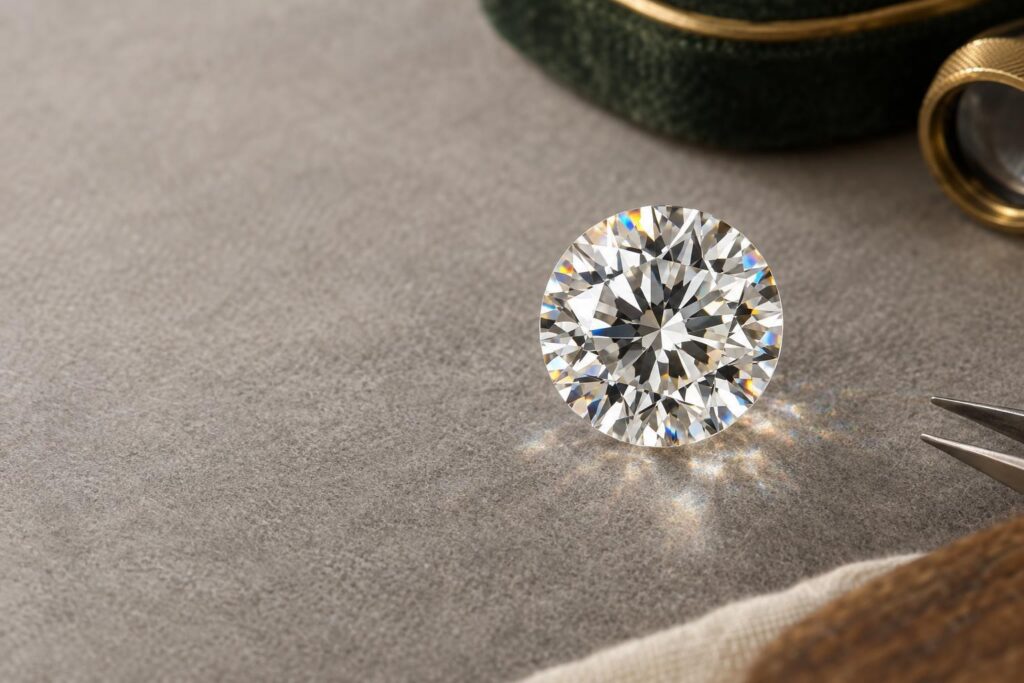
How is cut graded? GIA grades the cut of round brilliants on a five-point scale: Excellent, Very Good, Good, Fair and Poor. Round brilliants are the only shape with an official GIA cut grade. Fancy shapes are graded for polish (how smooth the facets are) and symmetry (how evenly they line up). Cut also affects durability: the girdle is the thin outer edge of the diamond, and a very thin girdle may risk chipping 2.
What does that mean for you? If you love a fancy shape, you will compare polish, symmetry and how the stone looks, rather than one cut grade. IGI uses its own cut scale, from Ideal to Poor 6. For more depth, see diamond cut explained.
Why size, colour and clarity are trade-offs
Why do these three pull against each other? Within a budget, spending more on one often means accepting less of another. Knowing which C matters most shows where to spend more and where to compromise 1. So it helps to know where your eye can see a difference, and where it can’t.
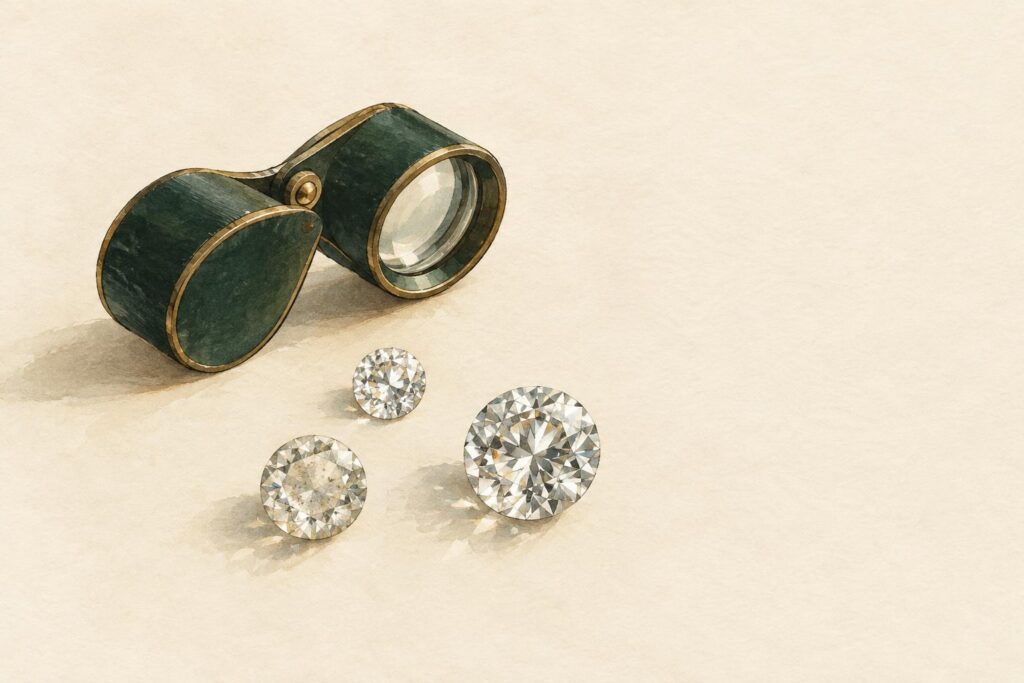
How does size work? Carat is a unit of weight, not size. Well-proportioned diamonds often look larger and brighter face up, while a thick girdle can hide extra weight without adding visible size 2. If visible size matters to you, the relevant facts include cut and proportions, not only weight.
What about colour? GIA grades colour on a D-to-Z scale, where D is completely colourless and Z shows an obvious light yellow or brown. Grades D to F are colourless, and G to J are near colourless, with colour often seen only by trained graders 3. Metal colour reflects through the stone. White gold and platinum suit D to J diamonds, while yellow claws (the small metal arms that hold the stone) can make a colourless diamond look yellower 1.
And clarity? Clarity describes inclusions, tiny features inside the stone, and blemishes, marks on its surface. The grade depends on their size, location, visibility and number. The GIA scale has 11 grades, from Flawless to Included, judged under 10x magnification, and many features can’t be seen with the naked eye 4. Eye-clean diamonds, with nothing visible to the naked eye, can be just as desirable as stones with higher technical grades 6.
Why shape changes what you notice
Why does shape affect the other grades? Shape is the diamond’s outline seen face up, while cutting style is how its facets are arranged. Round is the most popular shape, and fancy shapes include oval, pear, marquise, heart, square and rectangle. Brilliant cuts hide colour and inclusions better. Step cuts, whose facets run in rows like steps, tend to show colour and clarity more, so consider a higher colour and clarity grade for them 1.
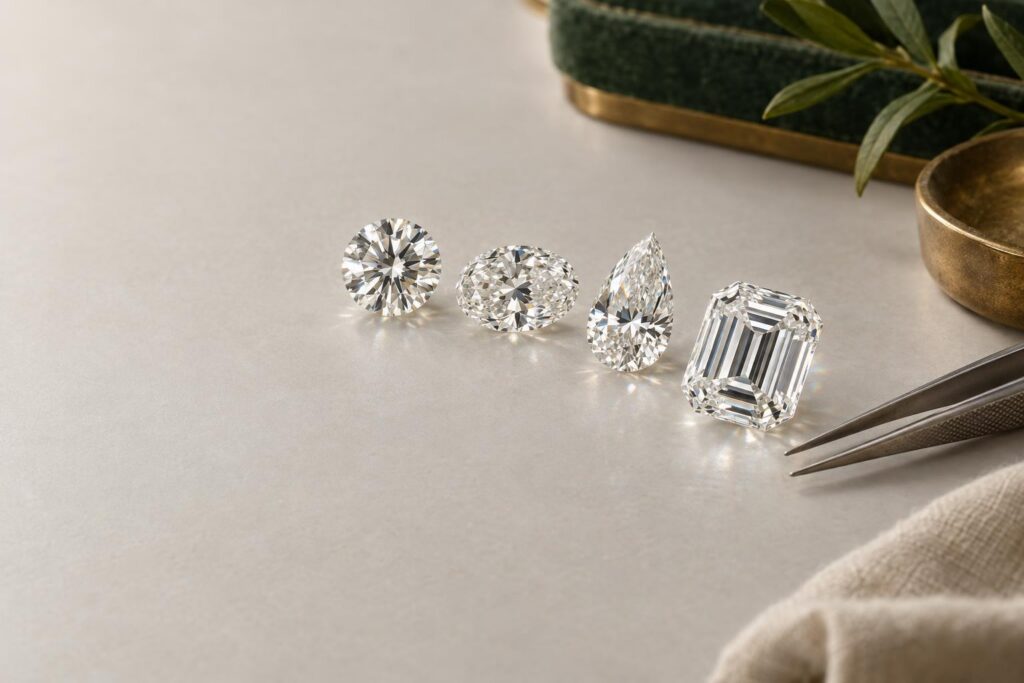
How does shape affect durability? Diamond is the hardest known natural mineral, but it is only somewhat tough, so it can still chip in normal wear. The corners of a princess cut are very vulnerable, because they lie close to a cleavage plane, a direction in which the crystal can split 5. Our guide to choosing a diamond shape covers each outline in more detail.
Why the wearer’s taste and lifestyle matter
Why think about the wearer before the stone? Because the ring is for them. Their style and habits decide which of the facts in this guide matter most.
How does lifestyle change the choice? If the wearer uses their hands a lot, protection becomes a bigger question. Bezel settings, where a metal rim surrounds the stone, are among the most protective. They suit shapes with sharp points, such as princess and marquise, and have no claws to snag 1. Partial bezels and V-shaped claws can also protect vulnerable points and corners 5.
What about taste? Notice the metal colour the wearer chooses, and whether they wear simple or detailed pieces. Our guides to ring settings and white gold vs platinum explain those choices in more depth.
Why an independent report matters
Why ask for a report? Because it records what you are buying. A report from an independent lab tells you the diamond’s identity and quality, including whether it is natural and whether it has been treated 1. Choosing between a natural and a laboratory-grown diamond is covered in its own comparison.
How do you read one? An IGI report starts with a unique report number, then shape, measurements and the 4Cs. It also rates polish, symmetry and fluorescence, a glow some diamonds show under ultraviolet light, and includes a proportions diagram. Report numbers, optional laser inscriptions on the diamond and online report checks help you avoid fake or altered reports, so compare the report with the diamond itself 6. See how to read a GIA diamond grading report and GIA vs IGI diamond reports.
Why a few simple tools can help
Why use a tool? Numbers on a report are hard to picture, and a budget is easier to keep when it is written down. These tools can help you turn grades and totals into something concrete:
Colour: from D to Z
- D–F Colourless
- G–J Near colourless
- K–M Faint
- N–R Very light
- S–Z Light
Clarity: from flawless to included
- FL Flawless
- IF Internally flawless
- VVS1 Very, very slightly included
- VVS2 Very, very slightly included
- VS1 Very slightly included
- VS2 Very slightly included
- SI1 Slightly included
- SI2 Slightly included
- I1 Included
- I2 Included
- I3 Included
Cut: what proportions do to light
Cut grades for round brilliants run: Excellent, Very good, Good, Fair, Poor.
Carat: weight and size
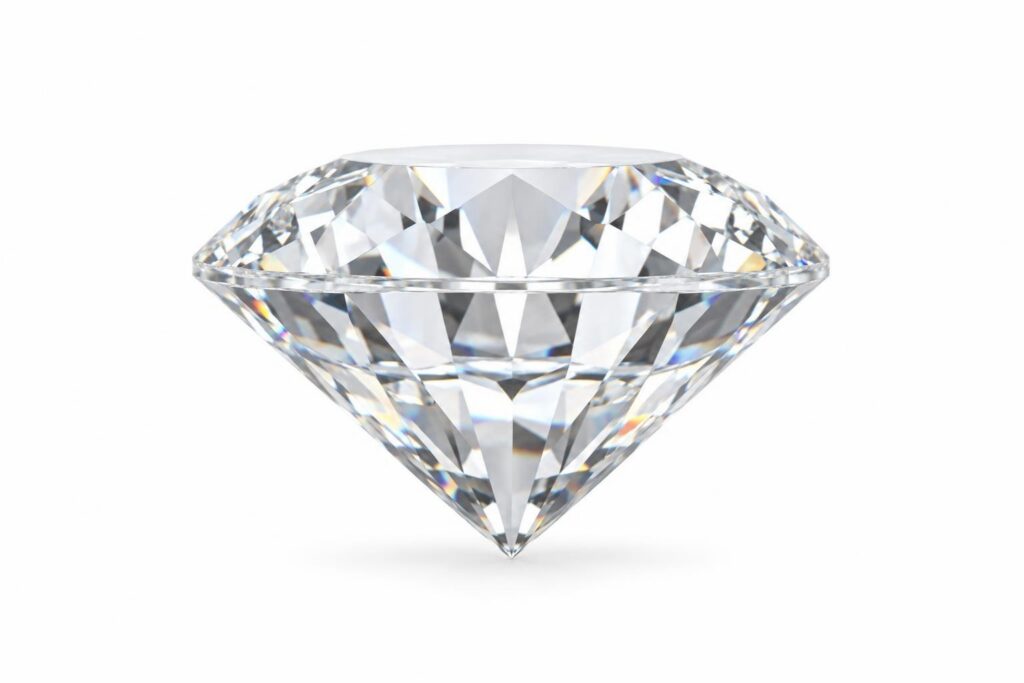
The parts of a diamond
- Table
- The large flat facet on top. Most light enters the stone here.
- Crown
- The upper part, between the table and the girdle. Its angled facets help split light into flashes of colour (fire).
- Girdle
- The thin outer edge at the widest point. The setting usually grips the stone here.
- Pavilion
- The lower part, below the girdle. Its angle decides how much light reflects back up through the top.
- Culet
- The point, or tiny facet, at the very bottom of the pavilion.
- Total depth
- The height from the table to the culet, compared with the diameter. It is one of the measurements behind the cut grade.
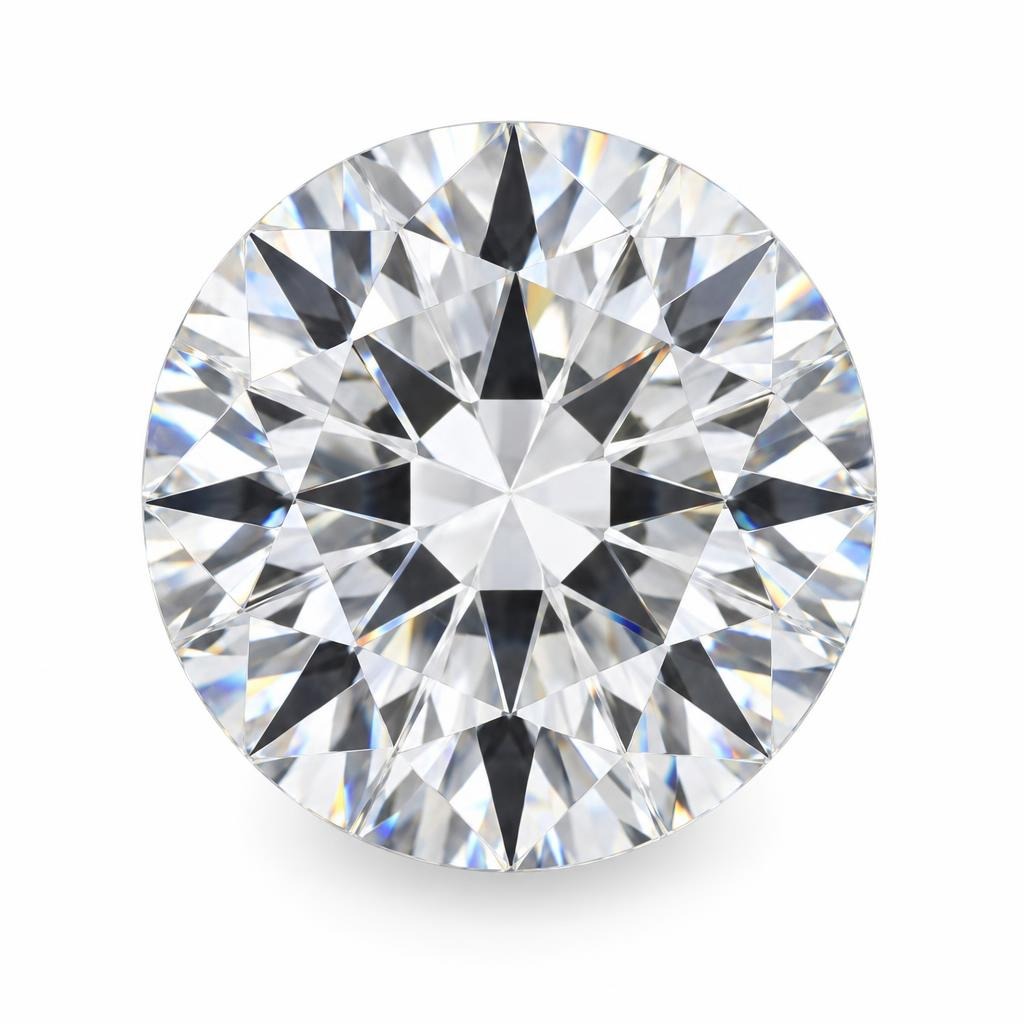
Pictures: one AI-generated illustration of a diamond, adjusted for each grade. They show how the grades differ; they are not a grading of any stone.
- The Carat to Millimetre Estimator helps you picture how large a carat weight may look.
- The Engagement Ring Budget Planner helps you set a total for the whole ring, not only the stone.
- The Ring Size Converter helps you compare ring sizes between countries.
When choosing by grades isn’t enough: the downsides
Why can’t grades alone decide? Some grading happens in conditions unlike daily life. Colour, for example, is graded table-down, with the stone upside down, under controlled lighting against master comparison stones 3. Diamonds look very different under different lighting, so check how a stone looks in everyday light, not just under jewellers’ spotlights 1.
How can a priority list mislead? Cut first is a starting order, not a rule. If the wearer strongly prefers one shape, that may come first. Eye-clean is not the whole clarity story either. Clarity depends on the size, location, visibility and number of inclusions, and in the Included grades (I1 to I3) they may affect transparency, brilliance and durability 4.
Why might two reports read differently? Labs use their own words for grades, such as Ideal at the top of IGI’s cut scale 6. So compare what each grade means, not only its name.
What can’t this guide do? It can’t grade a specific stone, set your budget or replace seeing the diamond. Use it to narrow the field, then look at actual stones with the wearer’s life in mind.
Sources and methodology
This guide is based on published grading guidance from GIA and IGI on cut, colour, clarity, shape, durability and laboratory reports. It explains how each factor works and leaves the decision to you; it does not grade, price or recommend any specific stone.
- 10 Tips for Buying a Diamond Engagement Ring
- GIA Diamond Cut Grade: 6 Things You Need to Know
- The GIA Guide to Diamond Color
- Diamond Clarity
- How to Protect Your Diamond from Chipping
- Expert Guide: Reading an IGI Diamond Report Like a Pro