
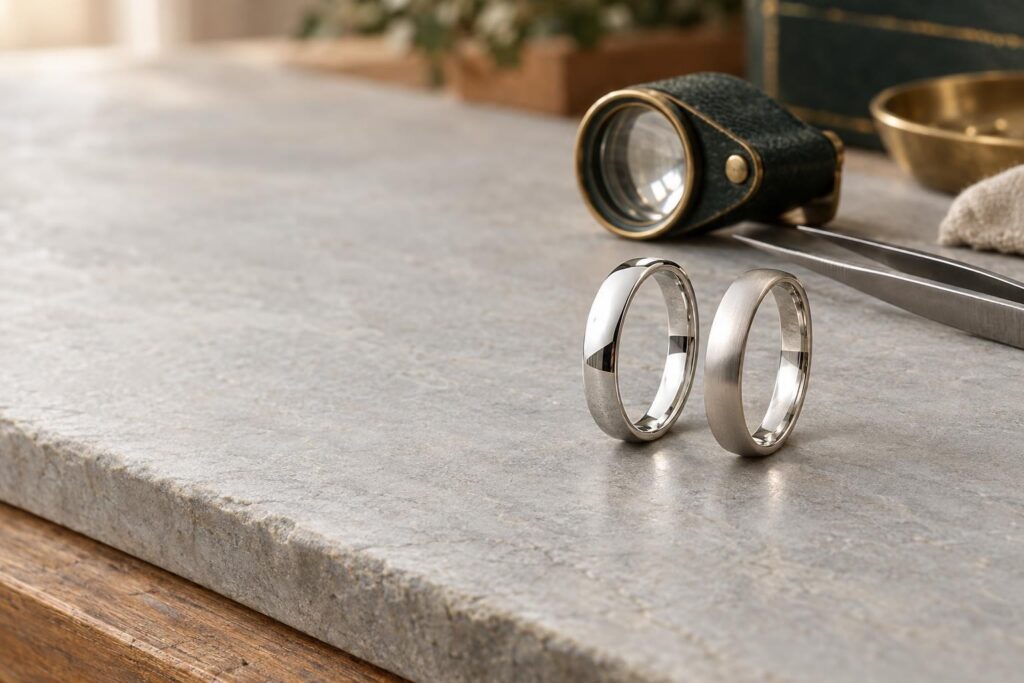
Why white gold and platinum behave differently
If you’re torn between white gold and platinum, you’re choosing a metal you may wear every day for years. This guide compares the two on colour, wear, weight and upkeep, using sources such as GIA. Knowing why they differ helps you choose for how you live, not only for how a ring looks on day one.
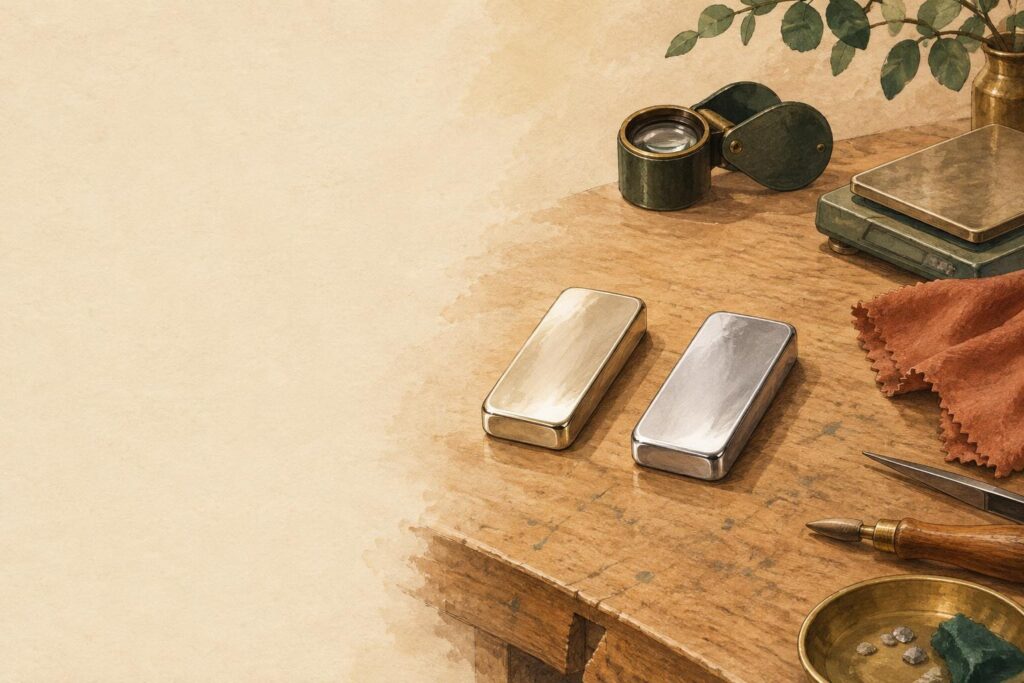
Why do they behave differently? It starts with how each one gets its white colour. White gold is gold alloyed with nickel or palladium, copper and zinc, and it is often plated with rhodium 1. GIA says platinum doesn’t tarnish and keeps its natural white colour 2.
- Rhodium plating on white gold wears away gradually, so the ring needs replating occasionally 1.
- Platinum develops a soft surface look called a patina, and repolishing can return it to bright white. A piece that is 90% pure platinum also weighs 60% more than a similar 14K gold piece 3.
- Nickel allergy commonly comes from jewellery, so the metals in the alloy matter 6.
- How hard platinum is depends on the alloy it is mixed into 5.
- Each metal has real downsides, covered below.
Why what’s inside the metal matters
Why look at what each metal is made of? Because researchers test exactly the things you care about. A Gold Bulletin study measured white golds’ colour, hardness and nickel allergy response, among other properties 4.
An alloy is a blend of metals melted together. The ct number tells you what share of a gold alloy is pure gold. 18ct (18K) gold is 750 parts pure gold and 250 parts other metals, and 14ct (14K) has a lower share of gold 1. You can read more in 9ct vs 14ct vs 18ct gold and what 375, 585 and 750 gold marks mean.
Platinum jewellery uses alloys too. Examples include Pt950 mixed with iridium, cobalt or ruthenium, and Pt900 mixed with iridium, and each mix has a different hardness 5.
Platinum is stamped Pt or Plat plus its parts per thousand, such as Pt950, which means 950 parts in every 1,000 1. Marking formats can differ between countries, so the stamp you see may follow another format.
Platinum also needs a lot of heat to work. It must be heated to about 2,130°C (3,872°F) to be shaped for casting, which means melting it and pouring it into a mould 2.
Why white gold is often rhodium-plated
Why does it matter whether white gold is plated? Because the plating is the surface you see. White gold is often plated with rhodium, which can make it hard to tell 14K from 18K white gold by eye 1.
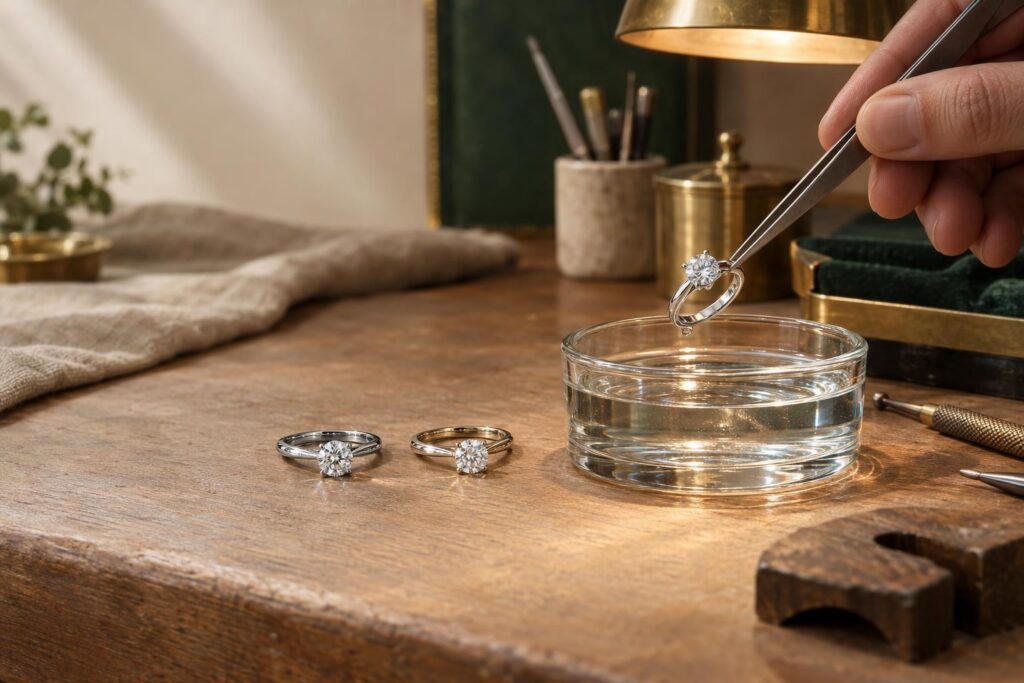
How does the plating change over time? It wears away gradually, so a plated white gold ring needs replating occasionally 1.
What about platinum? It doesn’t tarnish, which means its surface doesn’t darken, and it keeps its natural white colour 2. There are exceptions. For example, some platinum alloys mixed with palladium look greyish, so some makers rhodium-plate them for a whiter colour and harder surface 5. If an unplated ring matters to you, ask whether the platinum ring you’re looking at is plated.
Why platinum develops a patina, and what that means for scratches
Why does a platinum ring look softer after a while? Over time it develops a natural patina, a softer, less mirror-like surface. Repolishing can return it to a bright white shine, and platinum loses very little metal over a lifetime of wear 3.
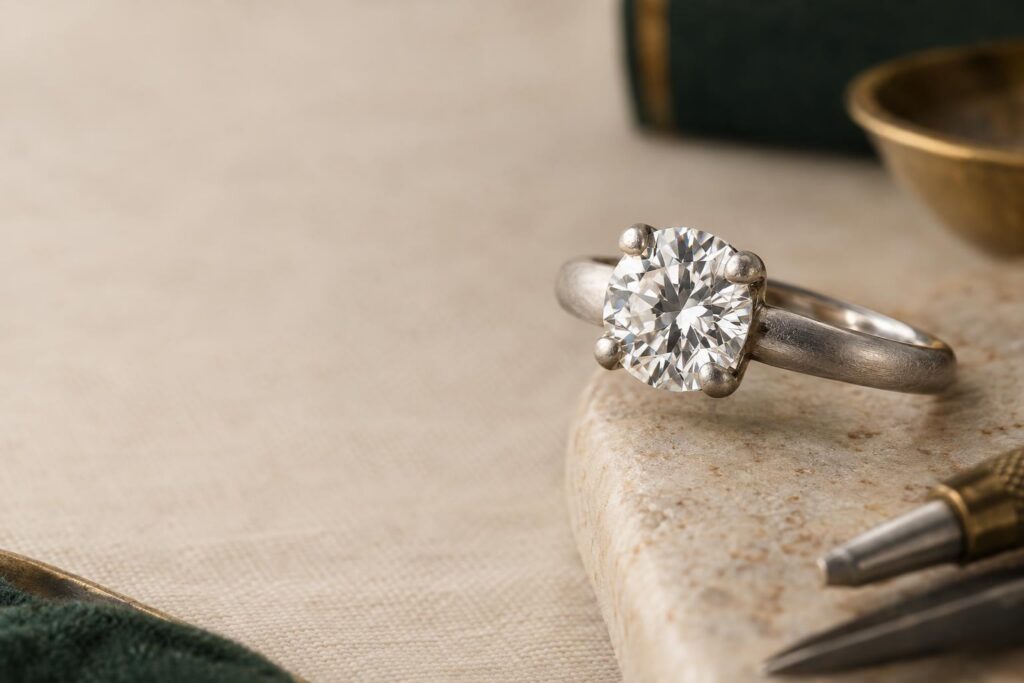
Where does the patina come from? Platinum Guild International (PGI), a platinum industry body, explains that when platinum is scratched, the metal is pushed aside rather than flaked off and lost. Over time, these small scratches give the surface a satiny finish, which is the patina 9.
How easily does platinum mark? Hardness here is measured in Vickers hardness (HV), a lab test of how well a metal resists denting. Pure platinum is 40 HV, Pt950 with iridium is 80 HV and Pt950 with cobalt is 135 HV, so the alloy makes a real difference 5.
The Platinum Guild says cast pieces in Pt950 with iridium "will scratch rapidly" and that their prongs bend easily 5.
What about white gold? The Gold Bulletin study found that palladium white golds with copper matched or improved on nickel white golds’ properties 4. These sources give no single harder-or-softer answer between white gold and platinum, so it is worth asking about the exact alloy.
Why platinum feels heavier: density
Why does weight matter? Some people like a ring they can feel, while others prefer to forget it’s there. Density is how much mass is packed into a given space, and platinum is denser than gold 1.
How big is the difference? A piece that is 90% pure platinum weighs 60% more than a similar 14K gold piece 3. If weight matters to you, holding a ring in each metal is one way to feel the difference for yourself.
Why skin sensitivity can tip the balance
Why does the alloy matter for your skin? Nickel allergy is a type of allergic contact dermatitis, a skin reaction caused by contact with something. It is the most common identifiable cause of metal-related contact dermatitis, and it commonly comes from jewellery 6.
How common is it? A meta-analysis combines the results of many studies. In one covering more than 20,000 people, 20.1% had a contact allergy, and nickel was the most common allergen. It is more common in women, and more piercings may mean a higher risk 6.
What does this mean for white gold? People allergic to nickel should avoid white gold made with nickel 1. In the Gold Bulletin study, the palladium white golds tested were made without nickel 4. Not every alloy is the same, so ask what the specific white gold contains.
And for platinum? It is often described as suiting sensitive skin 2, which is linked to its high purity 3. Platinum jewellery alloys still contain other metals, such as iridium, cobalt or ruthenium 5. So it is worth asking what is in the alloy. This is general information, not medical advice.
Why durability matters for the claws holding your stone
Why think about the claws? Claws, also called prongs, are the small metal tips that hold a stone in place. Platinum is denser and stronger than gold, and less brittle than gold alloy, so platinum prongs are less likely to break 1. Brittle means a metal tends to snap rather than bend. It also makes a secure setting for diamonds and gemstones 2.
Is all platinum the same here? No. The Platinum Guild says prongs cast in Pt950 with iridium bend easily, while alloys such as Pt900 with iridium (110 HV) and Pt950 with cobalt (135 HV) are harder 5. For more on how claw count changes security, see four claws vs six claws.
Why upkeep looks different for each metal
Why plan for upkeep before you buy? Because the sources describe different changes in each metal over the years. On plated white gold, the rhodium wears away gradually, so the ring needs replating occasionally 1.
How white gold and platinum change over the years
Both metals start out looking white, but they get there in different ways and age differently. Switch between the four stages to compare the surface of each ring.
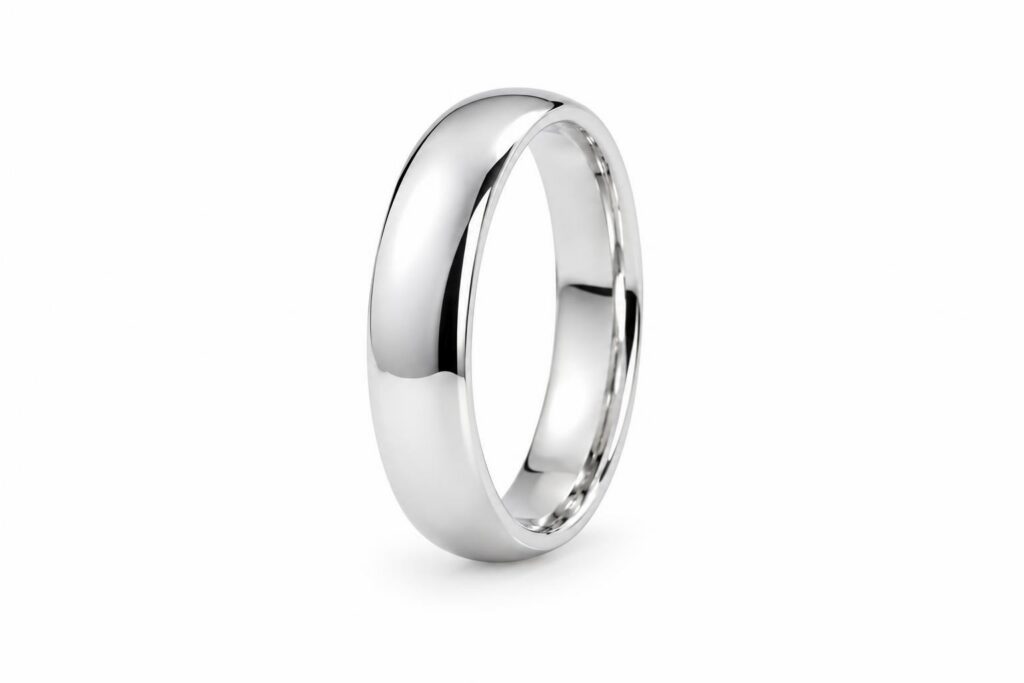
- White gold with fresh plating
- White gold is often plated with rhodium, and the plating is the surface you see. It makes the ring look bright white, which is also why 14K and 18K white gold are hard to tell apart by eye.
- White gold as the plating wears
- The rhodium wears away gradually, so a plated white gold ring needs replating occasionally. White gold alloys are never truly white, and some have a slight yellowish tone that the plating hides.
- Platinum when new
- Platinum doesn't tarnish and keeps its natural white colour. Its whiteness is the metal itself, not a coating on top.
- Platinum with a patina
- When platinum is scratched, the metal is pushed aside rather than flaked off, so very little is lost. Over time the small scratches give a satiny, less mirror-like finish called a patina. Repolishing can return it to a bright white shine.
The pictures exaggerate the differences to make them visible. In real life the shift in worn white gold is gradual and depends on the alloy, and some platinum alloys look greyish and are rhodium-plated. Pictures: AI-generated illustrations, checked for accuracy. They are not photographs of a real piece.
On platinum, a natural patina develops over time, and repolishing can return it to a bright white shine 3. A rhodium-plated platinum alloy is different, because its whiter colour comes from plating too 5.
What does this mean for colour and wear day to day? White gold alloys are never truly white 7. On a white gold colour index set by MJSA and the World Gold Council, the whitest alloys do not need rhodium, while others have a slight yellowish tone and do need it 8. As the thin rhodium coating wears off, the white gold underneath shows, so the ring can look faded or slightly yellow until it is replated 7. The alloy itself wears too: in abrasion tests commissioned by PGI, the white gold samples lost metal weight while the platinum did not 10. So ask your jeweller what the unplated alloy looks like. On platinum, wear shows as a patina rather than as a change of colour: the metal keeps its natural white colour 2 and loses very little metal over a lifetime of wear 3.
Why the two metals can cost different amounts
Why might two rings of the same design cost different amounts? This article gives no prices. The sources don’t give a full price breakdown, but they name facts worth knowing when you compare quotes.
- Rarity: platinum is far rarer than gold 1.
- Weight: a piece that is 90% pure platinum weighs 60% more than a similar 14K gold piece 3.
- Whitening metal: nickel is the cheapest commercially workable way to whiten gold, while palladium’s cost limits its use in high-volume, low-cost jewellery 4.
One way to compare is to ask for a quote for the same design in each metal, from the same maker.
The downsides: when each metal isn’t the right choice
Why look at the downsides? Because each metal has trade-offs, and knowing them early can help prevent surprises later.
When white gold may not suit you
If you have a nickel allergy and the white gold is made with nickel, avoid it 1.
If you’d rather not have a ring replated, note how plated white gold changes. The rhodium plating is the surface you see, and it wears away gradually, so the ring needs replating occasionally 1.
When platinum may not suit you
- You prefer a lighter ring or a constant mirror-bright finish: a 90% platinum piece weighs 60% more than a similar 14K gold piece, and platinum develops a patina with wear 3.
- The alloy is a softer one: cast Pt950 with iridium scratches rapidly and its prongs bend easily 5.
- Budget is tight: platinum is far rarer than gold 1, so compare quotes for the same design in both metals.
How to weigh up white gold vs platinum for your ring
You may hear that platinum is better than white gold. The facts often raised in support are about colour: rhodium plating on white gold wears away 1, while platinum keeps its natural white colour 2. Other facts point the other way. A 90% platinum piece is heavier than a similar 14K gold piece 3, and some cast platinum alloys scratch rapidly 5. Which matters more depends on what you value.
- If a natural white colour without replating matters most, the relevant fact is that platinum keeps its natural white colour 2, though some greyish platinum alloys are rhodium-plated 5.
- If a lighter feel matters most, the relevant fact is that a 90% platinum piece weighs 60% more than a similar 14K gold piece 3.
- If you have a nickel allergy, the relevant fact is that nickel allergy commonly comes from jewellery 6, so ask what any alloy contains.
- If claw strength matters most, the relevant fact is that platinum prongs are less likely to break 1. The claws section above shows how alloys differ.
- If budget matters most, compare the same design in each metal.
If you’d like to talk through both metals for your ring, we at Ralph Jacobs offer a free consultation, online at bookings.ralphjacobs.org from any country, on WhatsApp or in our Secunda showroom. For a step-by-step decision, see white gold or platinum: which should you choose?
Frequently asked questions
White gold is often plated with rhodium, and that plating wears away gradually, so the ring needs replating occasionally 1.