
Why 9ct vs 14ct vs 18ct gold is a question of proportion
Why does the number on a gold ring matter to you? It tells you how much of the metal is gold 3. The other metals mixed in can make gold more durable and change its colour 2. Some of them, such as nickel, are a common cause of skin rashes from jewellery 4. Knowing what the number means lets you weigh 9ct, 14ct and 18ct for yourself.
How does the number work? A karat is one twenty-fourth part of pure gold 3. Pure gold is 24 parts gold, written 24K, so 18K gold is 18 parts gold and 6 parts other metals 1. In this article we write gold purity as ct, such as 18ct (18K). This is not the same as the carat used for diamonds, which is a unit of weight for stones.
What do the three karats contain? Here is the typical make-up of each one:
- 9ct (9K): 37.5% gold, so 62.5% other metals 2.
- 14ct (14K): 58.3% gold, so 41.7% other metals 1.
- 18ct (18K): 18 parts gold out of 24, which is 75% gold and 25% other metals 3.
These proportions can also be written as fineness, which is purity in parts per thousand 2. 18ct gold is 750 parts per thousand, and 14ct gold may be stamped 583, 585 or 14K 1. The purity standards recognised by CIBJO, the World Jewellery Confederation, include 375, 585 and 750 3. You can read more in what 375, 585 and 750 gold marks mean.
Why gold for rings is mixed with other metals
Why not simply choose the purest gold? Pure gold is relatively soft and bends easily. That softness makes 24ct jewellery prone to scratching and wear, and it limits the designs a jeweller can make 5.
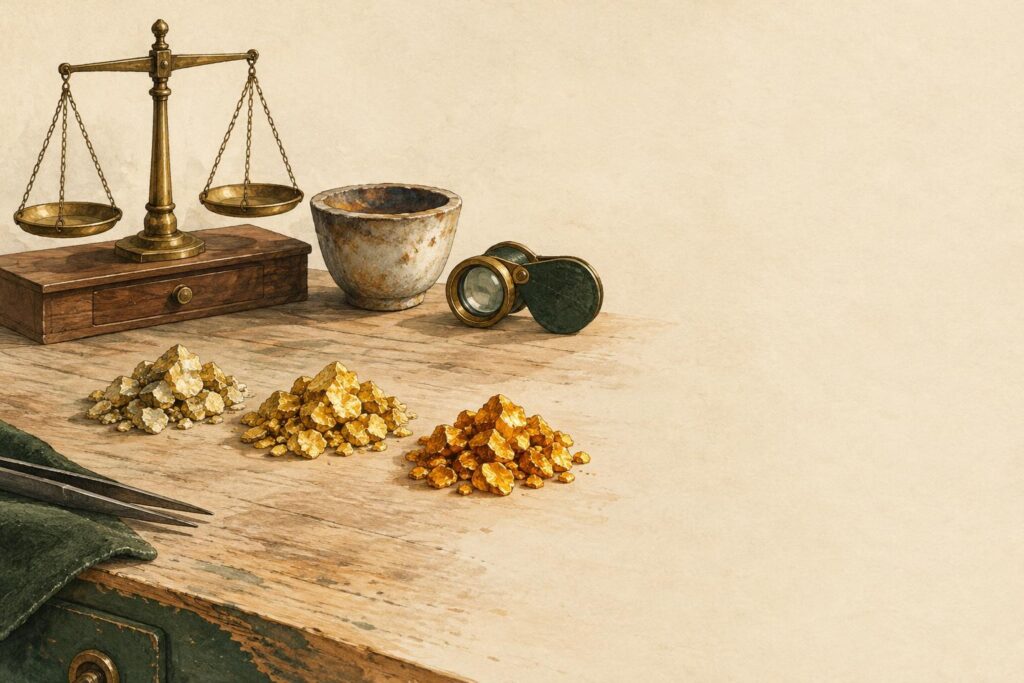
How is this solved? Gold is mixed with other metals, such as copper, silver and zinc, to make it harder and more durable 1. The mixture is called an alloy, which simply means a blend of metals.
What does this mean for 9ct, 14ct and 18ct? Each one contains a share of other metals, as the percentages above show 2. Adding other metals can improve gold’s hardness and strength 5. If someone tells you one karat is tougher than another, ask what the claim is based on and which metals are in that particular alloy.
Why the colour of gold changes with what is mixed in
Why might two gold rings look different? The metals added to gold also affect its colour 1. Copper, for example, is what gives rose gold its pink colour 2.
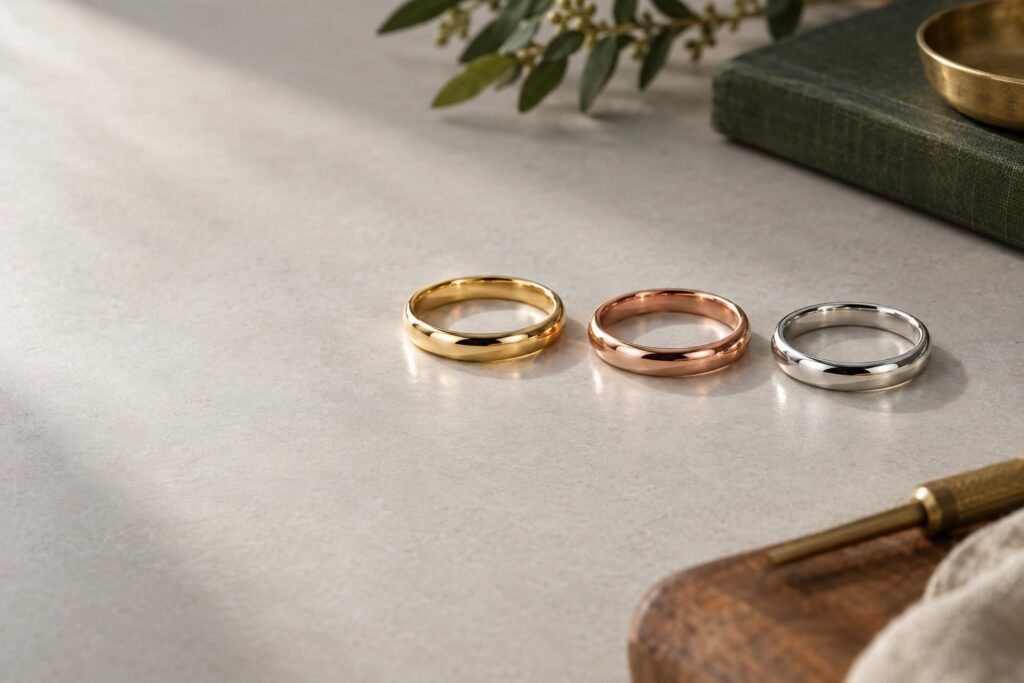
How is white gold made? It is made with white metals such as palladium or silver, and is usually plated with rhodium for a harder, brighter surface 2. Rhodium is a white metal applied as a thin coating. It can wear away over time and may need re-plating 1.
What does the karat do to colour? In a 9ct ring, other metals make up more of the alloy than gold does, while an 18ct ring is three quarters gold 2. Even so, it can be hard to tell one gold purity from another by eye 1. If colour matters most to you, seeing the actual rings side by side lets you judge for yourself.
Why some people’s skin reacts to gold rings
Why does an itchy ring matter? Jewellery allergy is a common cause of an allergic skin rash called contact dermatitis. Rings are among the most common causes, and the affected skin becomes intensely itchy 4.
How does gold cause it? Often the gold is not the problem. Jewellery allergy is mostly caused by nickel and cobalt. Many people who think they are allergic to gold are actually allergic to nickel, which can be present in small amounts or added to whiten and strengthen gold 4.
What does the karat change? DermNet advises assuming that metal jewellery contains some nickel unless it is 18 or 24 carat gold, or one of a few other materials. It also lists gold of at least 18 karat among the choices for people with a nickel allergy 4.
Other metals matter too. If you are allergic to copper or nickel, avoid white gold; if you are sensitive to copper, avoid yellow and rose gold 1. White gold that contains nickel makes up only a small share of white gold alloys 2. Rhodium plating protects against nickel at first but wears off over months or years, and a nickel allergy, once it develops, often lasts for life 4.
This is general information, not medical advice. If you have reacted to jewellery before, talk to a doctor, and tell your jeweller before you choose an alloy.
Why everyday chemicals matter for the metals in your ring
Why think about chlorine and cleaning products? Gold is not the only thing in your ring. Chlorine and harsh chemicals can damage the other metals in the alloy 1.
How does the karat come in? A 9ct alloy has a larger proportion of those other metals than an 18ct alloy 2. If someone claims one karat tarnishes or discolours more than another, ask what that claim is based on.
What can you do? Follow the care guidance your jeweller gives for your piece, especially around swimming pools and household cleaners. If your white gold ring is rhodium-plated, the plating can wear away and may need re-plating 1.
Why an everyday ring and a special piece can call for different choices
Why does how often you wear it matter? A ring worn every day spends more time on your hand, through whatever your routine involves. If that includes pools or cleaning products, it helps to know that chlorine and harsh chemicals can damage the other metals in the alloy 1.
How can you weigh the three karats? Here are the facts above, tied to what you might care about:
- If a nickel allergy is a concern, the relevant fact is that DermNet suggests assuming jewellery contains some nickel unless it is 18 or 24 carat gold 4.
- If colour matters most, remember that the added metals shape the colour, and purities can be hard to tell apart by eye 1.
- If daily wear matters most, other metals are added to improve gold’s hardness and strength, so ask how the specific alloy and design will hold up 5.
- If white gold appeals, it is usually rhodium-plated 2.
- If you want the most gold in the piece, 18ct is 18 parts gold in 24, compared with 14 parts for 14ct and 9 parts for 9ct 3.
Which of these facts weighs most is your decision. It depends on the person wearing the ring and how they live.
The downsides: when each karat may not be the right choice
Why look at the downsides? Every karat is a trade-off, and knowing the limits of each one helps you avoid surprises later.
9ct gold
Why might 9ct not suit you? It is 37.5% gold, so most of the alloy is other metals 2. It also falls below the 18 karat level in DermNet’s nickel guidance, which matters if you have a nickel allergy 4.
14ct gold
Why might 14ct not suit you? It is 58.3% gold, so 41.7% of it is other metals 1. It is also below 18 karat, so DermNet’s advice to assume some nickel applies here too 4.
18ct gold
Why might 18ct not suit you? It still contains 25% other metals, often copper or silver 2. If you are sensitive to copper, yellow and rose gold are best avoided, and the rhodium plating on white gold can wear away and may need re-plating 1.
24ct gold
Why might pure gold not suit a ring? It is relatively soft and bends easily, which makes 24ct jewellery prone to scratching and wear and limits design options 5.
Why it helps to check the stamp and ask about the alloy
Why check the stamp? It can be hard to tell one gold purity from another by eye, so look for the purity stamp inside the ring 1. Under CIBJO’s standards, no negative tolerance is allowed, which means a piece can’t contain less gold than its stamp says 3.
What should you ask before you choose? These questions cover colour, durability and skin:
- Which metals are mixed with the gold in this alloy?
- Does this alloy contain nickel or copper?
- Is the ring rhodium-plated, and will the plating need renewing?
- What fineness stamp will be inside the ring?
If you are also weighing a white metal, see white gold vs platinum. And if you’d like to talk through these questions for a specific ring, we at Ralph Jacobs offer a free consultation, online from any country at bookings.ralphjacobs.org.