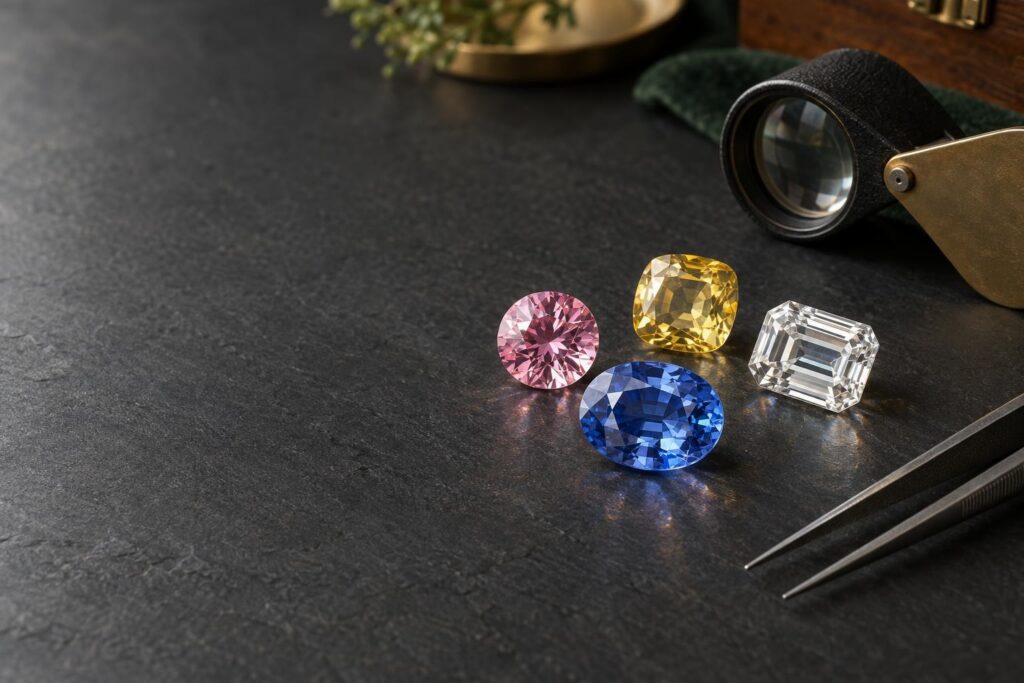
Why sapphire is more than a blue stone
Why does it matter what a sapphire really is? Because the name covers far more than the deep blue stone most people picture. If you are thinking about a sapphire for a ring, knowing the whole family shows you every option. Sapphire belongs to the mineral corundum, which is made only of aluminium and oxygen 1.
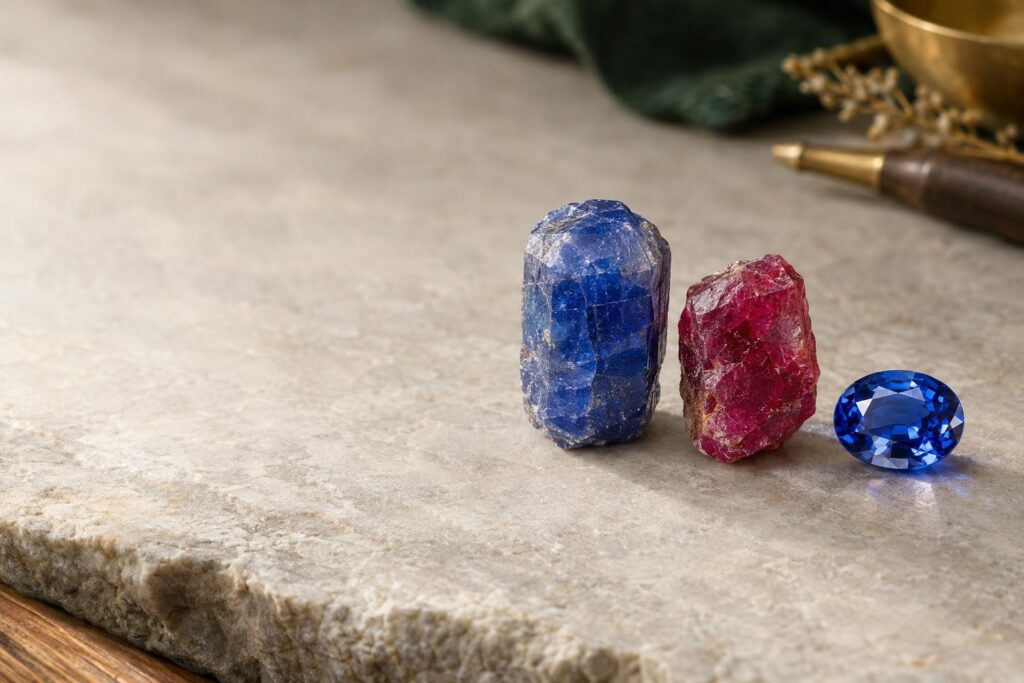
How is a sapphire different from a ruby? Both are corundum. The trade calls red corundum ruby, and every other colour of corundum is sapphire, including colourless stones known as white sapphire 2.
Why sapphire comes in almost every colour
Why can one mineral show so many colours? Pure corundum has no colour at all. Its colours come from tiny amounts of other elements inside the crystal, and most stones owe their colour to a mix of two or three colour-causing groups. Nearly every colour occurs naturally; the one exception is a strong emerald green, though olive to teal greens are found 5.
The colours of sapphire
Sapphire is far more than a blue stone. Choose a colour to see how the family varies.
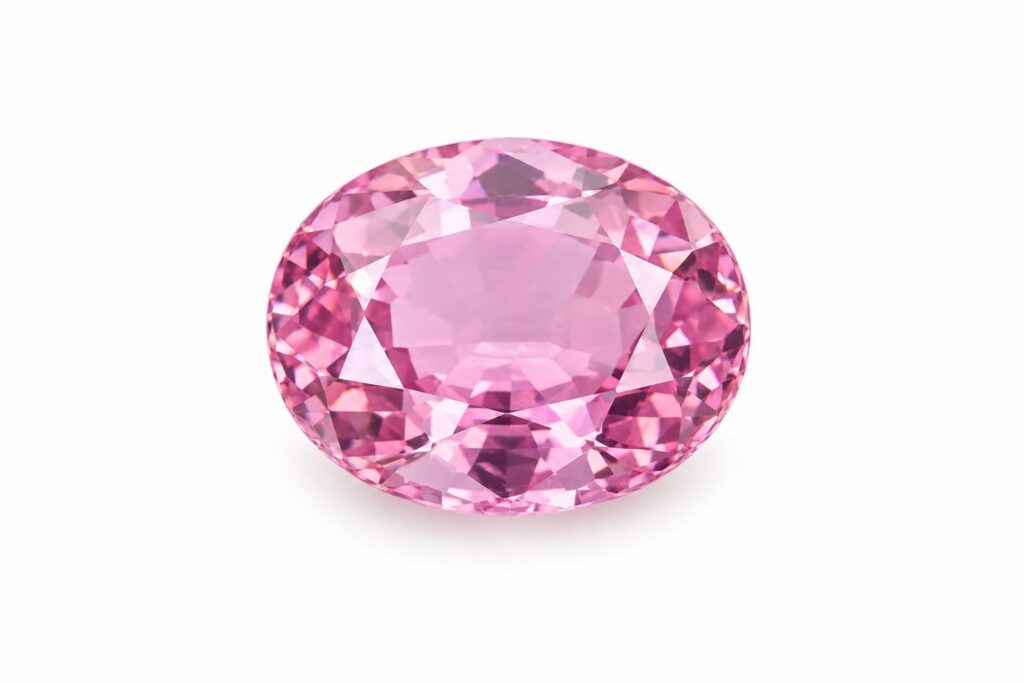
- Pink sapphire
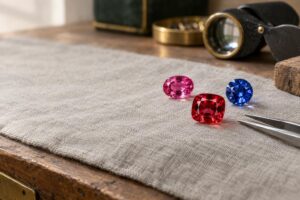
- Chromium causes pink sapphire, and the same element gives ruby its red. Corundum that is red is called ruby, while pink stones are sapphires.
- Orange sapphire
- Any corundum that is not red is called sapphire, and that includes orange stones.
- Yellow sapphire
- Yellow stones are sapphires too. Nearly every colour occurs naturally in corundum, so yellow sits alongside blue in the same family.
- Green sapphire
- Olive to teal greens are found in sapphire. A strong emerald green is the one colour that does not occur naturally.
- Blue sapphire
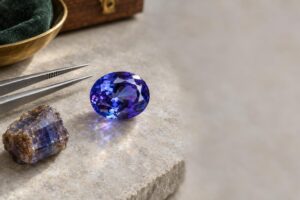
- Iron and titanium create the blue, and only a few hundredths of a percent is enough. Blue sapphire can be a pure blue, but it ranges from greenish blue to violetish blue.
- Violet sapphire
- Violet stones are sapphires as well. Any corundum that is not red takes the name sapphire, whatever its colour.
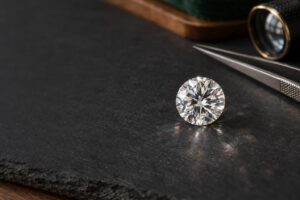
- White sapphire
- Pure corundum has no colour at all. Colourless corundum is known as white sapphire, and its colours elsewhere come from tiny amounts of other elements.
The pictures show one typical tone for each colour. Real stones vary in hue, tone and saturation, and colours on screen are only approximate. Pictures: AI-generated illustrations, checked for accuracy. They are not photographs of a real piece.
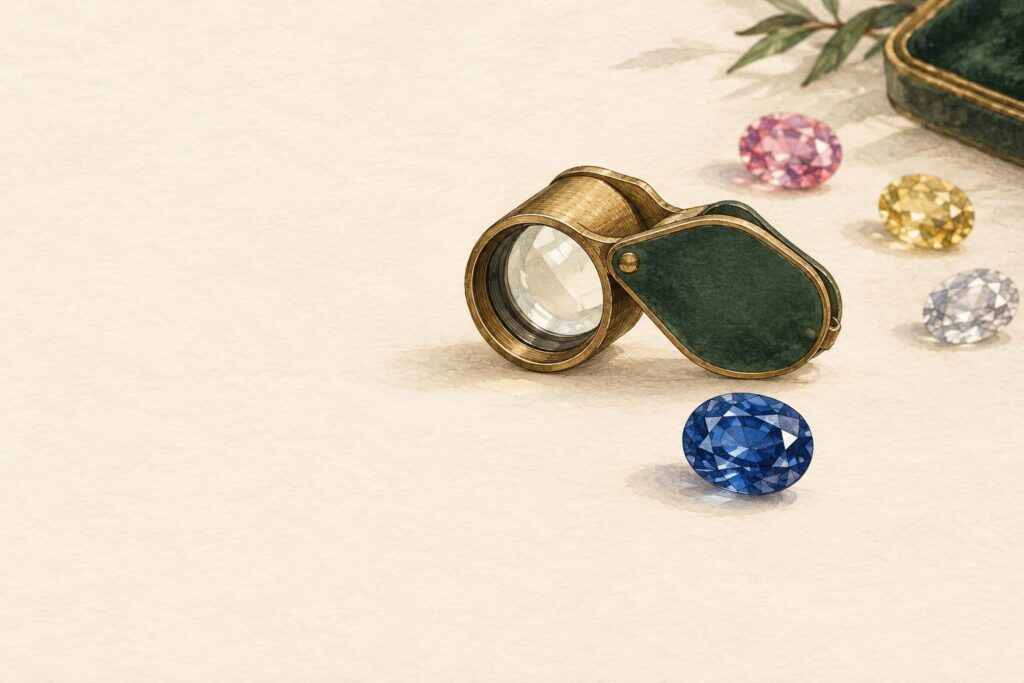
How is blue made? Iron and titanium create the blue, and only a few hundredths of a percent is enough. Chromium causes pink sapphire and the red of ruby. Blue sapphire itself can be a pure blue, but it ranges from greenish blue to violetish blue 1.
Which blues are most valued? The most valued blues are velvety blue to violetish blue, in a medium to medium-dark tone, where tone means how light or dark the colour looks 2.
- Fancy sapphires: violet, green, yellow, orange, pink, purple and the shades between, as well as grey, black and brown.
- Parti-coloured sapphires: one stone that shows more than one colour.
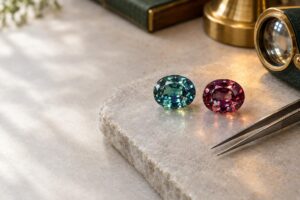
- Colour-change sapphires: usually blue in daylight and purple under warm bulb light 1.
- Padparadscha: a pink-orange variety whose Sanskrit name refers to the colour of a lotus blossom 2.
Why do some sapphires show a star? Light reflects off many tiny, aligned needle-like inclusions, which are small features trapped inside a gem. This effect, called asterism, usually appears as a six-ray star on a cabochon, a stone with a smooth domed top instead of flat facets 1.
Why sapphire treatments matter, and why you should be told
Why should treatments matter to you? A treatment can change how a stone looks and how it should be cared for. Blue sapphire is only rarely untreated and is commonly heated, and heating is rated stable 6.
How does heat treatment work? Heating can deepen blue colour, or even create it. It can also remove silk, the fine needle-like inclusions, so the stone looks clearer, or strengthen silk to improve a star. Heating is considered durable and permanent in normal handling 4.
What is lattice diffusion? Certain elements enter the gem’s crystal structure during heating and change its colour. Beryllium has a much smaller atom than titanium or chromium, so it can travel right through a sapphire, even a large one. Diffusion is considered permanent and is widespread, but it is often extremely hard to detect except by qualified laboratories 4.
Beryllium does not add colour by itself. It creates a tiny charge defect that produces intense colour at only a few parts per million 5. Diffusion is common in blue, orange, pink-orange and other fancy sapphires 6.
Some sapphires have glass-filled fractures or oil in small cracks, and both are unstable treatments 6. In sapphire, fracture filling mainly uses high-lead glass, which mild acids such as lemon juice can damage 3.
What should a seller tell you? Under the CIBJO guidance, sellers shall tell buyers about any treatment and any special care it needs, and suspected treatments should be disclosed too 6. You can read more in how gemstone treatments should be disclosed.
Why sapphire suits rings worn every day
Why does durability matter for a ring? An engagement ring is often worn every day, so its stone needs to resist both scratches and breaks. Sapphire is 9 on the Mohs scale, which measures scratch resistance. It also has excellent toughness, meaning resistance to chipping and breaking, and no cleavage, a flat plane along which some crystals split. That makes it a great choice for rings worn every day 3.
How does it compare with diamond? Diamond is only one number higher, but the steps on the scale are uneven, so diamond is many times harder. Sapphire also resists heat, light and common chemicals in normal wear, and both untreated and heated stones are very durable 3. Hardness is only part of the picture, as the Mohs scale is not the whole durability story explains.
What changes with treatment? Heating may make a stone slightly more brittle, so its pointed corners and edges need protecting 4. With shallow diffusion, surface damage or re-cutting can remove the treated colour 3.
Why colour, cut and treatment matter when buying a sapphire
Why look beyond the name? A sapphire’s colour is described by hue, tone and saturation: the colour itself, how light or dark it is, and how strong it is. The way a stone is cut can change how that colour shows.
How does cutting change the colour you see? Sapphire often shows colour zoning, meaning uneven bands or patches of colour, so cutters place the strongest colour where it shows best face-up, looking down at the stone. Blue sapphire also shows pleochroism: greenish blue in one direction and violetish blue in another, so the direction in which a stone is cut affects which of these colours you see face-up 2.
What about clarity and size? Blue sapphires usually have some inclusions, but generally better clarity than rubies 2. Fancy colours are generally harder to find than blue, and some colours are scarce in very small or very large sizes 1.
Laboratory-grown sapphires exist too. Synthetic stones have essentially the same composition, properties and structure as the natural stone. In the trade’s terminology, ‘synthetic’, ‘laboratory-created’ and ‘laboratory-grown’ mean the same thing, and sellers shall tell buyers about any treatment 6. You can ask whether a stone is natural or laboratory-grown, and how it was treated. See how to buy a sapphire and how coloured gemstones are evaluated.
Why the setting matters for a sapphire
Why think about the setting early? Heated sapphires may be slightly more brittle, so their pointed corners and edges need protecting 4. Ring settings explained shows the different ways a setting can hold a stone.
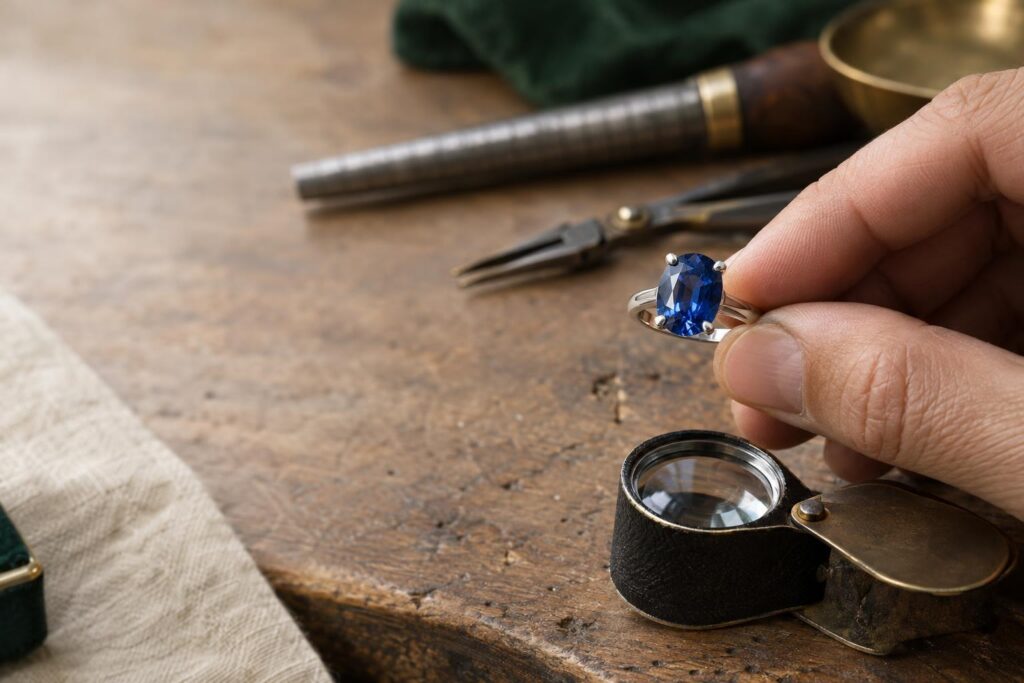
How do star sapphires differ? Star corundum has to be cut as a cabochon, so its setting holds a smooth, domed stone rather than a faceted one. Black star sapphires tend to break along parallel planes, so they are cut very flat 2.
Why this entry describes rather than recommends
Why no verdict here? This entry sets out the facts so you can decide what matters to you. Inclusion in this guide does not confirm that Ralph Jacobs stocks this gemstone. If you would like to talk through a wide range of coloured gemstones for a ring, we offer a free consultation, online from any country at bookings.ralphjacobs.org.
Frequently asked questions
Pure corundum is colourless, and small amounts of other elements give it colour. Iron and titanium make blue, while chromium makes pink. Any corundum that is not red can be called sapphire, so violet, green, yellow, orange, pink, grey and black stones are sapphires too 1.
Heating is common, and blue sapphire is only rarely untreated. Diffusion is also common in several colours. Sellers shall disclose any treatment and any special care it needs 6.