Why pearls are unique among gems
Why does a pearl feel so different from the other gems in a jewellery case? It is an organic gem, made by a living animal rather than formed as a mineral in rock. If you are choosing pearl jewellery, knowing how pearls form helps you understand what you are looking at. CIBJO, the World Jewellery Confederation, describes organic substances as "natural products of animal or plant origin used in jewellery." 5
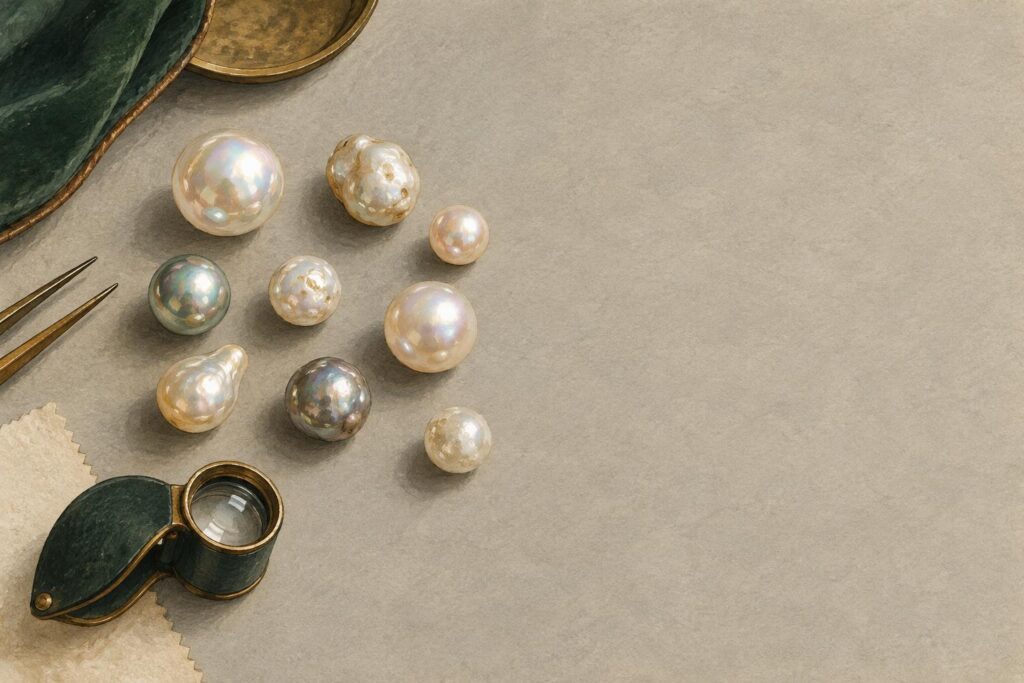
How does a pearl form? A natural pearl grows in the mantle tissue (the soft inner lining) of certain molluscs, which are soft-bodied animals with shells. It usually forms around a microscopic irritant, always with no human help. A cultured pearl also grows inside a living mollusc, but it needs human intervention and care. 2
How is a cultured pearl started? A technician places a shell bead and a piece of mantle tissue into the host’s gonad (its reproductive organ). Another method puts several pieces of tissue, without beads, into the mantle. The mollusc then secretes nacre over them. 2 It does this through the same biological process that forms natural pearls. In the early 20th century, Kokichi Mikimoto developed ways to produce round cultured pearls, and production was underway by the 1910s. 6
What is nacre? It is made of layers of microscopic aragonite (calcium carbonate) platelets, bound together by a protein called conchiolin. This layered structure is what gives some pearls their glow. 5
Why pearl types look so different
Why can two pearl necklaces look nothing alike? Pearl types differ in size, colour, lustre and value because different molluscs form them, in freshwater and saltwater around the world. 6
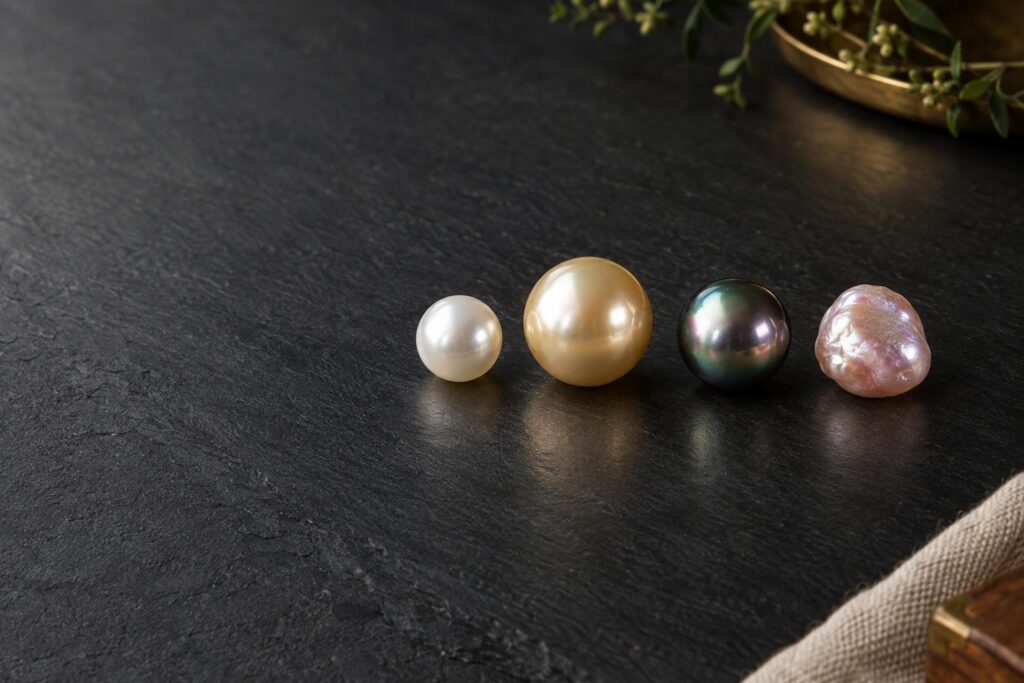
There are four main types of cultured pearl: akoya, South Sea, Tahitian and freshwater. South Sea pearls are valued for their large size and thick nacre, which come from a long growth period. 2
Tahitian pearls are often called black pearls. They can be grey, black or brown, with blue, green, purple or pink overtones. 2
Freshwater cultured pearls are the most commonly produced type. They come in a wide range of sizes, shapes and colours, and one mollusc often grows many pearls. 2
Tissue-nucleated freshwater pearls (started with tissue only, no bead) are often almost entirely nacre, which helps durability and resistance to chipping. Some freshwater pearls are bead-nucleated, which can give larger, rounder pearls. 6
Why lustre and colour matter so much
Why does lustre get so much attention? Lustre is how brightly and sharply a pearl’s surface reflects light. GIA says it "might be the most important" of the seven pearl quality factors. It grades lustre from Excellent, with "bright and sharp" reflections, down to Poor, with "dim and diffused" ones. 1
The three parts of a pearl's colour
A pearl's colour can have up to three parts. Switch between them to see what each one adds to the look of a pearl.
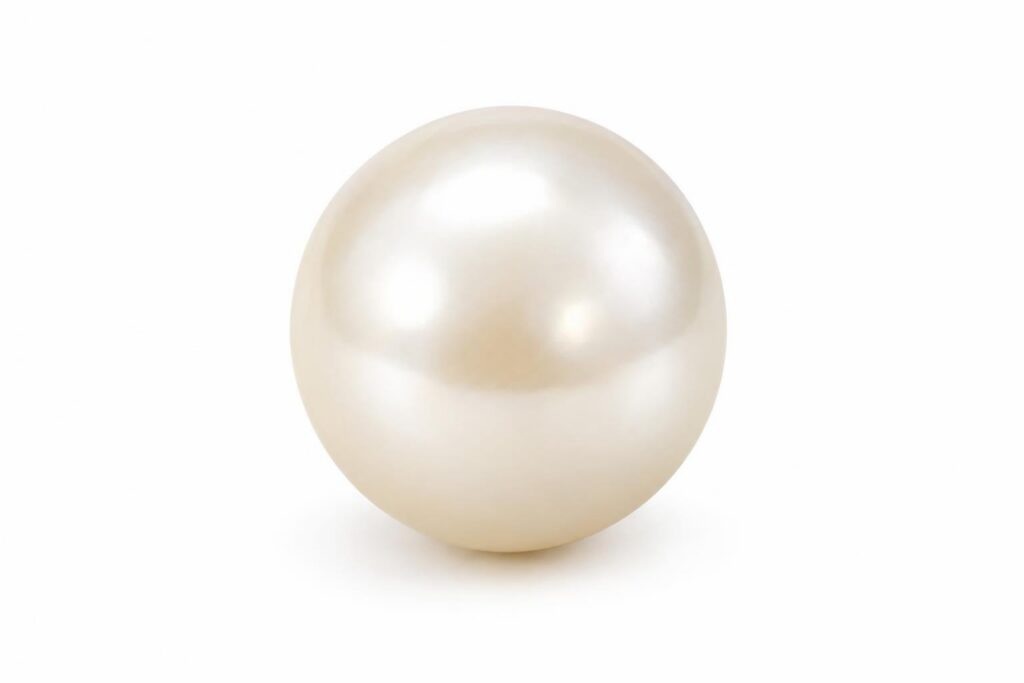
- Bodycolour
- Bodycolour is the main colour of the pearl. Every pearl has it, whether or not it shows any other colour.
- Overtone
- Overtone is a translucent colour lying over the bodycolour. Only some pearls show it.
- Orient
- Orient is a rainbow shimmer. It appears when light interferes and diffracts (bends and spreads) within the surface of some nacreous pearls, so only some pearls show it.
Overtone and orient are subtle in real pearls and shift with the light and the angle, so the pictures only suggest them. Pictures: AI-generated illustrations, checked for accuracy. They are not photographs of a real piece.
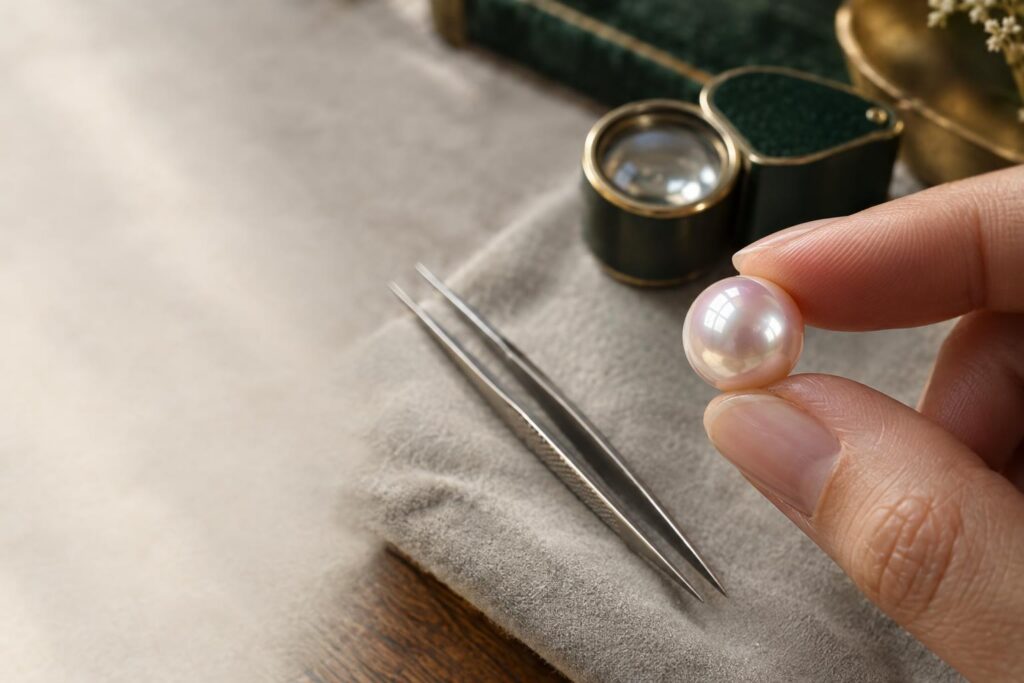
How does colour work in a pearl? It can have three parts. Bodycolour is the main colour. Overtone is a translucent colour lying over the bodycolour, and orient is a rainbow shimmer. Every pearl has bodycolour, but only some show overtone or orient. 1 Orient appears when light interferes and diffracts (bends and spreads) within the surface of some nacreous pearls. The layered structure of nacre is what produces both orient and overtone. 5
Why treatments and names matter
Why should you ask whether a pearl has been treated? Some treatments affect how a pearl looks and how it lasts. Dyeing adds colour, impregnation soaks a substance into the pearl, and coating adds a surface layer. Dyed, impregnated or coated pearls may change over time, and too much bleaching can make some pearls more fragile. 3
Names matter too. Under CIBJO’s guidelines, the word "pearl" on its own refers only to a natural pearl. It must be preceded by "cultured", "composite" or "imitation" when that applies. 5 So imitation pearls exist, and they should be named as imitations. It is fair to ask whether a pearl is natural or cultured, and whether it has been treated. Read more in how gemstone treatments should be disclosed.
Why pearls need gentle care
Why do pearls need such careful handling? Pearl ranks 2.5 on the Mohs scale, the 1-to-10 scale of scratch resistance, so it is very soft and easily scratched. High heat can burn pearls or cause discolouration, splitting or cracking. Many chemicals and all acids can harm them, including hair spray, perfume, cosmetics and even sweat. 3
The pearl’s own make-up plays a part as well. Pearls with a high proportion of organic material are often fragile. Coloured pearls may fade after long exposure to sunlight or chemicals. 5 For more on how hardness relates to everyday wear, see the Mohs scale is not the whole durability story.
How should pearls be cleaned? Wipe them with a soft, clean cloth after each wear. For an occasional deeper clean, warm soapy water is fine, but let the string dry fully before wearing. Never clean pearls in an ultrasonic or steam cleaner. 3
How should they be stored? Keep pearls in a soft pouch or case, away from sharp or rough objects, and not somewhere hot and dry. Necklaces may need restringing from time to time, because the silk string can darken, stretch or wear thin. 4
Why some pearls are valued more than others
Why can two pearls of the same type differ so much? GIA judges natural and cultured pearls on seven factors: size, shape, colour, lustre, surface quality, nacre quality and, for two or more pearls, matching. 1 Here is what each one means.
- Size: when other factors are equal, larger pearls are rarer and more valuable than smaller pearls of the same type.
- Shape: round is the hardest shape to culture, so it is the rarest and generally the most valuable. Well-formed pear, oval and baroque (irregular) pearls are also prized.
- Colour: the bodycolour, plus any overtone or orient.
- Lustre: bright, sharp reflections rather than dim, blurred ones.
- Surface quality: most pearls are never perfect. Marks include abrasions, flattened areas and wrinkles, and many or severe marks can weaken a pearl and lower its value.
- Nacre quality: if the nucleus (the core the nacre grows over) shows through, or the pearl looks dull and chalky, the nacre is thin. That affects both lustre and durability.
- Matching: in most strands and earrings, the pearls should match on every quality factor. 1
How can you use these factors? GIA’s 7 Pearl Value Factors give a consistent way to compare pearls within one type and across types. 6 For how other coloured gems are assessed, see how coloured gemstones are evaluated. These questions can help when you look at pearl jewellery:
- Is the pearl natural or cultured, and which type is it?
- Has it been dyed, bleached, impregnated or coated?
- Does the nacre look thick, or can you see signs of a nucleus or a chalky surface?
- If it is a strand or a pair, how well do the pearls match?
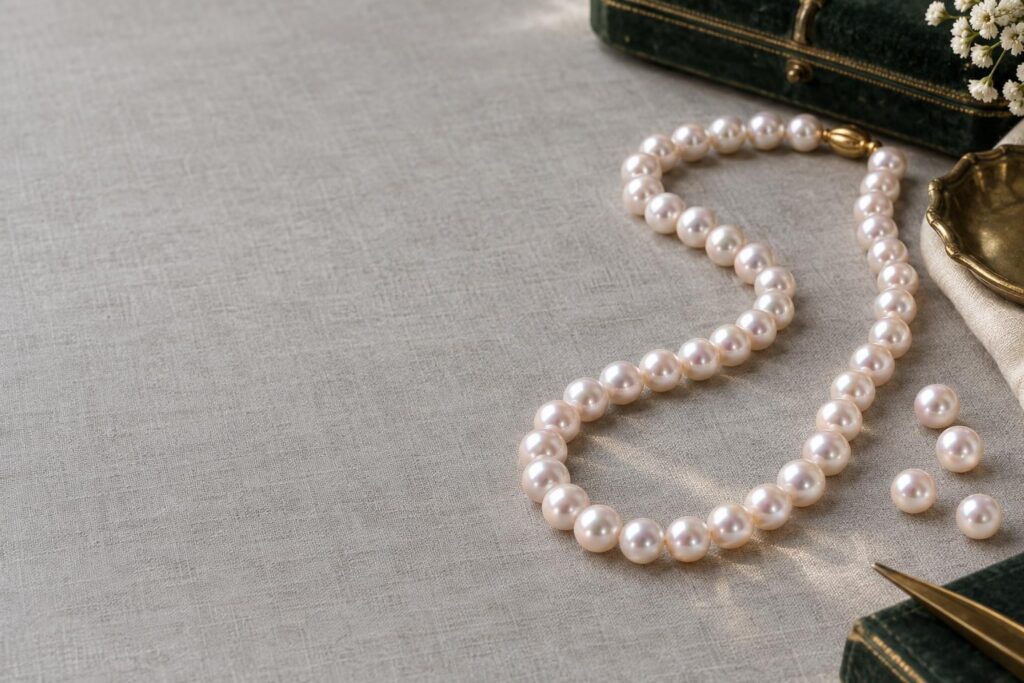
- Is the necklace knotted between the pearls?
Why the design shapes how a pearl wears
Why does design matter so much for a soft gem? Because pearl is easily scratched, it helps to think about how often a piece will touch hard or rough surfaces. 3 Most pearl necklaces are knotted between pearls, so if one breaks, only one pearl comes loose. 4 In most strands and earrings, the pearls should match on every quality factor. 1
To see how different settings hold a stone, read ring settings explained. For how gems cope with daily wear on the hand, see which gemstones suit everyday rings.
Why this entry is a starting point
This entry describes pearls in general, not any one pearl. Inclusion in this guide does not confirm that Ralph Jacobs stocks this gemstone. If you would like to talk through a design idea, we offer a free consultation, online from any country at bookings.ralphjacobs.org.
Frequently asked questions
Under CIBJO guidelines, the word "pearl" on its own refers only to a natural pearl, which forms with no human help. Otherwise it must be preceded by "cultured", "composite" or "imitation" when that applies. 5
No. Never clean pearls in an ultrasonic or steam cleaner. Wipe them with a soft cloth after each wear. For an occasional clean, use warm soapy water and let the string dry fully before wearing. 3
Round is the hardest shape to culture, so round pearls are the rarest and generally the most valuable. Well-formed pear, oval and baroque pearls are also prized. 1
The silk string can darken, stretch or wear thin. Most pearl necklaces are knotted between pearls, so if the string breaks, only one pearl comes loose. 4