
Ring settings explained: why the setting matters
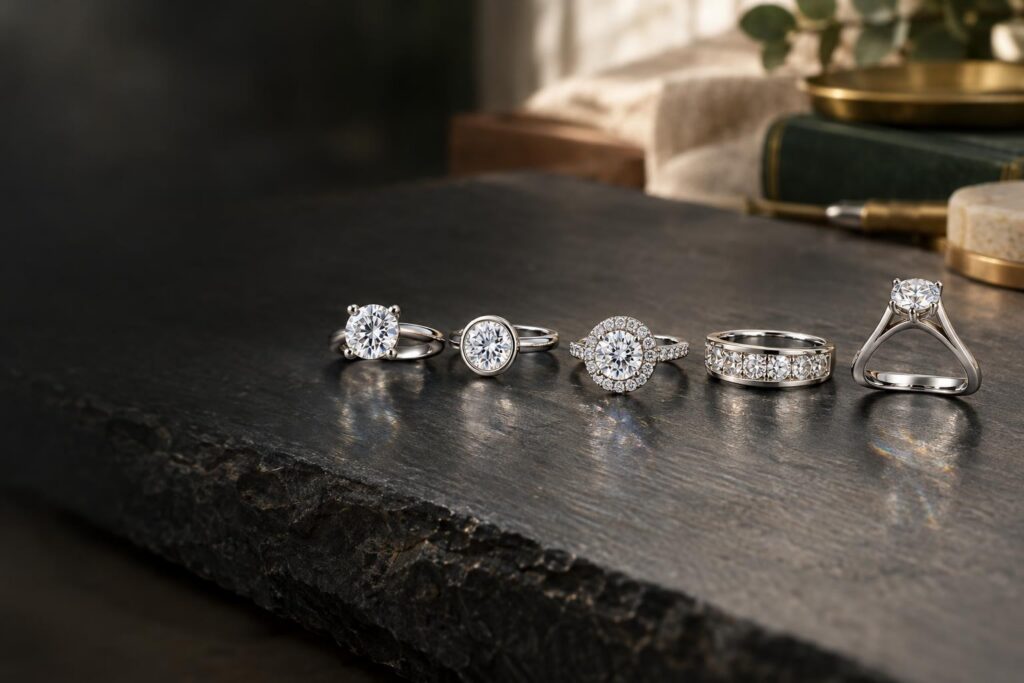
When you look at a ring, you notice the stone first. Yet the setting, the metal that holds the stone in place, also shapes the ring’s look. It affects how much light reaches the stone and how well the ring stands up to daily wear 1.
Why does a diamond need protecting at all? Diamond is very hard, which means it resists scratches. But it is only somewhat tough, so a hard knock can chip or break it. Chips usually happen when the girdle (the thin outer edge of the stone) or a point hits something hard. Stones with pointed corners, such as princess cuts, are often set with prongs that protect the corners 6.
Why doesn’t the setting decide sparkle? A diamond’s sparkle depends on its cut, not on how many prongs hold it 4. You can read more in Diamond cut explained.
What the setting can change is how big the stone looks. Bulky prongs, for example, can make a diamond look smaller 5. Below, each setting is described by what you see and how it wears. For the ways of holding a stone, it also shows where the metal grips it.
Why a solitaire is a design, not a way of holding the stone
Why does this difference matter? Setting names mix two ideas, which can make them confusing. Some names describe how the metal grips the stone: prongs, bezel, pavé, channel and tension. Others describe the overall design: solitaire, halo, cathedral and three-stone.
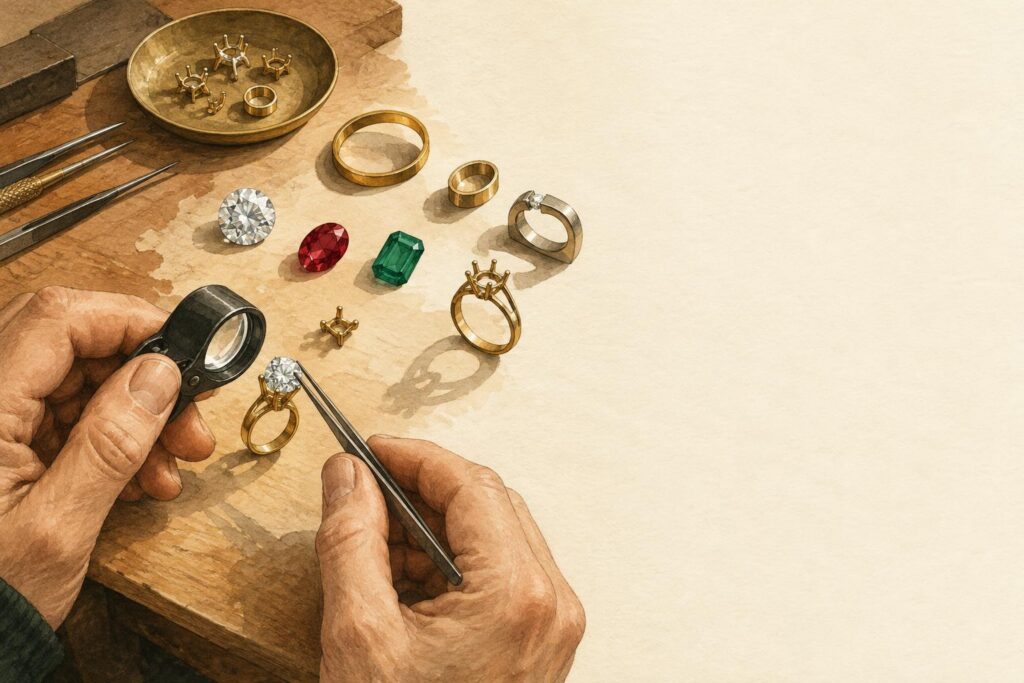
A solitaire shows the difference well. A diamond solitaire is any piece of jewellery with a single diamond. Popular ways to hold that one stone include prongs, a cathedral, a bezel or tension 3. So when you choose a solitaire, you still choose how its stone is held.
How prongs (claws) hold the stone
Why do prongs show off a stone so well? Prongs, also called claws, are small metal posts that grip the stone. Seen from the side, they raise it high enough above the band to show its size and detail 3. Picture a few fingers holding a marble up to the light.
Prongs let in the most light. Their raised edges can catch on fabric, though, and they should be checked occasionally. Over time they may need re-tipping (adding new metal to a worn prong tip) 1.
Four prongs or six?
Why does the number of prongs matter? In a four-prong setting, if one prong breaks off, the centre stone can easily fall out. Six prongs protect the girdle better, while four can make a diamond look squarer 4. Which matters more depends on whether you weigh security or shape first. Four claws vs six claws compares the two in depth.
Why a cathedral setting lifts the stone
Why raise the stone above the band? In a cathedral setting, arches of metal lift the stone above the band, much like the arches of a tall church roof 1. It keeps the diamond visible, and the slopes on either side help protect it 3.
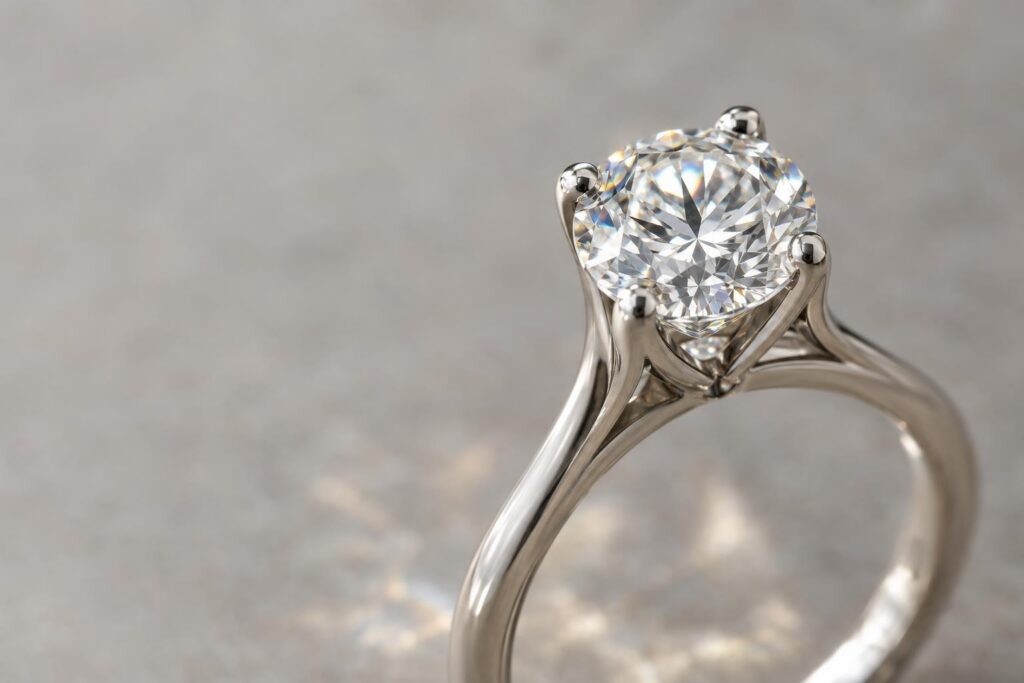
Seen from the side, those arches are the main feature. They give the centre setting extra stability, but the raised stone can catch on things more 1.
The arches lift the stone, but they are not what grips it. Like a solitaire, a cathedral design still holds its stone in a particular way, so ask the jeweller how, then read the section on that method.
Why a halo makes the centre stone look bigger
Why do people choose a halo? A halo is a design with a ring of small stones set around the centre stone. With a halo, the centre stone can appear to be the size of the halo itself 5. Carat weight vs visible size explains why size on the hand is not only about weight.
The trade-off is upkeep. Because halos have many small stones, they may need more maintenance 1.
Prongs on halo diamonds also tend to wear out faster, so the ring should be checked routinely 5. A halo is a design, so the centre stone and the small stones around it are each held in their own way. Ask the jeweller how each is held.
Why a bezel protects the stone’s edge
Why wrap the stone in metal? A bezel surrounds the stone with a rim of metal, like a frame around a picture 3.
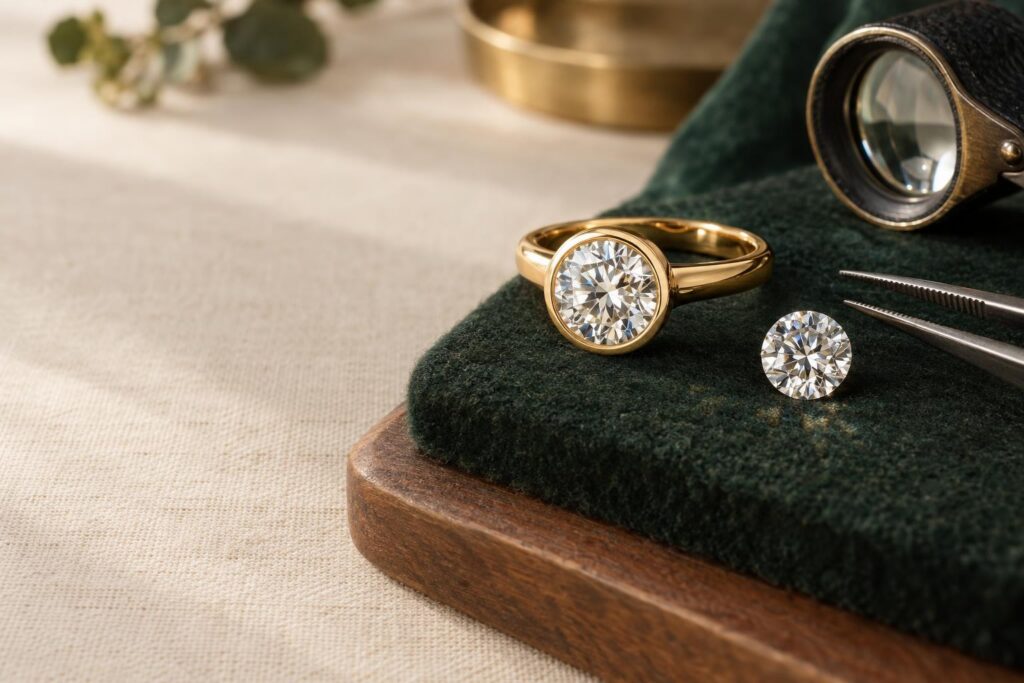
Bezel settings resist chips well and are practical for people who work with their hands. The cost is light: they let in slightly less light than prongs 1.
Bezels protect against knocks, and for diamonds they are generally used for round and oval stones 5. If you like a fancy shape, Choosing a diamond shape may help.
Why pavé lines the band with small stones
Why cover a band in tiny stones? Pavé (from the French word for paving) lines the band with small stones, like a path laid with cobbles. It is a type of bead setting: each stone sits in a hole and is held at the girdle by small metal beads. Seen from the top, the stones are usually laid out in a honeycomb pattern 2.
Pavé diamonds are usually 0.20 ct or smaller. Here ct means carat, the unit for a gemstone’s weight. They are set into tapered holes, and pavé on the bottom of the band is more easily lost because of friction 5.
If the wearer is extremely active, pavé stones can be vulnerable to falling out 2. Pavé bands can also be harder to resize 1. Why can’t every ring be resized? explains why.
Why a channel setting resists snagging
Why set stones in a groove? In a channel setting, stones sit edge to edge in a groove that protects them. This makes the setting good for daily wear and active people 2.
The groove is formed by two parallel metal walls, so no prongs stick up between the stones. Channel settings suit everyday wear and catch on clothing less than prong-set stones 1.
Why a tension setting looks as if the stone floats
Why does a tension-set stone seem to hover? It is held by pressure between the open ends of the band. Tension settings are mostly used with diamonds and sapphires 1.
Seven ring settings, side by side
Each setting grips the stone in a different way. Switch between them to see how the metal holds the stone and what that asks of you.
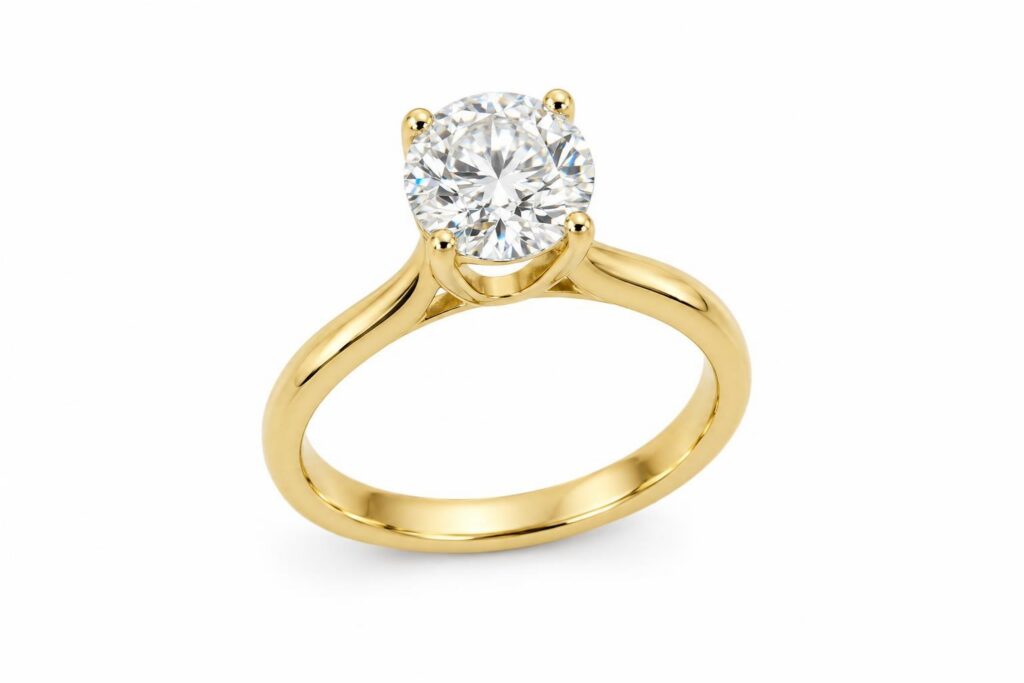
- Prong (claw) setting
- Four metal prongs rise from the band and grip the stone. Prongs let in the most light but need occasional checks. If one prong breaks off, the centre stone can easily fall out. Four prongs can make a diamond look squarer, while six protect the girdle better.
- Cathedral setting
- Two metal arches rise from the band and support the head. The head's four prongs, not the arches, grip the stone at its girdle and crown edge. The arches lift the head above the band, and a raised stone can catch on things more.
- Halo setting
- The centre stone has its own four prongs. Around it, a metal frame holds a ring of small accent stones, each secured by tiny metal beads. A halo can make the centre stone appear the size of the halo. It may need more maintenance, and its prongs tend to wear out faster.
- Bezel setting
- A continuous metal rim surrounds the stone, touches it all the way round the girdle and is pressed slightly over the crown edge. Bezels resist chips well and suit people who work with their hands. They let in slightly less light than prongs.
- Pavé setting
- Small round stones are set close together in a honeycomb pattern across the band. Each sits in a tapered hole and is held at its girdle by tiny metal beads raised between the stones. They can fall out for extremely active wearers.
- Channel setting
- Round stones sit edge to edge between two parallel metal walls, with no prongs between them. Each girdle is held in a groove cut into the inside of each wall. The groove protects the stones and the ring catches on clothing less, but channel-set rings can be harder to resize.
- Tension setting
- The band is open at the top. Its two ends press on opposite sides of the stone's girdle and hold it by pressure alone, with no metal underneath, which makes cleaning easy. The exposed sides of the stone are vulnerable, and side knocks add stress.
The pictures show a round stone in each setting to keep the comparison fair. Real rings vary in the number of prongs, the height of the stone and the width of the band. Pictures: AI-generated illustrations, checked for accuracy. They are not photographs of a real piece.
The ring itself acts as a spring. There is no metal under the diamond, so it is easy to clean 3.
The open design has risks. A hard blow could shift or loosen the stone 1. The setting already presses on the girdle at two opposite points, and hitting the side of the ring adds more stress. The exposed sides of a tension-set diamond are vulnerable during casual wear 6.
Why a three-stone ring needs a closer look
Why look at three-stone rings separately? A three-stone ring is a design with a centre stone and one stone on each side. The sources behind this guide give no wear guidance specific to three-stone designs.
Because it is a design rather than a holding method, the useful question is how each of the three stones is held. Ask the jeweller, then read the section above for that method.
The downsides: when each setting may not suit you
Why look at the downsides? Knowing the weak points helps you plan for care, or rule a setting out. Here they are, side by side.
- Four prongs: if one prong breaks off, the centre stone can easily fall out 4.
- Halo: prongs on halo diamonds tend to wear out faster 5.
- Pavé: stones can be vulnerable to falling out for extremely active wearers 2.
- Tension: the exposed sides of the stone are vulnerable, and side knocks add stress 6.
GIA’s settings guide adds more weak points. Prong edges can catch on fabric, a cathedral’s raised stone can catch on things more, a bezel lets in slightly less light than prongs, and channel-set rings can be harder to resize 1.
Why do checks matter whatever you choose? Bent or broken prongs are a very common cause of chipping, and a loose diamond is at higher risk 6. Ultrasonic cleaners (machines that clean jewellery with vibrations in liquid) can dislodge stones that are already loose 1.
Why your daily life matters when you choose
Why think about your day before the look? Here are the facts above, sorted by what might matter to you.
- If you work with your hands, bezels resist chips well and are practical for this kind of wear 1.
- If you want stones protected in daily wear, channel-set stones sit in a groove that protects them 2.
- If you want the centre stone to look larger, a halo can make it appear the size of the halo 5.
- If easy cleaning matters, a tension setting has no metal under the diamond 3.
- If shape or security matters, four prongs can make a diamond look squarer, while six protect the girdle better 4.
If light or snagging matters most, prongs let in the most light, and channel settings catch on clothing less than prong-set stones 1.
If you’d like to talk through these settings, Ralph Jacobs offers a free consultation, booked online at bookings.ralphjacobs.org from any country, on WhatsApp or in our showroom. For a step-by-step decision, see How to choose an engagement ring setting.
Frequently asked questions
No. A diamond’s sparkle depends on its cut, not on how many prongs hold it. Prong count changes the look and the security: six prongs protect the girdle better, and four can make a diamond look squarer 4.
Pavé bands can be harder to resize 1. Our article on why not every ring can be resized explains how resizing works and what limits it.