
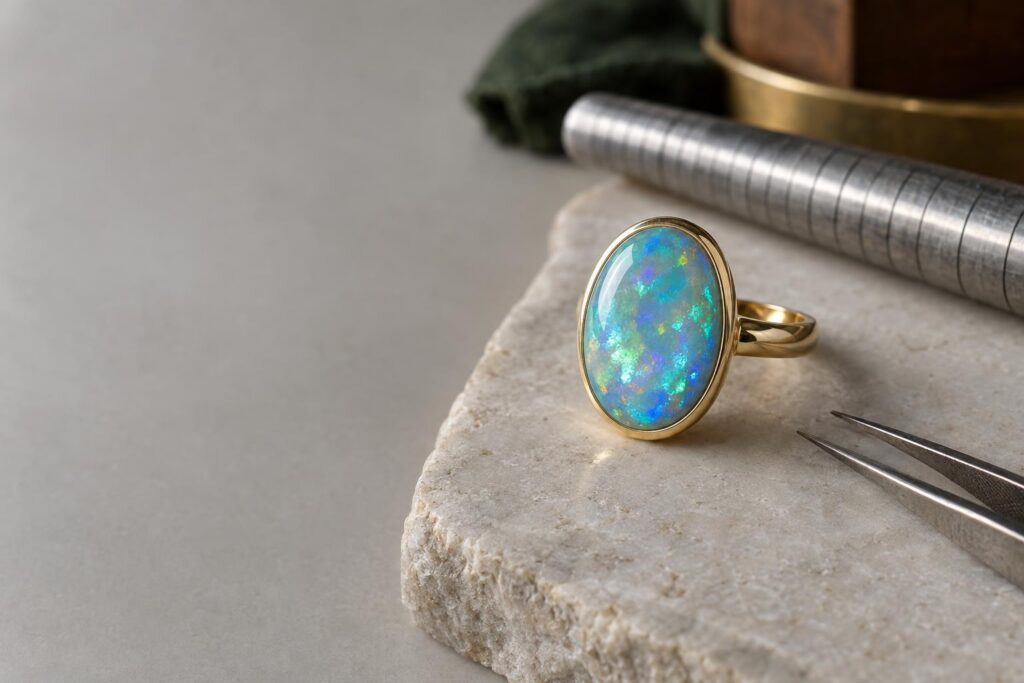
Why does a protective setting for soft gemstones matter so much?
If you love a gemstone that’s softer than diamond, you may worry it won’t last in a ring. That worry makes sense, because a ring takes much harder wear than any other type of jewellery 3. The setting, the metal that holds the stone, is one part of the answer.
Why does "soft" only tell part of the story? Gemmologists judge durability on three things: hardness, toughness and stability. Hardness is resistance to scratches. Toughness is resistance to breaking and chipping 2. Stability is resistance to damage from heat, light or chemicals 3.
How much softer is "soft"? The Mohs scale, a ranking of scratch resistance, is not linear. Diamond, at 10, is many times harder than corundum (the mineral of sapphire and ruby), at 9. So even corundum is far softer than diamond 2. There’s more in why the Mohs scale is not the whole durability story.
How does a setting help? The design of the head, the part of the ring that holds the stone, affects how the stone looks, how much light enters it and how well it is protected in daily wear 1.
Which parts of a stone need protecting? The girdle is the thin outer edge of the stone. Claw settings, where small metal tips grip the stone, work on almost any stone but don’t protect as much as other styles. For stones that chip easily, GIA’s guidance is a setting that covers the girdle. The table, the large flat facet (polished surface) on top, is very difficult to protect in a ring 3. For a wider look at every style, see ring settings explained.
Why can a bezel help protect a softer stone’s edge?
Why look at bezels? A bezel is a rim of metal around the stone. In a full bezel, the metal completely circles the stone’s edge. A partial bezel leaves some sections open, which balances visibility and protection. Bezels offer excellent resistance to chips, and their smooth edges are less likely to catch on clothing or gloves 1.
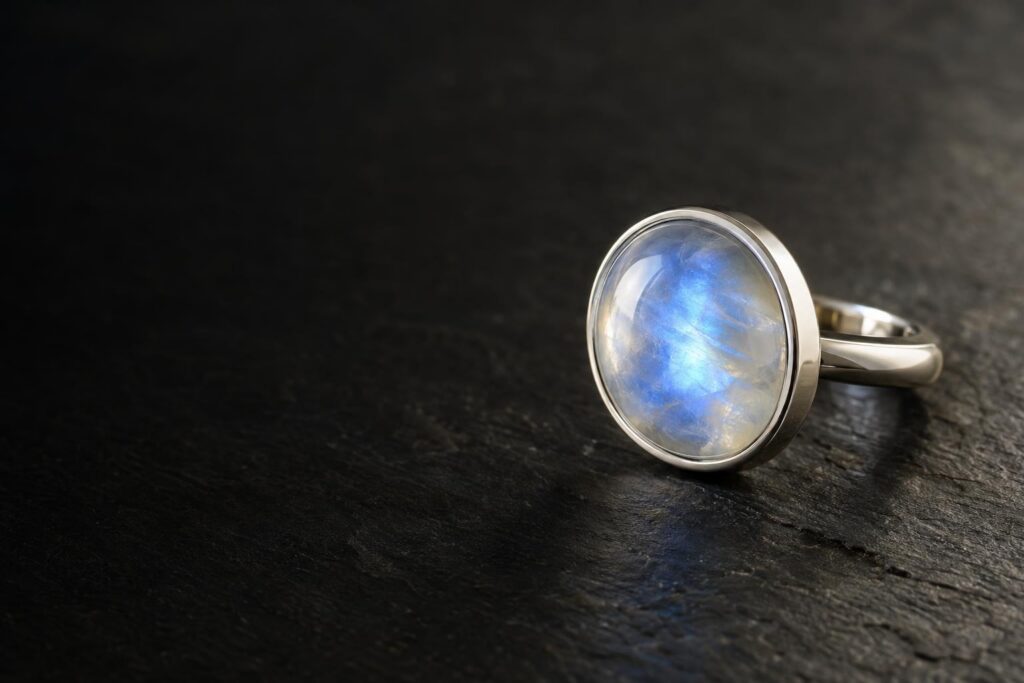
How far does that cover go? A bezel can protect both the girdle and the pavilion, the lower part of the stone, on many gems. For a fragile stone in a ring you wear often, consider a bezel, or metalwork that rises above the table. The thin line of metal also leads the eye around the gem 3.
What do you give up? A bezel covers more of the stone’s edge, so it lets in slightly less light than claws do. It also gives a clean, modern look 1. That look suits some tastes more than others.
Why do the number and shape of claws change the risk?
Why think about claws at all? Claws, also called prongs, are the small metal tips that grip the stone. They let in the most light, but they leave most of the stone exposed. They can catch on fabric, and they should be checked from time to time 1.
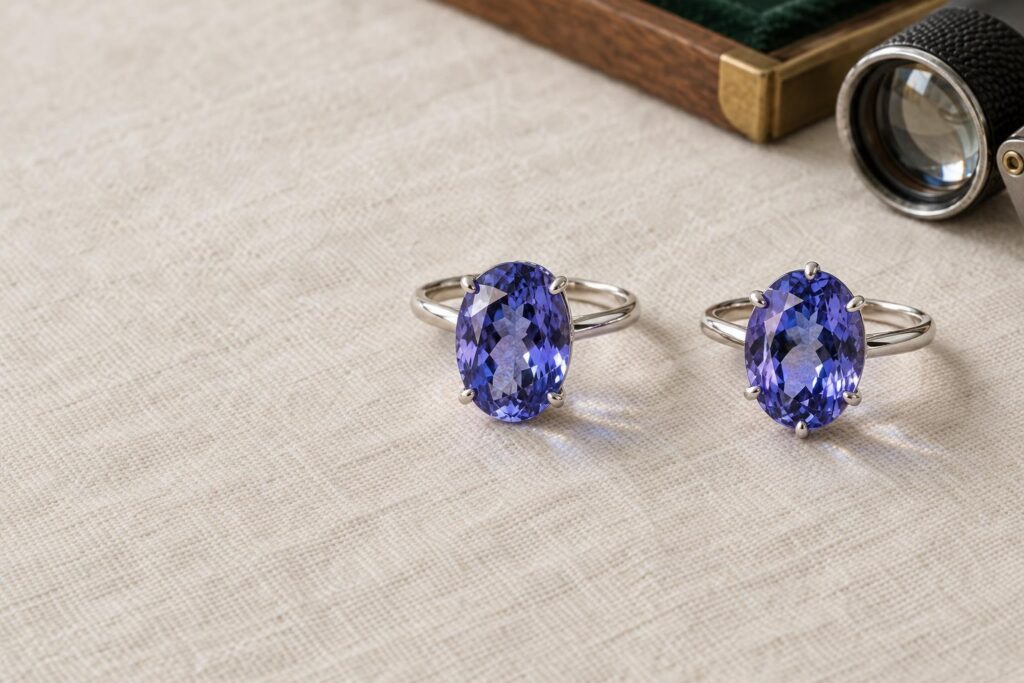
How does the number matter? Claws protect the stone from damage and loss. Four claws put less metal on the stone, but hold it less securely and protect the girdle less. If one claw breaks in a four-claw setting, the stone can easily fall out. With six, it will probably stay in place. You may hear that four claws give more sparkle. For diamonds, at least, that is a myth: sparkle depends on the quality of the cut 5. The detail is in four claws vs six claws.
What about stones with points? Pear and marquise shapes have pointed tips. V-shaped claws, bezels and partial bezels can help protect those points. Bent or broken claws can leave weak areas of a gem open to chipping 2. That’s one reason to have the claws checked, whatever their number.
Why does the height of a setting matter?
Why does height matter? It changes how easily a ring catches on things. Cathedral settings, where arches of metal lift the stone above the band, raise it higher and may be more likely to catch on clothing or objects. Flush settings are low-profile and unlikely to snag 1.
How do low settings work? In a flush setting, the stone sits sunk into the metal of the band. In a channel setting, stones sit in a row between two metal walls. Both set stones low and protect the girdle 3.
What’s the catch? Flush settings let in less light than bezel or claw settings 1. Flush setting is also best kept for durable stones, because setting a stone this way puts stress on it 3. So it’s worth asking whether a flush setting suits your particular stone.
Why consider a halo, and what does it ask of you?
Why consider a halo? A halo is a centre stone, held by claws or a bezel, surrounded by a ring of smaller stones. It can make the centre stone look larger 1. GIA’s guidance for opal is also relevant: if you’re tough on your jewellery, it suggests a protective setting with metal or gems surrounding the opal 4.
Seven settings, from most exposed to most enclosed
Pick a setting to see how it holds a softer stone, what it protects and what it gives up in return.
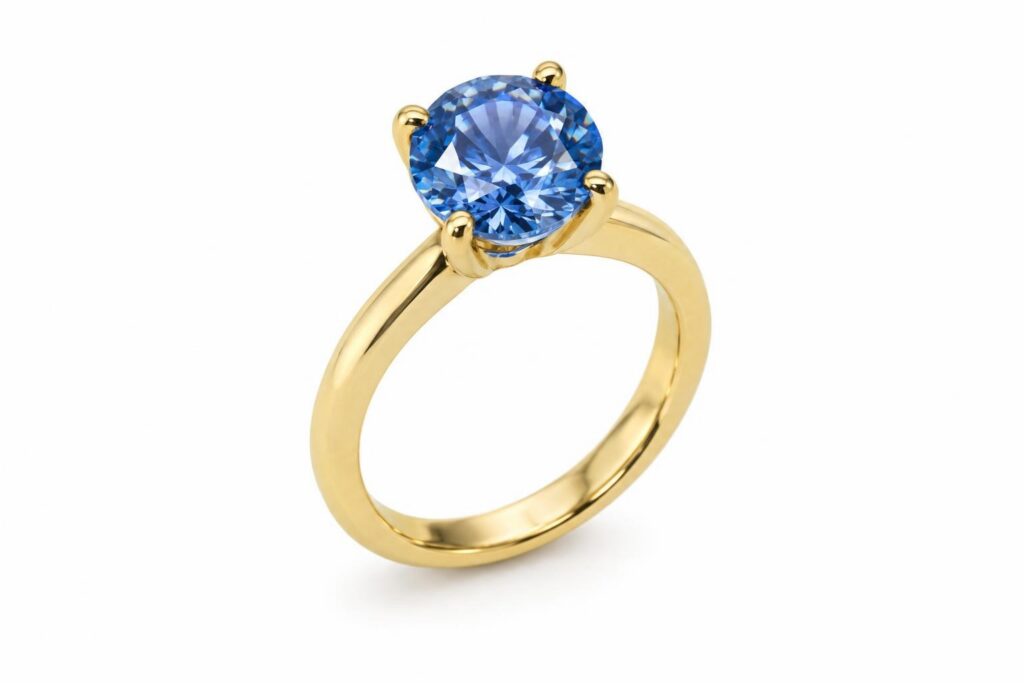
- Four-claw setting
- Claws, also called prongs, are the small metal tips that grip the stone. They let in the most light but leave most of the stone exposed. Four claws put less metal on the stone, hold it less securely and protect the girdle less. If one breaks, the stone can easily fall out.
- Six-claw setting
- Six claws put more metal around the stone. If one claw breaks, the stone will probably stay in place. Claws can still catch on fabric and should be checked from time to time.
- Cathedral setting
- Arches of metal lift the stone above the band. That raises it higher, so the ring may be more likely to catch on clothing or objects.
- Halo setting
- A halo is a centre stone, held by claws or a bezel, surrounded by a ring of smaller stones. It can make the centre stone look larger. The many small stones may need more maintenance to stay secure and clean, and ultrasonic cleaners can shake gems loose.
- Partial bezel
- A partial bezel is a rim of metal that leaves some sections of the stone's edge open. That balances visibility and protection.
- Full bezel
- In a full bezel the metal completely circles the stone's edge. It offers excellent resistance to chips, and its smooth edges are less likely to catch on clothing or gloves. It covers more of the stone and lets in slightly less light than claws. The table, the flat top facet, is still very hard to protect.
- Flush setting
- The stone sits sunk into the metal of the band. This low profile is unlikely to snag, and it protects the girdle. It lets in less light than bezel or claw settings. Flush setting is best kept for durable stones, because it puts stress on the stone.
Every picture uses the same round stone so the settings are easy to compare. Real rings vary by jeweller and by gem, and a picture cannot show how a stone will wear. Pictures: AI-generated illustrations, checked for accuracy. They are not photographs of a real piece.
How does a halo change care? Its many small stones may need more maintenance to stay secure and clean 1. Ultrasonic cleaners, which clean with fast vibration, can shake gems loose. They can also chip gems set with their girdles touching 6. So it helps to ask how closely the small stones in a halo are set, and how the ring should be cleaned.
The downsides: when a protective setting isn’t the right choice
Why talk about limits? Because some parts of a stone are hard to protect, whatever the setting. The table, the flat facet on top, is very difficult to protect in a ring. And flush setting suits only durable stones, because the setting process stresses the gem 3.
What do you give up for more metal? Bezels cover more of the stone’s edge and let in slightly less light than claws. Flush settings let in less light than either. A partial bezel leaves sections open, which balances visibility and protection. In a halo, the many small stones may need more maintenance to stay secure and clean 1.
Could the stone suit other jewellery? Less tough gems such as opal or tanzanite are safer in earrings or necklaces, so a ring set with one is best kept for special occasions 2. Treat an opal ring like silk, because it needs a bit more care 4.
Durability depends on the stone’s own hardness, toughness and stability, not only on the metal around it. Which gemstones suit everyday rings? looks at the stone side of the choice.
What should you check and ask before choosing a setting?
Why think about cleaning before you choose? Some softer gems are also sensitive to heat or chemicals. Most coloured gems can be cleaned with warm water, mild dish soap and a soft brush. Ultrasonic cleaners shouldn’t be used on heat-sensitive gems such as opal, tanzanite, moonstone and topaz. Heat, steam, solvents and ultrasonic cleaners can also damage some treated gems 6. It helps to know whether your stone has been treated, so see how gemstone treatments should be disclosed.
How do you turn all this into a decision? These questions can help you compare options with any jeweller. For the wider choice of style, see how to choose an engagement ring setting.
- How much of the girdle will the metal cover?
- Does my stone have points or corners, and how will they be protected?
- How high will the stone sit above the band?
- How many claws will hold it, and how often should they be checked?
- How should this setting be cleaned, and has the stone been treated?
If you’d like to talk through settings for a particular stone, Ralph Jacobs offers a free consultation. You can book online from any country at bookings.ralphjacobs.org, message us on WhatsApp, or visit our Secunda showroom. How much protection you want is your decision.
Frequently asked questions
Not completely. A bezel protects the girdle and pavilion of many gems well, but the table, the flat top facet, is very difficult to protect in a ring. Scratch resistance comes from the stone’s own hardness, so the top can still scratch 3.
Four claws put less metal on the stone, but hold it less securely and protect the girdle less. If one claw breaks in a four-claw setting, the stone can easily fall out; with six, it will probably stay in place 5.
Less tough gems such as opal or tanzanite are safer in earrings or necklaces, so a ring set with one is best kept for special occasions 2. How often you wear yours is your decision.
Avoid ultrasonic cleaners for heat-sensitive gems such as opal, tanzanite, moonstone and topaz; they can also damage some treated gems. Warm water, mild dish soap and a soft brush suit most coloured gems 6.