
Why does HPHT matter to you? You may see these four letters on a diamond grading report, and they can mean two different things. HPHT can describe how a laboratory-grown diamond was made, or it can mean a diamond’s appearance was changed after it formed 4. Knowing which one applies tells you exactly what you are buying.
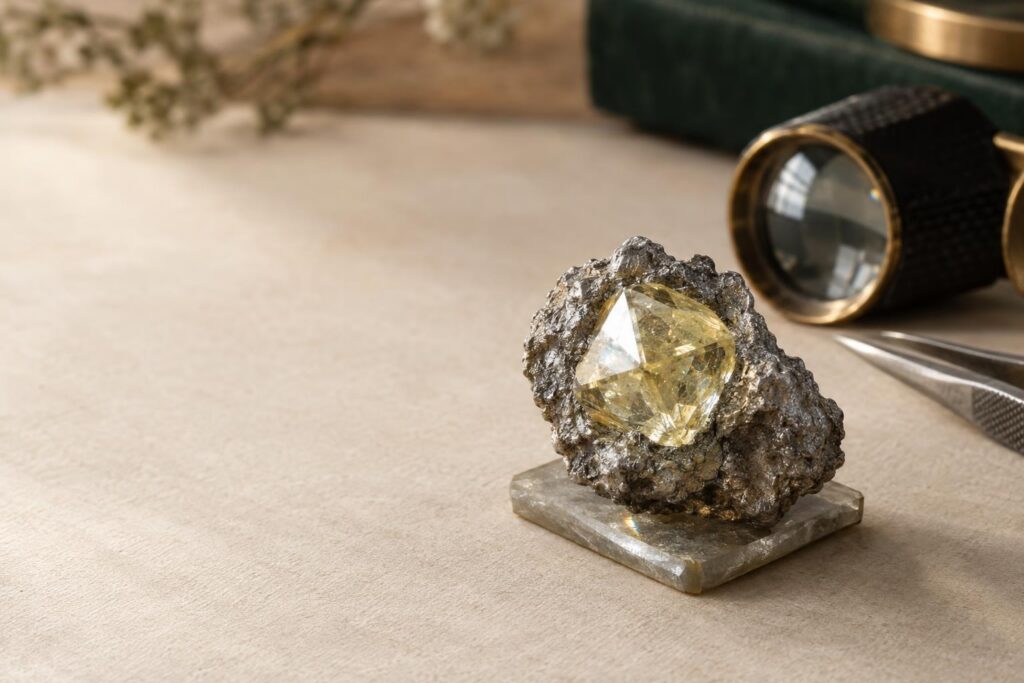
How is a diamond grown this way? Carbon is heated to 1,300 to 1,600 °C under enormous pressure, copying conditions deep in the earth where natural diamonds form. Molten metal, such as iron, nickel or cobalt, dissolves the carbon. The carbon then builds up on a small diamond "seed" over several days to weeks 1. Reports for lab-grown diamonds can state whether the stone was grown by HPHT or by another method, called CVD 5. You can compare the two in CVD vs HPHT lab-grown diamonds.
How is HPHT used as a treatment? It can change the colour of certain diamonds, making them colourless, pink, blue, green or yellow. Outside a well-equipped laboratory, this treatment is virtually undetectable. GIA discloses it on its reports and laser-inscribes the girdle, the thin outer edge of the diamond 3. CIBJO, the World Jewellery Confederation, says such a stone should be described as a "treated diamond", with both words given equal emphasis 4. Read more in How Gemstone Treatments Should Be Disclosed.
Example: You compare two reports. One, for a laboratory-grown diamond, lists HPHT as the growth process, which tells you how it was made. The other, for a natural diamond, discloses HPHT treatment, which tells you its colour was changed in a lab after it formed.