
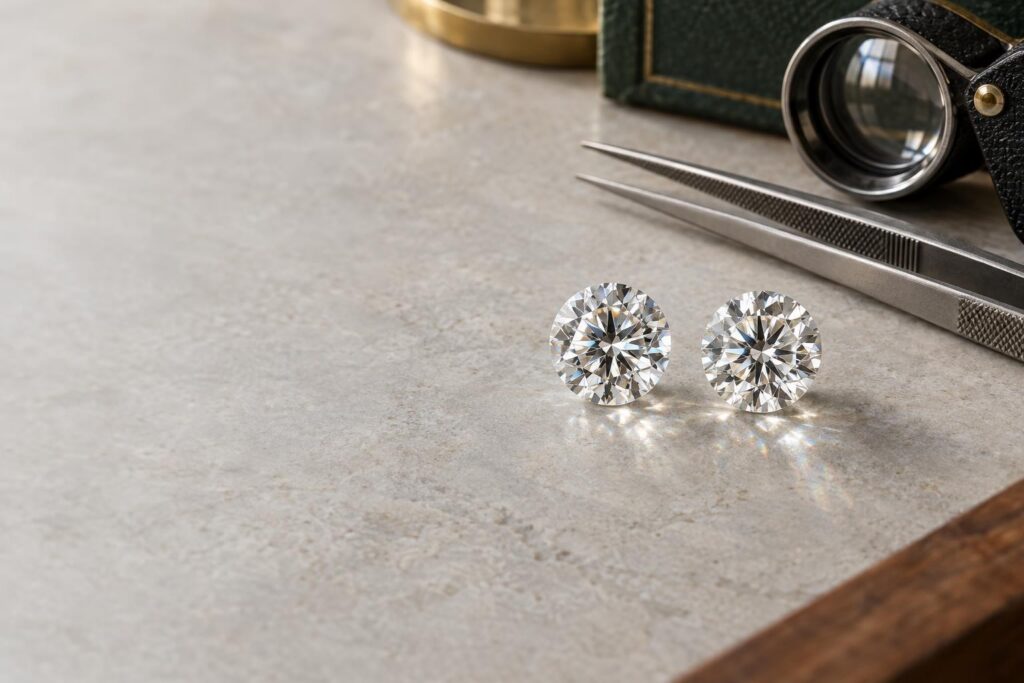
Why the letters CVD and HPHT matter to you
You are comparing laboratory-grown diamonds, and every listing seems to say CVD or HPHT. It is easy to wonder whether one of those labels means a better stone. In short, the letters name how the diamond was grown. Each method has some typical traits, but stones made the same way still vary widely. In one GIA review, HPHT stones covered nearly the whole clarity scale 4.
Key takeaways
- CVD and HPHT are two ways to grow a diamond. Both make stones with essentially the same chemistry and crystal structure as natural diamond 2.
- Each method leaves its own growth clues, which labs use to identify it. Not every stone shows every feature 1.
- Most CVD stones sent for grading have had HPHT treatment after growth to remove colour 3.
- GIA reports can state the growth method and signs of treatment 6. IGI reports can also state the growth process and treatment wording 5.
- A method can hint at tendencies. Your own stone’s report, and how the stone looks, describe the stone itself.
Why the growth method is a label, not a quality grade
Why can two stones made the same way still differ? Because growth is only the start. Each finished stone has its own colour, clarity and cut, whichever method made it. A GIA review of several thousand HPHT stones, examined from 2007 to 2016, found them across nearly the whole clarity scale 4.
Clarity is about a stone’s inclusions, the tiny features inside it, and other marks. In that review, most HPHT stones were VS1 or VS2 (very slightly included). CVD stones were mostly VVS2 or VS1, which is slightly higher. These figures describe only stones sent to GIA, not every diamond made 4.
Lab-grown diamonds have essentially the same chemical composition and crystal structure as natural diamonds. They look the same to the unaided eye 2. You can read what each grade changes in the 4 Cs of diamonds.
So does the method affect quality? It can shape tendencies. For example, CVD diamonds may need treatment after growth to improve their colour 1. The HPHT process can produce colourless or fancy-colour diamonds with high clarity 4. But a tendency is not a grade. Your stone’s report and its appearance are what describe that one stone.
Why HPHT and CVD start the same way but grow differently
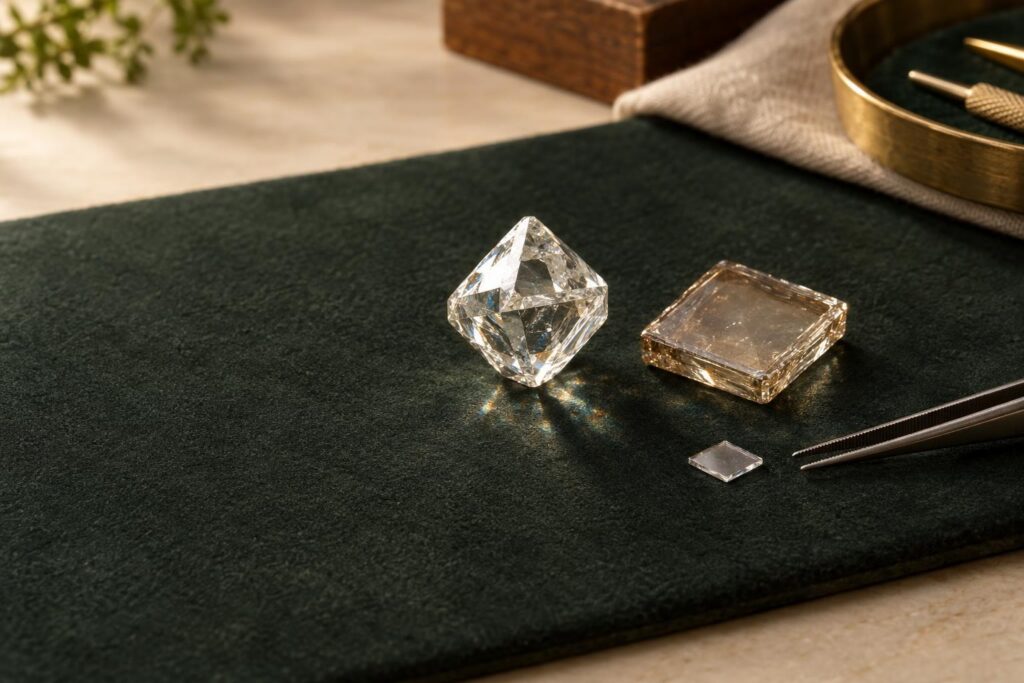
Why learn how each process works? Because the way a stone grows explains the clues it leaves and the treatments it may need. Both methods begin with a diamond seed, a small piece of diamond that new carbon crystallises on 1.
How HPHT growth works
HPHT stands for high pressure, high temperature. It copies the conditions under which natural diamonds form. Carbon dissolves in a metal flux, which is melted iron, nickel or cobalt, and then crystallises on the seed 1.
The chamber runs at 1300–1600°C and 5–6 GPa (gigapascals, a unit of pressure). Growth typically takes a few days or weeks, depending on the size of the stone 2.
How CVD growth works
CVD stands for chemical vapour deposition. A vacuum chamber is filled with a gas that contains carbon. The carbon then crystallises on a diamond seed 1.
CVD uses moderate temperatures of 700–1300°C and lower pressures than HPHT. Growth typically takes 4–6 weeks 2. CVD equipment costs less up front than HPHT equipment. The trade-off is that the diamonds may need treatment afterwards to improve their colour 1.
Why each method leaves different clues
Why would a lab care how a stone was grown? Because the method and any treatment can be identified, and labs do it from small growth markers. GIA scientists use these markers to identify which method was used, but not every stone shows every feature 1.
Typical HPHT traits
Fluorescence is a glow some diamonds give off under ultraviolet (UV) light. HPHT stones may show:
- uneven colour across the stone
- graining, faint lines left by the way the crystal grew
- metallic flux inclusions, tiny bits of the metal used during growth
- a cross-shaped fluorescence pattern
- a response to a magnet, if the metallic inclusions are large 1
Labs can identify HPHT stones by distinctive fluorescence patterns. Another clue is a lack of strain under crossed polarising filters, a lab test that reveals stress inside a crystal. Some also show phosphorescence, a glow that continues after the UV light is switched off 4.
Typical CVD traits
CVD stones have no metallic inclusions 1. Instead, they may show:
- dark graphite pinpoints, tiny black dots of carbon
- banded strain patterns under polarising filters
- striped fluorescence
Like the HPHT markers, these are identification clues for a laboratory. They are not quality grades.
Why CVD diamonds are often treated after growth
Why does treatment come up so often with CVD? Because a stone fresh from a CVD chamber may not have the colour the maker wants. After growth, CVD diamonds often get HPHT treatment to change their colour. It can make them more colourless or give them a fancy colour 2.
This means HPHT is two things: a growth method and a treatment. Most colourless CVD stones on the market were probably brown crystals decolourised by HPHT annealing, or heating under high pressure 1. HPHT equipment can also improve the colour of lower-quality natural or lab-grown diamonds 2.
Does the colour of a CVD stone stay put? Some CVD stones change colour for a while under UV light or heat. Every such change GIA has seen was temporary and fully reversible. CVD stones sent back to GIA months or years apart showed no significant change in colour grade 3. For how treatments in general should be shared with buyers, see how gemstone treatments should be disclosed.
Why the report is where the method is disclosed
Why rely on a report rather than the listing? Because a report is a laboratory’s opinion based on testing, and it can name both the method and any signs of treatment. Some GIA lab-grown reports have stated whether the stone was made by CVD or HPHT, and whether there are signs of colour treatment after growth. What a GIA report includes depends on the report type, so check your own. Sample wording reads: "produced by CVD (Chemical Vapor Deposition) growth process and may include post-growth treatments to change its color" 6.
IGI reports for untreated CVD and HPHT diamonds state the growth process. They describe these stones as "as grown with no indication of post-growth treatment." Reports for other CVD diamonds note that the stone "may include post-growth treatment." You can also ask for diamond type analysis, a test that sorts diamonds into scientific types, such as type IIa for CVD and type II for HPHT 5.
The girdle is the thin outer edge of a diamond. On stones GIA grades, it is laser-inscribed with the report number and a statement that the stone is lab-grown 2. A "LABORATORY-GROWN" inscription or a maker’s mark is commonly found on commercial-size stones 3.
Why read your own report closely? Because, as the examples above show, wording differs between laboratories. What a report includes can also depend on the type of report. So check exactly which method, treatment and quality details your report gives, rather than assuming every report shows the same grades. For more, see how to read a GIA diamond grading report and GIA vs IGI diamond reports.
The downsides and limits of judging a stone by its method
Why be careful with the label? Because it can feel like a quality shortcut when it isn’t one. Keep these limits in mind:
- The method name does not give your stone its grades. Studies show some tendencies by method, but HPHT stones alone have covered nearly the whole clarity scale, and those figures describe only stones sent to GIA 4.
- "May include post-growth treatment" is not a yes or no. It says treatment is possible, not that it was confirmed. Likewise, "no indication of post-growth treatment" is a finding from testing, not a promise 5.
- Growth clues vary, and not every stone shows every feature. The method is identified by laboratory testing, not by looking at a stone in a shop 1.
Choosing between lab-grown and natural is a separate decision. It is covered in natural vs lab-grown diamonds.
What to look for when buying CVD vs HPHT diamonds
Why use a checklist? Because it keeps your attention on the facts that describe the stone in front of you, not the label on the listing.
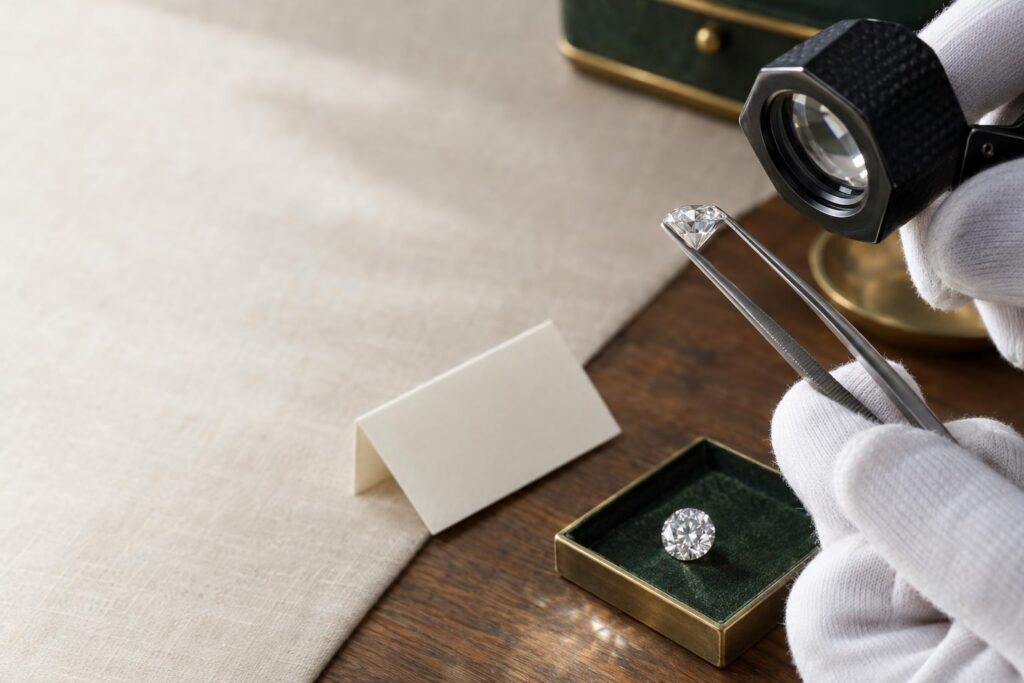
- A laboratory report that identifies the stone as laboratory-grown and names the growth method. GIA reports can state CVD or HPHT 6.
- The treatment wording, such as "as grown with no indication of post-growth treatment" or "may include post-growth treatment" 5.
- The laser inscription on the girdle. On stones GIA grades, it carries the report number, so you can check it matches the report 2.
- Whatever quality details the report gives, such as colour and clarity. Contents vary by laboratory and type of report.
- How the stone looks to you, in person or in clear video.
If an untreated stone matters to you, the treatment line is the relevant fact. If appearance matters most, the report’s quality details and your own eyes are. Either way, the decision is yours.
If you have questions about a laboratory-grown diamond, we offer a free consultation, online from any country at bookings.ralphjacobs.org, by WhatsApp, or at our Secunda showroom. Our lab-grown diamonds may come with IGI or GIA reports, though not every stone comes with an independent lab report.
Frequently asked questions
Not by method alone. Each finished stone has its own colour, clarity and cut, and in one GIA review HPHT stones covered nearly the whole clarity scale 4. Both methods make stones with essentially the same chemistry and crystal structure as natural diamond 2. Each method has some tendencies, but individual stones vary, so check what your own report says about your stone.
Not always. HPHT is both a growth method and a treatment. CVD diamonds often get HPHT treatment after growth to change their colour 2. Check whether the report names HPHT as the growth process or mentions post-growth treatment.
Some CVD stones change colour for a while under UV light or heat, but every such change GIA has seen was temporary and fully reversible. Stones resubmitted months or years apart showed no significant change in colour grade 3.