
Why does platinum matter when you choose a white metal? How a ring looks after years of wear matters as much as how it looks on day one. Platinum is naturally white, so its colour does not change with wear. It also does not alter the colour of a diamond or gemstone set in it. Over time, its surface develops a patina, a gentle change in the finish that comes with wear 4. For a side-by-side view, see white gold vs platinum.
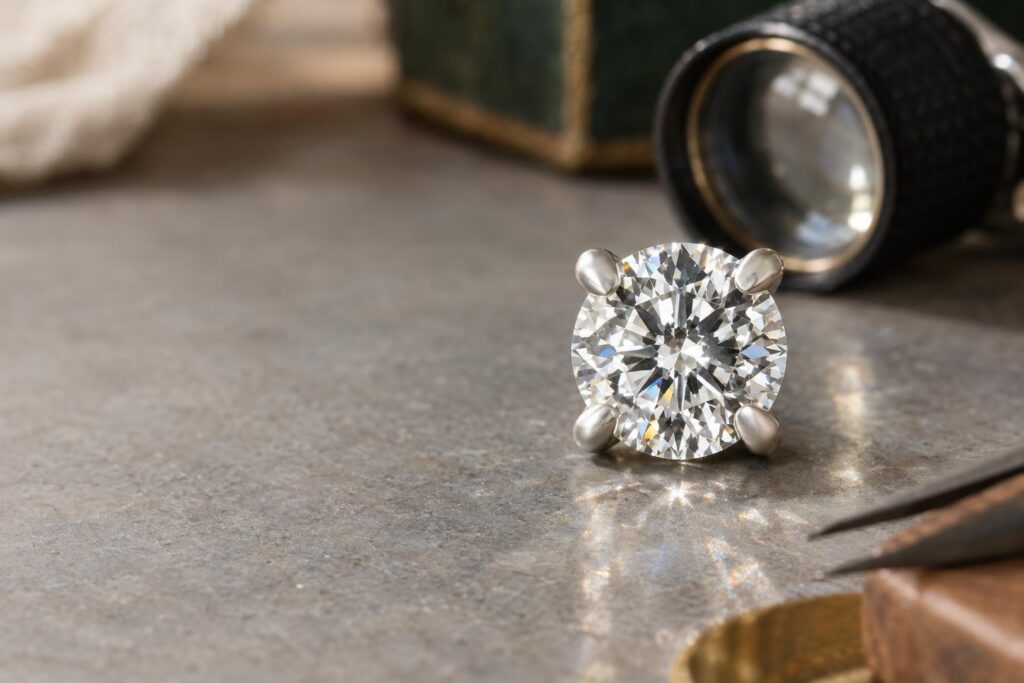
How does platinum hold up to daily wear? It is denser and stronger than gold, and less brittle than gold alloy (gold mixed with other metals). This means platinum prongs, the small metal claws that grip a stone, are less likely to break 2. One laboratory study found two platinum alloys lost two to three times less volume than white gold alloys over 250 hours of testing. That study was funded by a platinum industry group 5.
What should you look for inside a platinum piece? Platinum jewellery is mainly made at 950 or 900 fineness. Fineness is the number of parts of platinum in every 1,000 parts of metal 6. A quality stamp may read "Pt" or "Plat" followed by that number, such as Pt950 2. Stamps can look different from piece to piece, so ask your jeweller what a mark means, or read about the hallmark. Jewellers also value platinum for its significant weight 3. That weight comes from its high density of 21.5 g/cm³ 1.
Example: Imagine a ring with Pt950 stamped inside the band. In this style of stamp, that means 950 parts platinum in every 1,000 parts of metal 2. Years later, the band may have a soft patina, but because platinum is naturally white, its colour has not changed with wear 4.