
Why does this term matter when you shop? A three-stone ring asks you to choose three gems that look right together, not just one. Jewellers call three-stone a setting style, which means the overall design of the ring. The setting itself is how each gem is held, such as prongs (small metal claws) or a bezel (a thin metal rim around the stone) 2. Prongs show more of each stone, while a bezel protects it better 1.
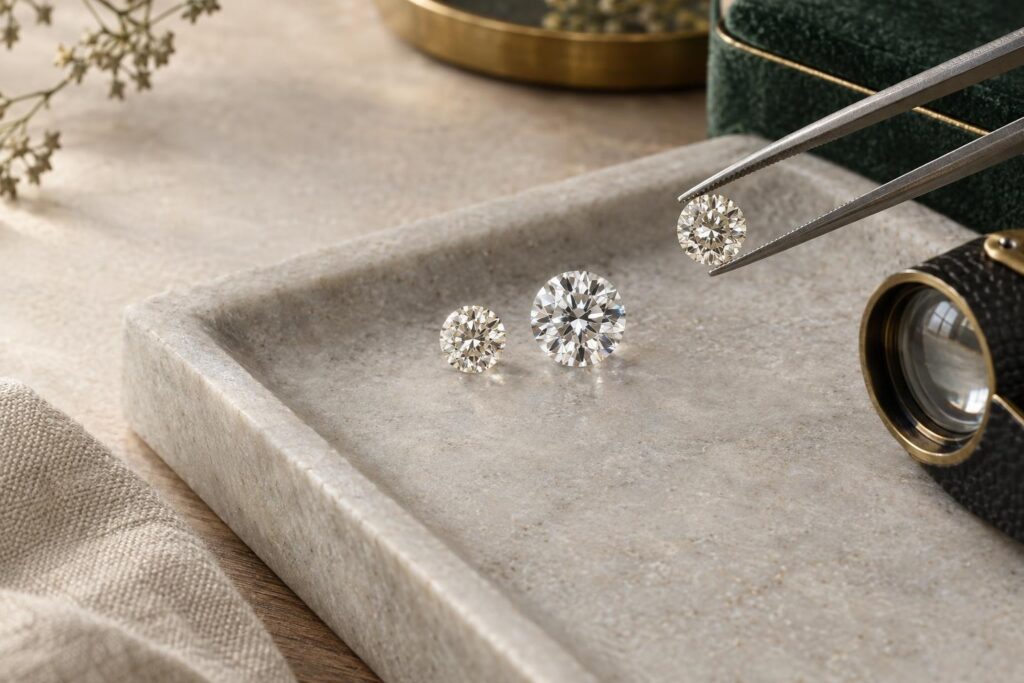
Why do the side stones need careful matching? They change how the centre stone looks. In an all-diamond ring, side stones are usually within about two colour grades of the centre stone. Much whiter side stones can make the centre diamond look more yellow 2. GIA’s guidance is that side stones should not be too large or too small compared with the centre stone. It also says they should not be hidden by the fingers on either side of the ring finger 3.
Why has the style lasted so long? The three stones are often said to stand for "yesterday, today and tomorrow", and the style dates back at least to the 17th century 1. The stones do not have to be diamonds or the same shape. Some modern designs pair an oval centre stone with pear-shaped side stones 4.
Example: One three-stone ring shown by GIA has a 1.39 ct round brilliant diamond framed by two round rubies of 1.41 ct and 1.37 ct, where ct stands for carat, the unit of a gem’s weight. Rubies score 9 on the Mohs scale of scratch resistance, which helps them cope with wear as side stones 1.