
Why does it help to know what white gold is made of? Most white gold jewellery sold in shops has rhodium plating, a thin coating of a bright white metal. When that plating wears, the colour of the metal underneath can look different 5. White gold is an alloy, which means a mix of metals. Gold is mixed with nickel or palladium, plus copper and zinc. 18ct (18K) white gold is 750 parts gold in 1,000 1. See 9ct vs 14ct vs 18ct gold for what the purity changes.
Why isn’t all white gold the same shade? Nickel and palladium do most of the whitening, and zinc helps offset the colour of copper 3. White gold with more alloy looks whiter, and white gold with more gold can have a slight yellow tint. Rhodium plating gives both the same bright white colour 2. The plating wears away gradually, so the piece needs replating from time to time 1. Regular contact with water and the chemicals in some soaps and shampoos can dull the rhodium finish 2.
Why does the whitening metal matter? Nickel has long been used because it is cheap and whitens gold strongly. However, it can cause allergic reactions on skin contact 3. If you are allergic to nickel, avoid white gold alloyed with nickel 1. White golds that use palladium instead can be made without nickel 4. To see how white gold compares with another white metal, read white gold vs platinum.
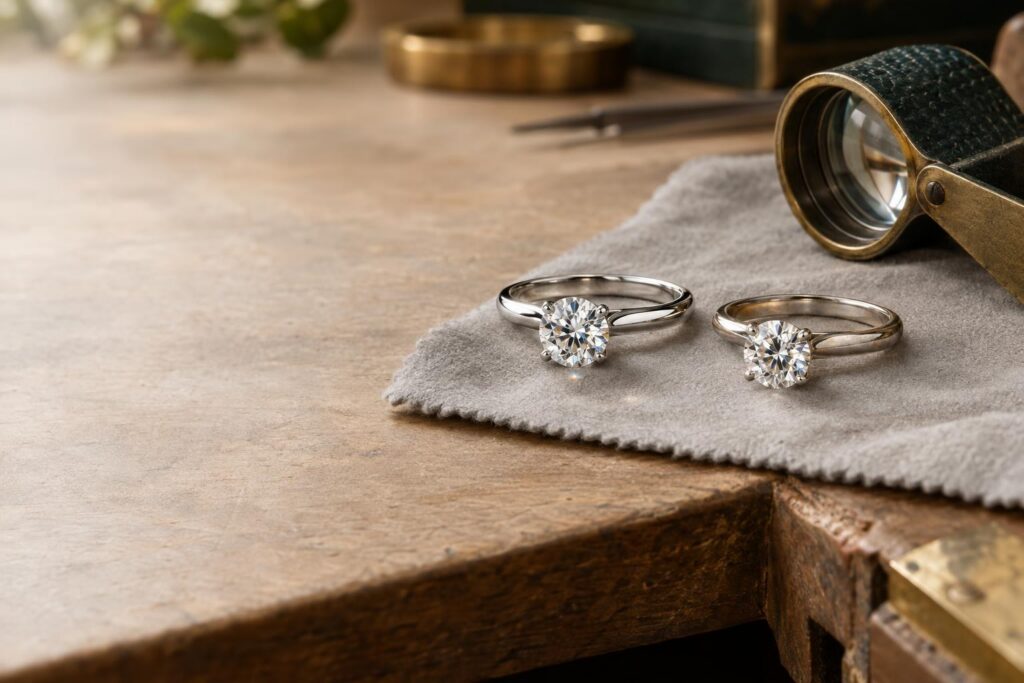
Example: Picture two white gold rings side by side: one is 14ct and the other is 18ct. Both are rhodium plated, so they can be hard to tell apart by eye. The quality mark stamped inside each ring tells you which is which 1. Learn to read these stamps in what 375, 585 and 750 gold marks mean.