
Why the metal matters so much in an engagement ring
You may have asked a jeweller for a sterling silver engagement ring and been steered towards gold or platinum. It is fair to wonder whether you were simply being upsold, or whether there is a real reason. This article looks at what the metals themselves do, so you can judge for yourself.
Sterling silver is popular for jewellery but rarely used for engagement rings or wedding bands. It is also soft and prone to tarnish 1. Below we explain both properties, set out silver’s real strengths, and leave the choice with you.
- Sterling silver is softer than gold and platinum, so it scratches and dents more easily, though the Gemological Institute of America (GIA) still rates it fine for everyday wear 2.
- Silver tarnishes, and every polish or chemical dip removes a little of the silver underneath 3.
- Pure platinum is too soft for jewellery, so it is alloyed to raise its hardness 6.
- Other metals have care needs too: white gold prongs should be checked from time to time 1.
Why sterling silver is softer than other ring metals
Why does softness come first? Because softer metal scratches and dents more easily 2. Sterling silver is an alloy, which means a mix of metals: 925 parts silver and 75 parts copper 1. Copper is almost always the other metal, because other metals are generally less effective at hardening silver 5.
Even with copper added, cast sterling silver is comparatively soft. The sources give hardness in HV, the Vickers hardness scale, where a higher number means harder metal. Cast sterling, the kind poured into a mould, measures about 60 to 70 HV. Some grain-refined and fire-stain-resistant sterling alloys are even softer when cast, down to 50 HV 4.
Can silver be made harder? To a point. Suitable heat treatment can raise sterling to about 140 HV. The process is seldom used, though, because it takes time and the gains are hard to achieve in industry. Hardening also reduces ductility, which is how far metal can bend before it cracks. For this reason, grain-refined alloys are recommended when hardened metal must be reshaped later, for example when sizing rings 4.
Gold is not hard in its pure form either. Pure 24ct (24K) gold is too soft for daily wear, so 14ct (14K) and 18ct (18K) gold are alloyed for strength and suit rings worn every day 2. To see how karat changes a ring, read 9ct vs 14ct vs 18ct gold. To understand the numbers stamped inside gold rings, see what 375, 585 and 750 gold marks mean.
Platinum follows the same pattern. Pure platinum is too soft for jewellery and scratches easily, and alloying it increases its hardness significantly 6.
Why softness matters in a sterling silver engagement ring
Why does softness matter for an engagement ring in particular? Because the ring is not only a band. If your ring holds a stone, the metal does the holding, every day you wear it.
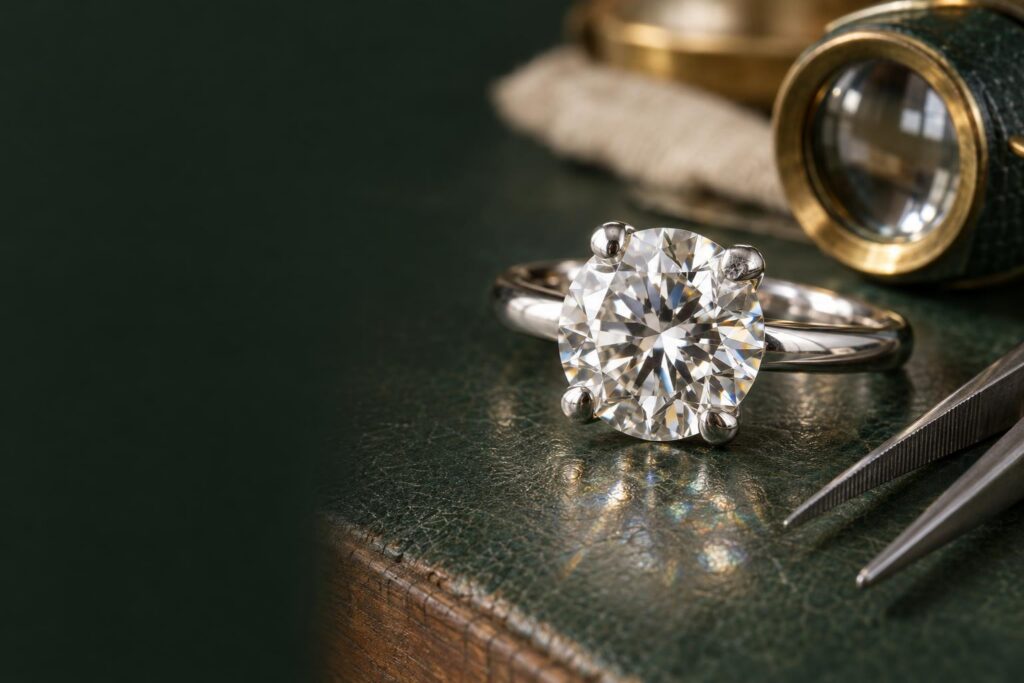
Some settings hold the stone with claws, also called prongs. These are small tips of metal that grip the edge of the stone. GIA’s comparison of white metals looks at how prongs behave in white gold and platinum 1. You can compare claw styles in ring settings explained.
Silver is not the most durable of metals: it can scratch and take on an aged look 1. The sources here do not test silver claws directly. So they do not show how well a silver claw holds a stone over years of wear. If that matters to you, ask a jeweller how a particular silver design holds its stone.
For comparison, platinum is denser and stronger than gold. It is also less brittle than gold alloy, so its prongs are less likely to break 1. Platinum is also very wear-resistant and won’t lose its shape over decades of wear 2.
White gold has its own profile. It is durable and long-wearing, and resists corrosion and impact 1. For a side-by-side look, read white gold vs platinum.
Why silver tarnishes, and what cleaning does over time
Why does tarnish matter for a ring you wear daily? Because it dulls the ring, and some ways of removing it take a little metal with them. Tarnish is mainly black silver sulphide. It forms from sulphur compounds in the air, such as hydrogen sulphide 3.
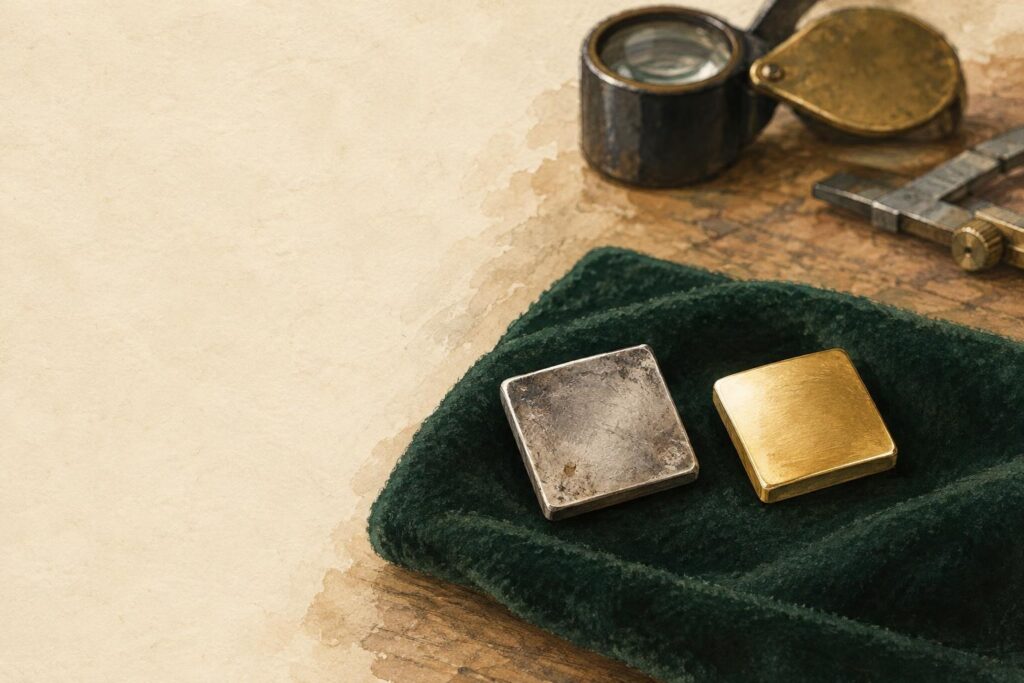
Silver tarnishes over time when exposed to air and moisture, which dulls it 2. Even a thin layer of dark tarnish can quickly destroy silver’s surface lustre, its soft natural shine. The salts and oils on your skin can also mark silver 3.
How is tarnish removed? It can be taken off with a polish, a chemical dip or an electrochemical method 3. Polishing and chemical dips come at a small cost to the metal:
- Each polish or chemical dip also removes some of the silver under the tarnish 3.
- Polishes are somewhat abrasive, so they leave a pattern of fine scratches.
- The more often a ring is polished or dipped, the more often this happens. The sources here do not describe the same cost for the electrochemical method.
Rhodium plating is a thin coating of rhodium, a white metal, applied over the ring. On silver, it makes tarnish less likely 1. Gold, by contrast, resists tarnish and corrosion. Platinum develops a patina, a soft worn sheen, which can be polished away 2.
Why gold and platinum have downsides too, and when silver may suit you
Why look at the other side? Because every metal has trade-offs, and silver’s strengths are real. White gold prongs can be damaged or loosen, so have them checked from time to time 1. Platinum develops a patina, which needs polishing if you want a bright finish 2.
Silver has clear advantages. It is valued for its beauty, affordability and versatility, and it pairs well with many gemstones. Sterling is rated fine for everyday wear and is resizable 2. Sterling also has good machinability, malleability and ductility, so it is easy to shape 5.
So the two GIA articles differ in emphasis. One rates sterling as fine for everyday wear, and notes it may need polishing to remove tarnish if it isn’t worn often 2. The other notes that it is rarely used for engagement rings 1. Both can be true at once. Which point weighs more depends on what you want from your ring.
Here is how those facts line up against different priorities:
- If cost matters most, silver’s affordability is in its favour. If tarnish resistance matters most, gold resists tarnish and corrosion 2.
- If you would rather not polish often, the relevant fact is that each polish or chemical dip removes a little silver 3.
- If the strength of the claws matters most, platinum’s prongs are less likely to break than those of gold alloy 1.
What to ask a jeweller before choosing your metal
Why ask questions rather than pick a metal outright? Because metals differ in hardness, tarnish, care and resizing 2. These questions can help you compare any metal fairly:
- Which alloy is used, and how hard is it once the ring is finished?
- How are the claws made, and how often should they be checked? You can learn to check claws and settings at home.
- Is the ring plated with rhodium, and what care does that finish need?
- How would the ring be resized if needed? To compare sizing systems, use the Ring Size Converter.
- What cleaning does the metal need, and how will it change the surface over time?
Ralph Jacobs makes engagement rings in 9ct and 18ct white and yellow gold, 14ct rose gold and platinum, and does not make rings in silver. If you’d like to compare these metals, we offer a free consultation, online from any country at bookings.ralphjacobs.org, by WhatsApp, or at our showroom.
Frequently asked questions
Sterling silver is rated fine for everyday wear. It is also softer than gold and platinum, so it scratches and dents more easily, and it tarnishes over time. Regular cleaning and polishing restores the shine 2.
Rhodium plating makes tarnish less likely on silver 1. That means it reduces the chance of tarnish rather than ruling it out.
Each polish or chemical dip removes some of the silver under the tarnish. Polishes are also somewhat abrasive and leave fine scratches 3. The more often a ring is polished or dipped, the more often this happens.