
Why does colour matter when you compare white diamonds? Most diamonds that look colourless actually hold faint hints of yellow or brown 1. The colour grade puts a name on how much. It is really a measure of a diamond’s lack of colour 5. To see how colour sits beside the other diamond grades, read The 4 Cs of Diamonds.
Colour: from D to Z
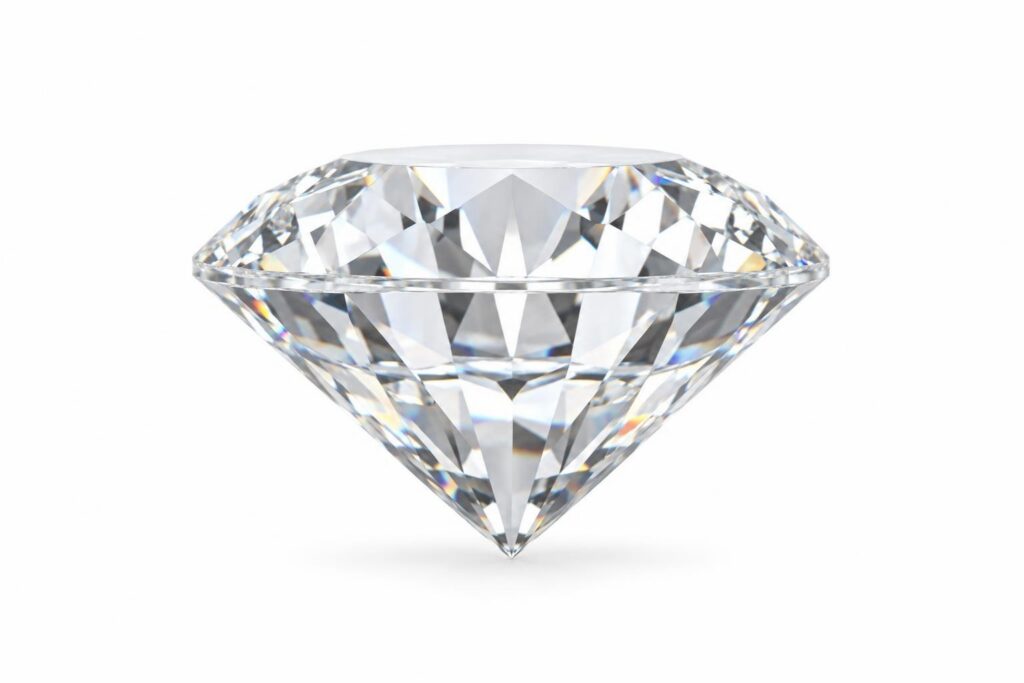
- D–F Colourless
- G–J Near colourless
- K–M Faint
- N–R Very light
- S–Z Light
Pictures: one AI-generated illustration of a diamond, adjusted for each grade. They show how the grades differ; they are not a grading of any stone.
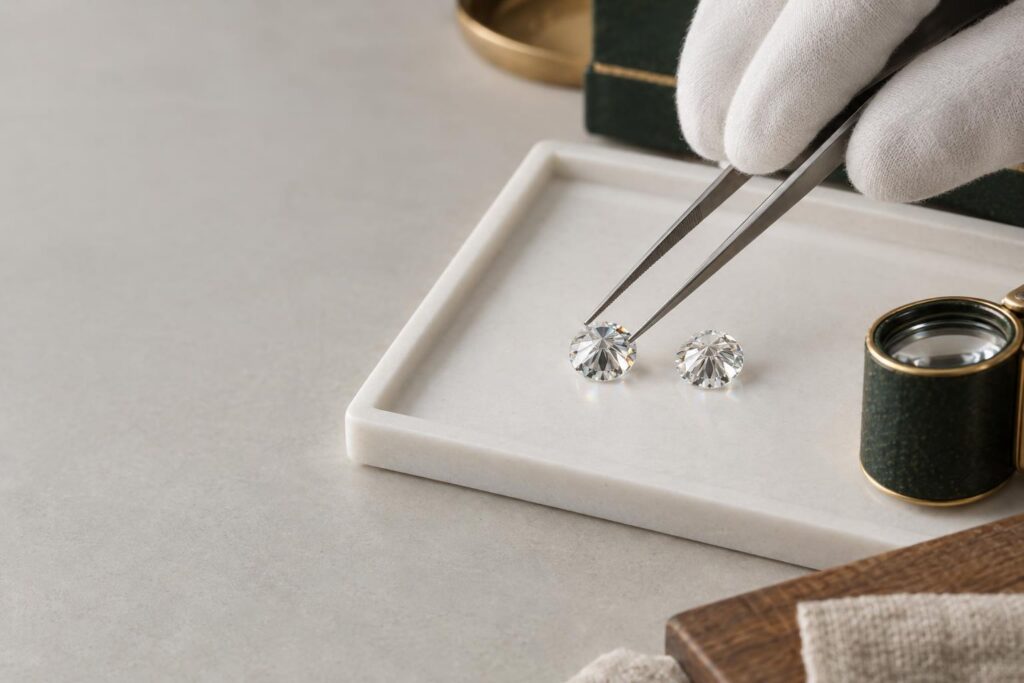
How is the grade decided? A trained grader places the diamond table down, meaning its large flat top face rests downward, under carefully controlled light. The stone is then compared with master stones, which are reference diamonds that each match one letter 1. Grading is done on loose stones, because the metal of a setting changes how the colour looks 5.
What do the letters mean? The GIA scale has 23 grades, from D to Z 2. D to F is colourless, G to J is near colourless, K to M is faint, N to R is very light, and S to Z is light 1. The scale starts at D to keep it apart from older systems that used letters such as A or AA 4. To see where the grade appears on paper, read How to Read a GIA Diamond Grading Report.
Example: Say you compare two reports: one round diamond is graded F and another is graded H. F sits in the colourless group and H in the near-colourless group. The untrained eye may not be able to tell a nearly colourless diamond from a colourless one 1. If colour matters to you, the grade records a difference your eyes may not notice.