
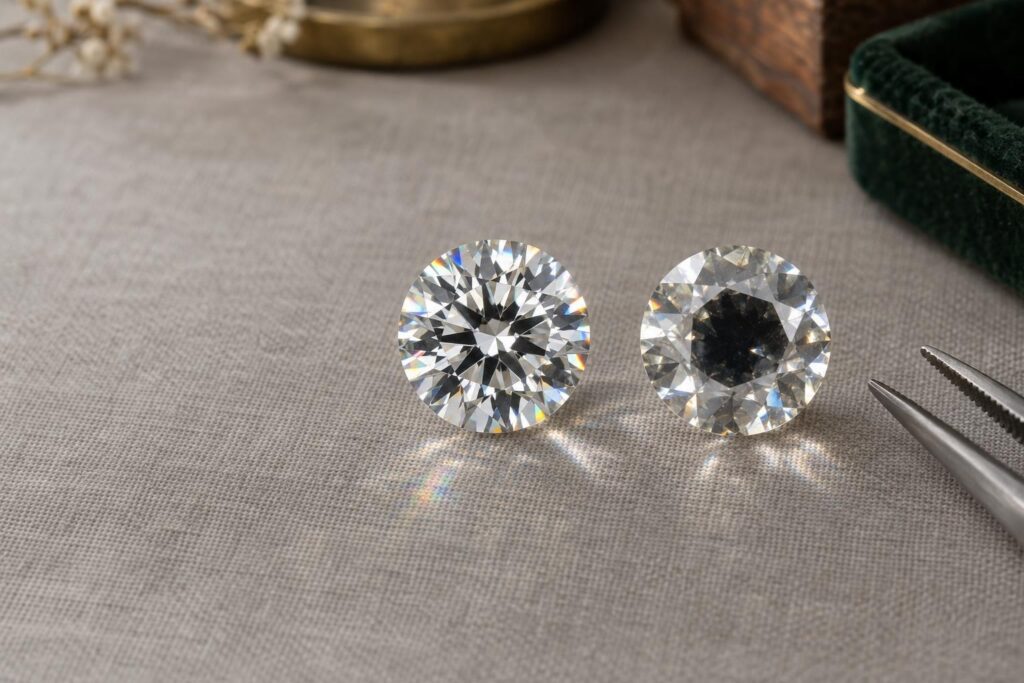
Why look at the cut grade? It is the part of a diamond report that shows how well the stone was crafted to return light. Here, "cut" means craftsmanship, not the shape, such as round or emerald 6. A diamond graded Excellent looks bright, with an even spread of light and dark. A Poor one looks dull because light leaks out 1.
Cut: what proportions do to light
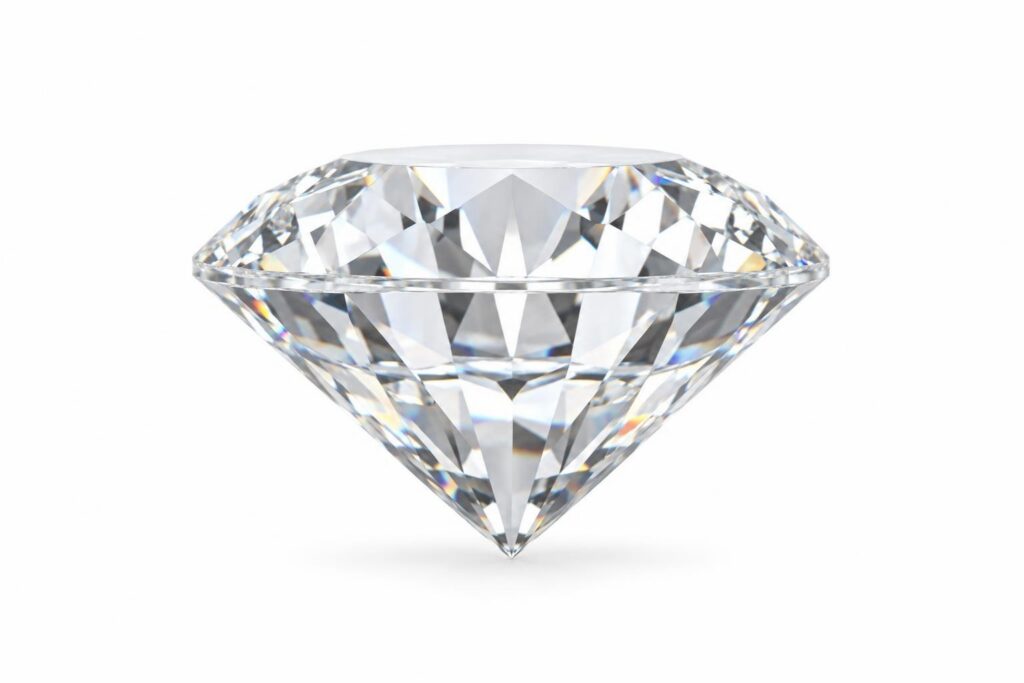
Cut grades for round brilliants run: Excellent, Very good, Good, Fair, Poor.
Pictures: one AI-generated illustration of a diamond, adjusted for each grade. They show how the grades differ; they are not a grading of any stone.
How is it graded? GIA’s system covers standard round brilliants across the D-to-Z colour grades. Its five grades are Excellent, Very Good, Good, Fair and Poor. Graders judge brightness, often called brilliance (white light reflected back), fire (flashes of rainbow colour) and scintillation (sparkle and pattern) 2. They also judge weight ratio, durability, polish and symmetry, which is the finish and placement of the tiny flat faces called facets. The overall grade is the lowest rating among five of these factors 1.
Why check the shape and the laboratory? GIA gives an overall cut grade only to round brilliants. Fancy shapes, such as oval or pear, get polish and symmetry grades instead, and those alone are not an overall cut grade 1. IGI does grade fancy shapes for cut, from Excellent to Poor 4. So GIA and IGI reports for the same shape may show different cut information. A lower grade is not automatically worse for you: Very Good and Good cuts are also beautiful, and some buyers prefer them 2.
Example: Imagine two round diamonds of 1.00 ct each, with the same colour and clarity. One has an Excellent cut grade and the other is graded Poor. The Excellent stone looks bright, with an even spread of light and dark, while the Poor stone looks dull because light leaks out 1.