
Why does scintillation matter when you choose a diamond? It is a big part of what most people call sparkle, the lively flashing you notice as a ring moves on a hand 3. GIA counts scintillation as one of seven parts of its cut grade for round brilliant diamonds 2. Knowing the term helps you follow what a jeweller means when they talk about how a stone performs.
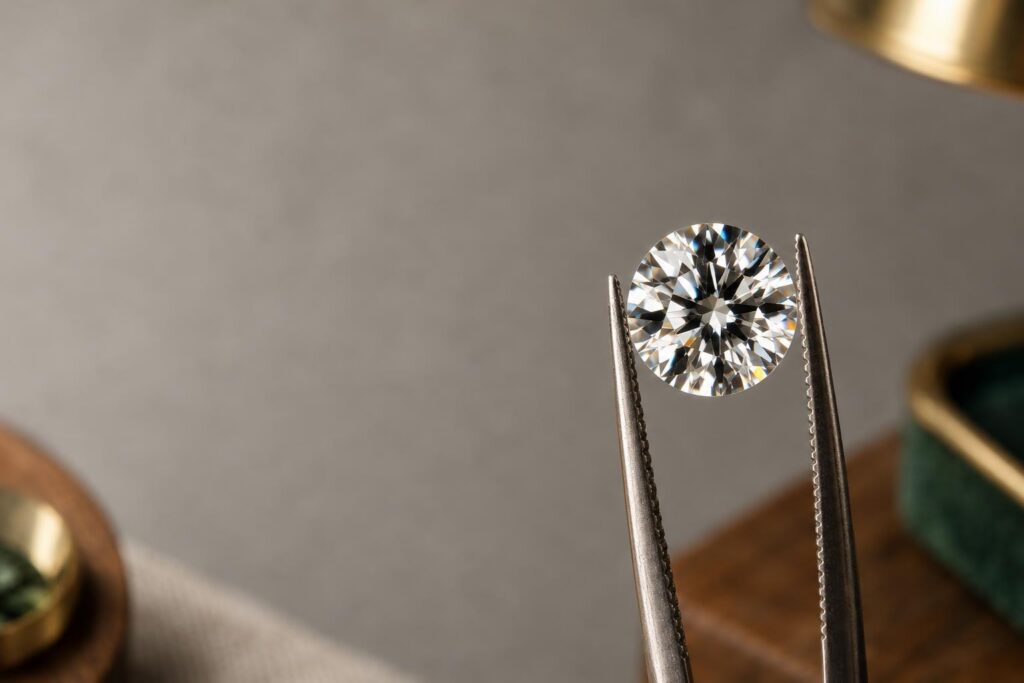
How does it work? A diamond’s facets are the small, flat, polished surfaces cut into it. They act like a set of tiny mirrors that reflect the room and each other 4. GIA describes scintillation as two things together. Sparkle is the spots of light that flash when the diamond, you or the light moves. Pattern is the size, arrangement and contrast of the bright and dark areas 1.
What changes how much you see? Lighting plays a part: the same diamond looks different in spot, diffused and mixed light 2. Scintillation also works alongside brilliance, the white light a diamond reflects, and fire, white light split into rainbow colours 1. People also have personal preferences about the light and dark pattern they like 4. To see how the three effects fit together, read Brilliance, Fire and Scintillation Explained.
Example: Hold a diamond ring under a single ceiling spotlight and tilt your hand slowly. The quick white and coloured flashes, and the bright and dark shapes moving across the stone, are scintillation. Spot lighting shows the elements that create sparkle, but too many bright spotlights can cause glare and make every diamond look alike. So look at a diamond in several kinds of light, including natural daylight 3.