
Why does clarity matter when you choose a diamond? Tiny marks inside or on a stone can change how it looks, what it is worth and even how sturdy it is. Inclusions (marks inside the stone) usually affect beauty and value more than blemishes (marks on the surface), which can often be polished away. Inclusions near the girdle, the thin outer edge of the diamond, can make it more likely to chip.2
Clarity: from flawless to included
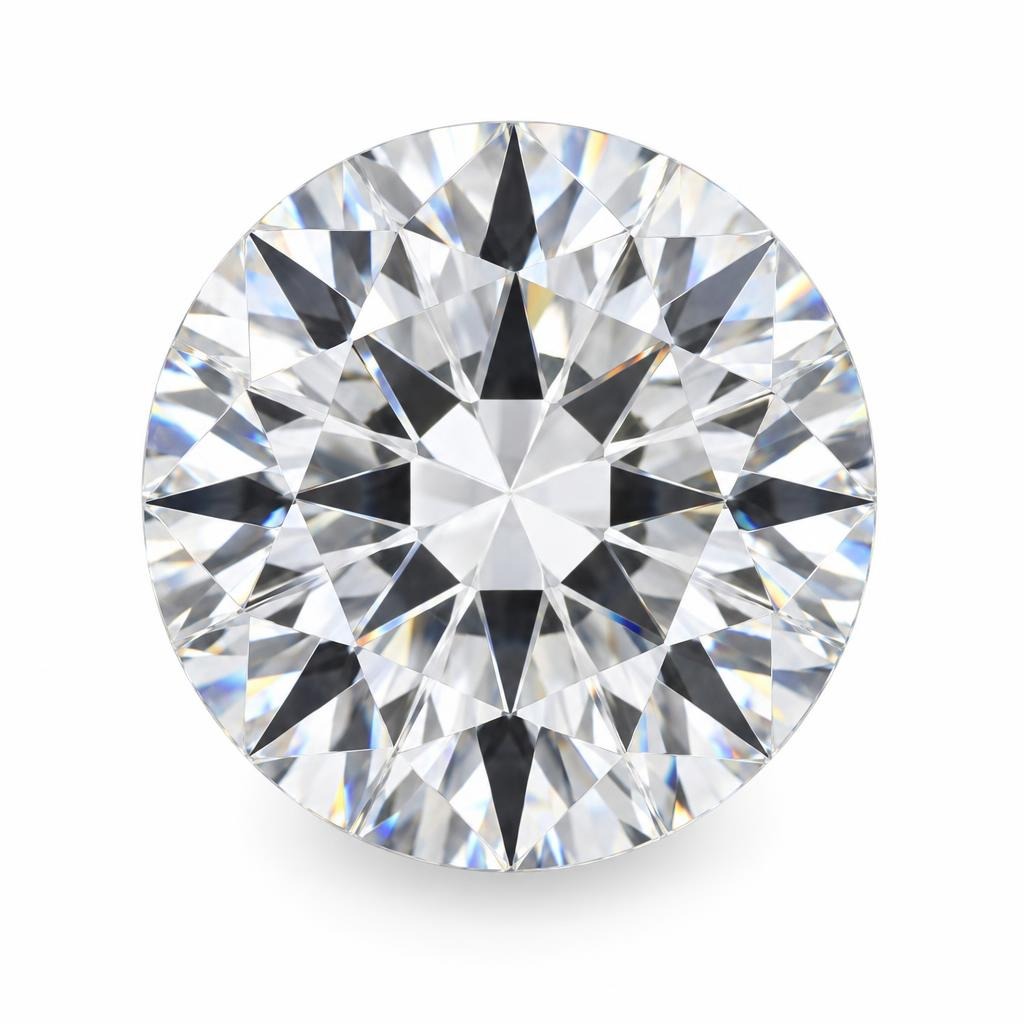
- FL Flawless
- IF Internally flawless
- VVS1 Very, very slightly included
- VVS2 Very, very slightly included
- VS1 Very slightly included
- VS2 Very slightly included
- SI1 Slightly included
- SI2 Slightly included
- I1 Included
- I2 Included
- I3 Included
Pictures: one AI-generated illustration of a diamond, adjusted for each grade. They show how the grades differ; they are not a grading of any stone.
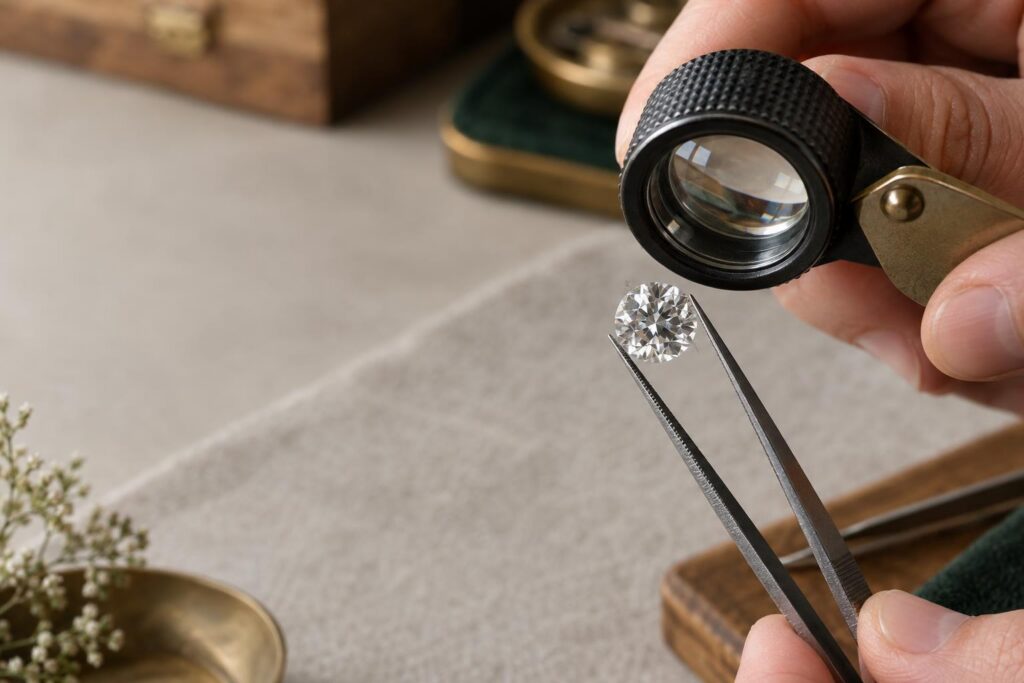
How is clarity graded? A trained grader studies the diamond through a loupe, a small magnifying glass that makes things look 10 times larger. The grader weighs the size, number, position and nature of each mark, and its relief: how clearly it stands out against the diamond.2 The GIA scale has 11 grades, from Flawless (FL) down to Included (I3). Most diamonds fall into the VS or SI grades.1
What do the middle grades mean? VVS diamonds have minute inclusions that are very hard to see at 10×, VS diamonds have minor ones, and SI diamonds have noticeable ones.3 Inclusions can sometimes be seen without magnification, even in higher grades.5 Clarity is one of the four qualities, known as the 4Cs, used to describe a diamond.
Example: Say a grading report (a laboratory’s written description of a stone) lists a diamond as SI1. That means a skilled grader found noticeable inclusions that were easy to see at 10× magnification.3 Where those marks sit matters too. One close to the centre of the table, the large flat facet on top, has a bigger effect than one near the edge.2