
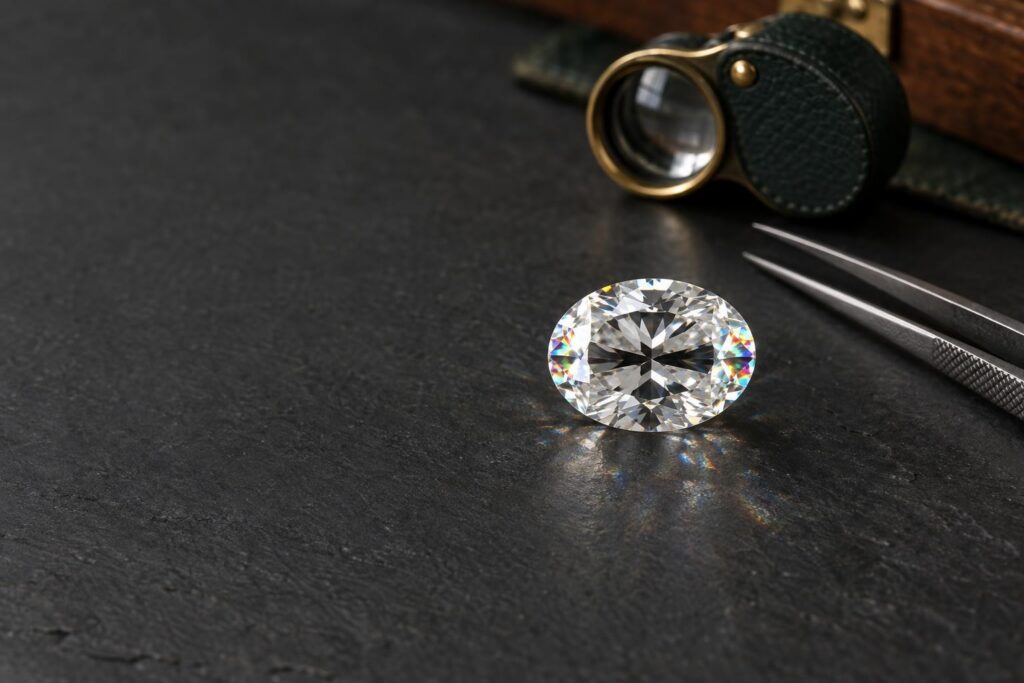
Why a dark band in your oval diamond may not be a flaw
You’ve found an oval diamond you like, but there’s a dark band across the middle. It’s natural to wonder if you’re looking at a flaw, and whether you should walk away.
Cut: what proportions do to light
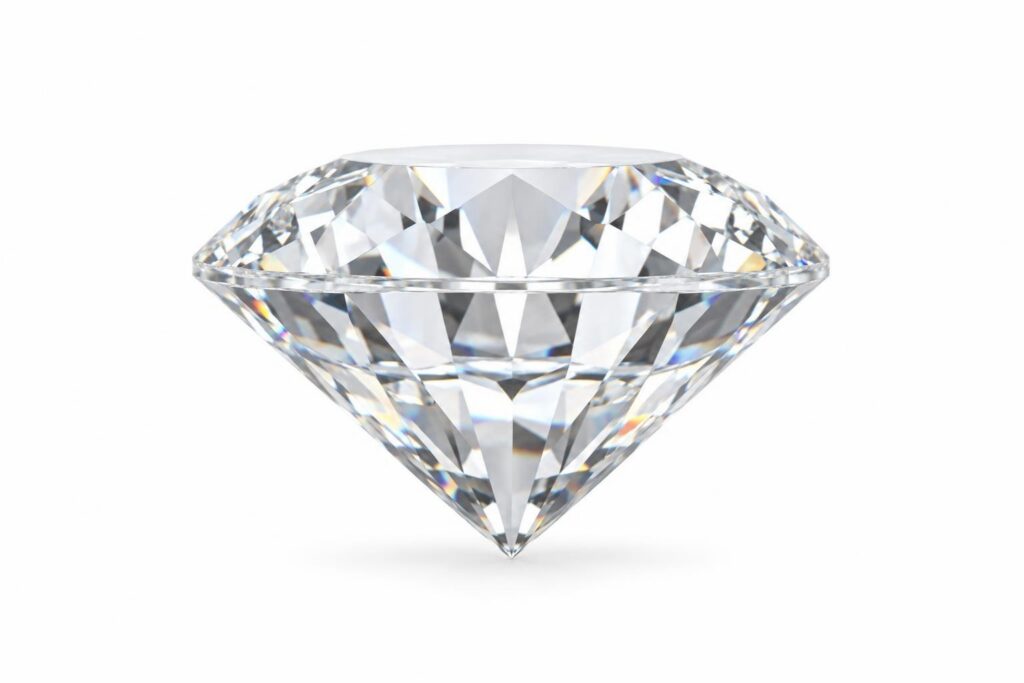
Cut grades for round brilliants run: Excellent, Very good, Good, Fair, Poor.
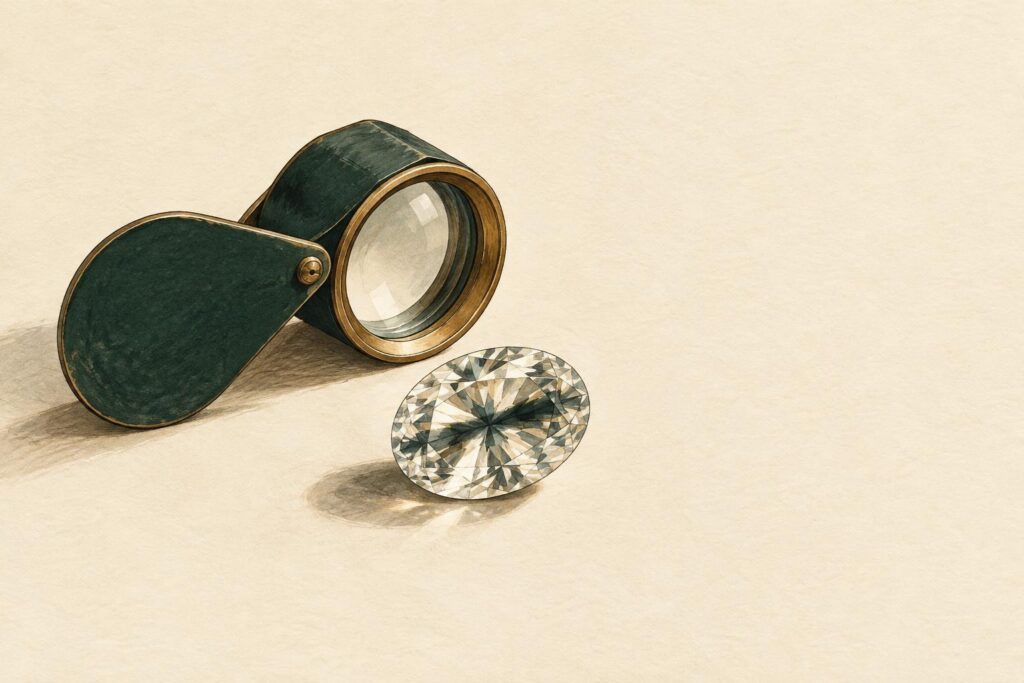
Pictures: one AI-generated illustration of a diamond, adjusted for each grade. They show how the grades differ; they are not a grading of any stone.
That dark band may be the bow-tie effect. It is a typical darkened area in the centre of long, narrow diamonds, such as oval, pear and marquise shapes 2. Its strength is linked to the facet layout and proportions. Large, dark, persistent bow-ties are a negative factor 1.
Not every dark area is a bow-tie, though. There are four causes of dark areas in a gem 3. This guide explains why the bow-tie happens and how to tell it from other dark areas. It also covers why it varies, and how to judge it in videos and in person.
- A bow-tie is a typical dark region in the centre of elongated diamonds, such as ovals, pears and marquises 2.
- The dark bow-tie is an obvious example of observer reflection: a reflection of you, the viewer 3.
- Large, dark, persistent bow-ties are a negative factor 1.
- Visibility can vary even between diamonds in the same length-to-width range, so view in person or ask for videos 4.
Why elongated diamonds show a bow-tie effect
Why does an oval show a dark band when other stones may not? Start with where you stand. When you look down at a diamond, your head and shoulders block some of the light above it 4. The stone’s facets (the small, flat, polished surfaces cut into it) can channel that blocked light into the centre 2.
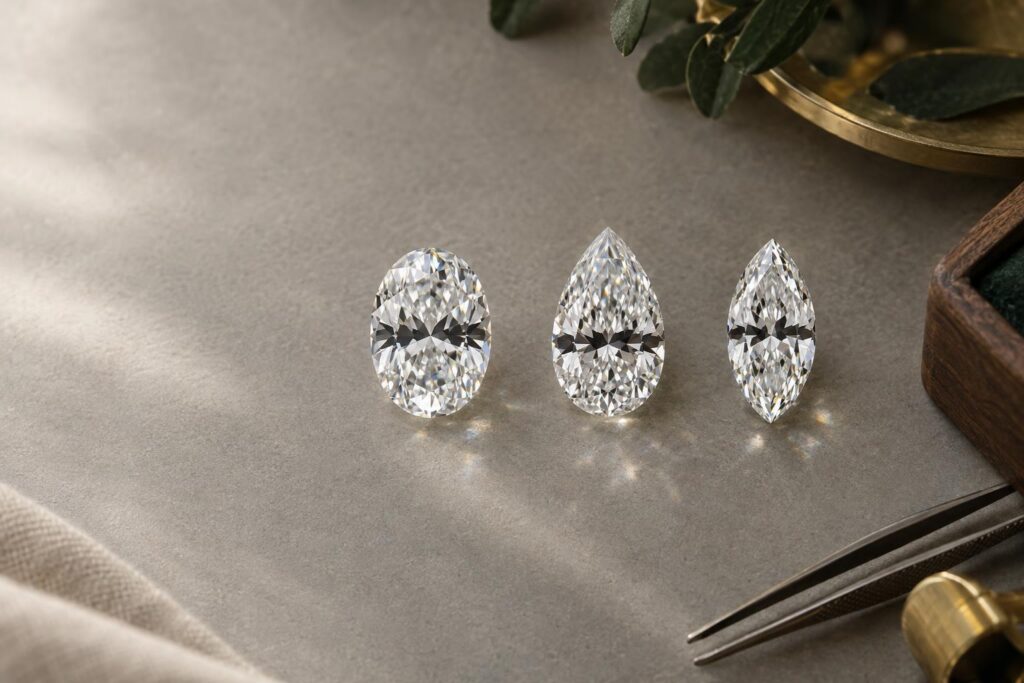
The dark bow-tie is an obvious example of observer reflection, meaning a reflection of the viewer. It happens over a narrow range of angles on the pavilion, the lower, pointed part of the diamond 3. Seen through the table, the large flat facet on top, it forms a dark area across the width of the stone 1.
Why these shapes in particular? A brilliant cut is a style with many facets arranged to return light as sparkle. Because oval, pear and marquise shapes are long, most brilliant facet layouts and a wide range of proportions tend to produce a bow-tie 1. To the naked eye, it often looks like two triangles joined in the middle of the stone 5.
Why the bow-tie looks darker when you lean in
Why does the dark band seem to grow when you look closely? The closer your face is to the diamond, the stronger the bow-tie looks 4. Your reflection gets stronger and darker as you move in 3.
Your surroundings matter too. Dark areas caused by the viewer’s head, body, clothing or hair are called obscuration. They are more noticeable the closer you are, or with dark clothes or hair in dim light 2.
How a bow-tie differs from light leakage and windowing
Why tell these apart? Because a dark or dull patch can have more than one cause. There are four causes of dark areas in a gem: absorption, windowing, extinction, and observer and object reflection. The dark bow-tie is an obvious example of observer reflection 3.
Light leakage and windowing both describe light that travels through the stone but doesn’t come back to your eye. They leave areas that look dull or lifeless, and a window usually lets you see through the diamond to the surface below 2.
A pavilion cut too shallow or too deep lets light escape from the side or leak out of the bottom 6. In the middle of a gem, windowing shows as grey, dull areas where you are seeing through the stone 3.
Why no two bow-ties look the same
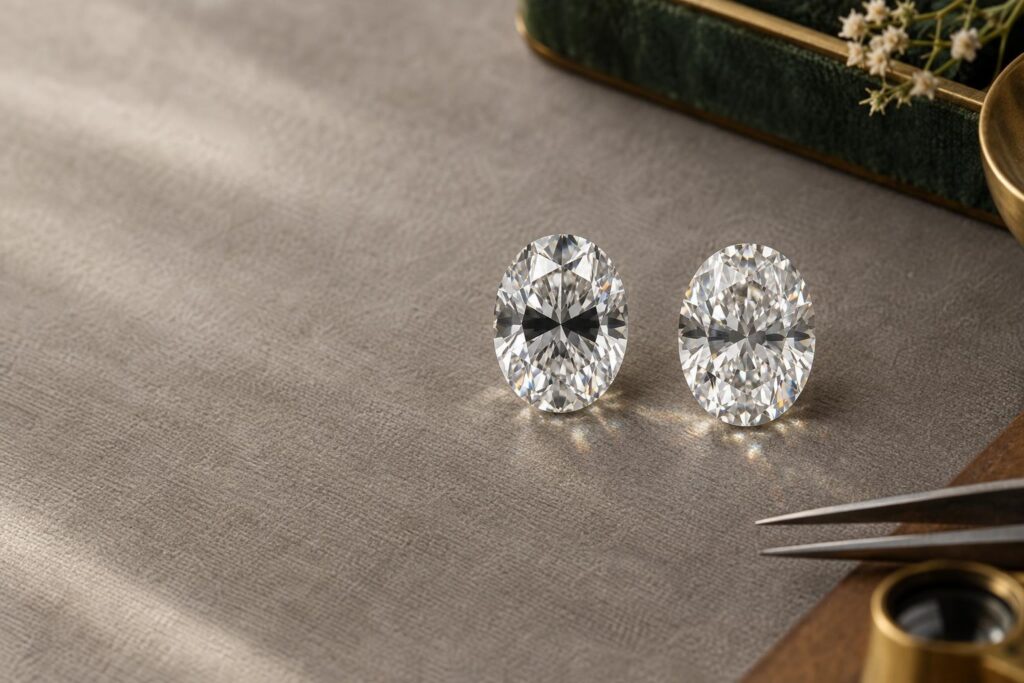
Why can two ovals of the same size look so different? Because the bow-tie depends on how each stone is cut. It can be slight or thick, broken into segments, or one continuous dark bar. Some stay dark as the diamond moves, while others brighten 1.
How facet layout changes the bow-tie
Why does the facet pattern matter so much? The layout and proportions can make a bow-tie stronger or weaker. Pavilion main facets that run across the stone’s widest part, called the belly, often strengthen it. Layouts without these belly mains minimise or remove the bow-tie 1.
Do all ovals have one, then? Sources differ. In GIA’s oval buying guide, a well-cut oval minimises the bow-tie, but some is always present because of the shape 4. The GIA research above found that some layouts can remove it.
How length-to-width ratio plays a part
Why look at proportions? The length-to-width ratio compares how long a stone is to how wide it is. Ovals above 1.50:1 may show a more pronounced bow-tie. But visibility can vary even between diamonds in the same ratio range 4.
It’s not only ovals. Brilliant-cut marquise diamonds should be checked for a bow-tie, and pear brilliants may also show one 5.
Why people disagree about how much bow-tie is acceptable
Why do some people call any bow-tie a flaw, while others don’t mind it? You may hear both views, and research on how people judge these shapes helps explain the split.
Observers in GIA research generally disliked broad, dark or persistent bow-ties. Opinions split once the bow-tie was narrower, less intense, or changed from dark to light with motion. Some observers expect a bow-tie in these shapes, while others prefer little or none 1.
Buying advice reflects both sides. A subtle, balanced bow-tie can add character and dimension 4. Viewed face-up, though, you want the bow-tie kept as small as possible 5. In moderation, observer reflection creates the contrast pattern that affects how bright a gem looks 3.
Where you land is yours to decide. If a narrow band that shifts with movement doesn’t bother you, that is one fair view. If you want as little dark area as possible, the relevant fact is that layouts without belly main facets can minimise or remove the bow-tie 1.
How to judge a bow-tie in videos and in person
Why isn’t a photo enough? Some bow-ties stay dark as the diamond moves, while others brighten 1. That’s why it’s worth viewing the stone in person or asking for videos 4.
- Movement: watch whether the dark area brightens as the diamond tilts, or stays dark 1.
- Width and darkness: is it slight or thick, broken into segments or one solid bar?
- Distance: look from a normal viewing distance, since a closer face makes the bow-tie look stronger 4.
- Your clothes and light: dark clothes or hair in dim light make dark areas more noticeable 2.
- See-through patches: a grey, dull area in the middle where you see through the stone points to windowing 3.
Keep the bigger picture in mind too. Fancy shapes change their light patterns with motion more than round diamonds do, which creates scintillation, the flashes of light you see as a stone moves 1. For more on sparkle, see brilliance, fire and scintillation.
Why a cut grade alone won’t tell you
Why not simply rely on a report? Some grading does look at it. IGI’s fancy-shape cut grading includes shape-specific checks such as bow-ties 2.
But a single grade can’t describe a bow-tie’s width, darkness, persistence or prominence, especially as the diamond moves 2. To see those qualities, view the stone in person or ask for videos 4. Our guides to reading a GIA report and GIA vs IGI reports explain what reports cover.
The downsides: when a bow-tie is a reason to keep looking
Why would a bow-tie change your decision? Observers in GIA research generally disliked broad, dark or persistent bow-ties, and the research treats large, dark, persistent bow-ties as a negative factor 1.
- you want no dark area at all. GIA’s oval guide holds that some bow-tie is always present in an oval 4. GIA research found that layouts without belly mains can minimise or remove it 1.
- you plan to compare stones by grade alone, since one grade can’t describe a bow-tie’s width, darkness or persistence as the diamond moves 2
- you prefer a marquise or pear but can’t check the stone itself, since these shapes can also show a bow-tie 5
None of this rules out oval, pear or marquise diamonds. It means each stone deserves a closer look. If you’re still weighing up shapes, our guide to choosing a diamond shape covers how they differ.
What this means for the oval you’re looking at
Why go back to that oval with fresh eyes? Because if the dark band is a bow-tie, the real question isn’t only whether it’s there. It’s how strong it is, and whether you like how it looks.
- Ask for a video of the stone moving, and watch whether the band lifts as it tilts.
- Look at how wide and dark the band is from a normal viewing distance.
- Ask the jeweller whether the dark area is a bow-tie or another cause, such as windowing.
- Compare it with other stones of a similar shape and ratio.
To understand the cut factors behind this, see why light performance matters.
If you’d like to talk through fancy shapes and how they handle light before you decide, we offer a free consultation. You can book it online at bookings.ralphjacobs.org from any country, or contact us on WhatsApp.
Frequently asked questions
Your head and shoulders block light above the stone. The closer your face is to the diamond, the stronger the bow-tie looks 4.
Partly. IGI’s fancy-shape cut grading includes checks such as bow-ties. But a single grade can’t describe a bow-tie’s width, darkness or persistence as the stone moves 2. A video or in-person view shows those qualities.
It can. Ovals above 1.50:1 may show a more pronounced bow-tie. Visibility can still vary between diamonds in the same ratio range, so the ratio alone can’t tell you how a stone will look 4.