

Why your grading report may not be what your insurer asked for
Your insurer has asked for a valuation of your diamond. You already have a grading report, so it seems natural to send that. It looks official, and it describes your stone in detail.

Why isn’t that always enough? Because the two documents answer different questions. A grading report describes what your diamond is and how it grades. A valuation states what it would cost to replace. GIA (the Gemological Institute of America), a laboratory that issues grading reports, puts it plainly: its report "is not a guarantee, valuation or appraisal" 4.
This article explains what each document does, who prepares it and why independence matters. By the end, you will know what to check before you send anything to your insurer.
- A GIA grading report describes a diamond’s quality. No appraisal value is stated on it 1.
- A valuation, also called an appraisal, assigns a monetary value. It can be made for insurance, probate or market assessment 6.
- Appraisers often use the quality information on a GIA report when they assign a value 2.
- Who prepares a valuation matters: an appraiser in a store that sells jewellery may have a bias toward their own stock 5.
Why a grading report describes quality, not price
Why does it help to know what a grading report covers? Because it shows you what an insurer can, and can’t, learn from it. A grading report works like a "blueprint" of the diamond. It gives the measurements and shape, and points out the stone’s individual characteristics 2.
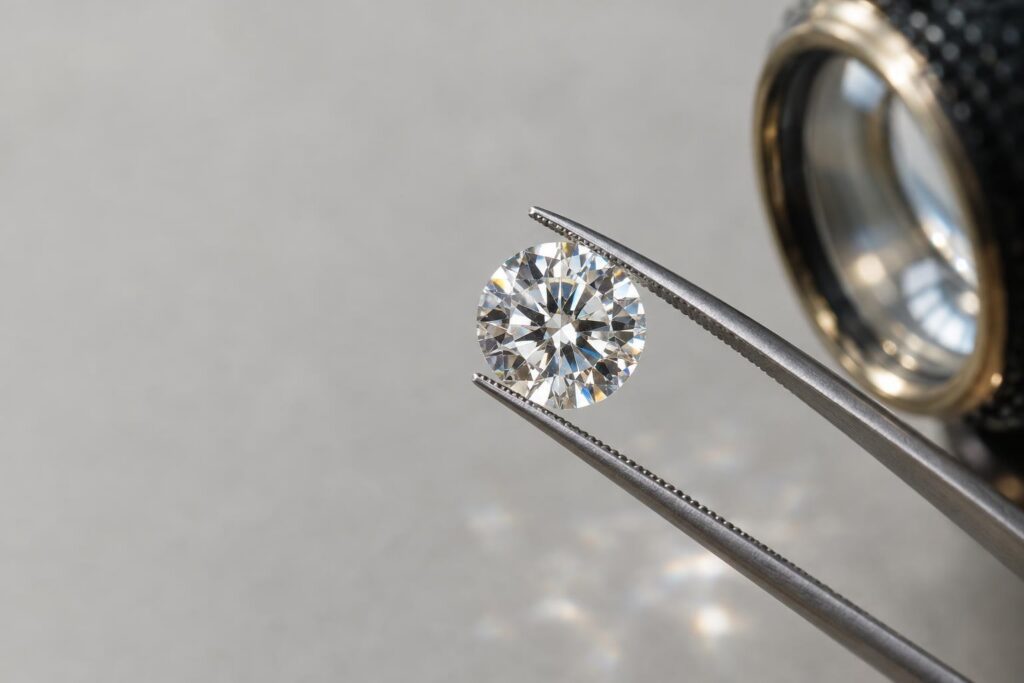
The report first confirms that the stone is a diamond. It then describes the 4Cs: cut, colour, clarity and carat weight. Carat is a unit of weight, not of size. Clarity looks at inclusions, the tiny features inside a stone. The report also covers proportions and finish, and names any known treatments, which are processes that change how a stone looks 2.
What the report leaves out is price. Value may be worked out from the information on the report, but no appraisal value is stated on it 1. To understand each line, see how to read a GIA diamond grading report.
Why a valuation is an opinion of value
Why does an insurer ask for a value rather than a description? Insurers may require an appraisal that describes the item thoroughly and gives an opinion of its replacement value in the marketplace 5. In this context, "valuation" and "appraisal" mean the same thing 6.
An appraisal is a description and valuation of property. The value it states is the appraiser’s opinion, based on research and experience 3. So it is a professional judgement, not a fixed fact like a measurement.
How is that value set? An appraisal assigns a value based on the diamond’s quality and on market conditions at the time 2. If an item can’t be replaced exactly, it is valued against a comparable item 5.
Insurance is not the only reason to get one. Appraisals can also be made for probate (the legal process of settling someone’s estate) or for market assessment 6.
Why the grading report vs valuation difference matters to your insurer
Why might a grading report seem like enough? It looks official, and a grading report is sometimes called a "certificate" 2. The details on it are also the ones that value may be worked out from 1.
Even so, the report itself is not a certificate or guarantee, and it does not indicate monetary value 2. A grading report only also counts as an appraisal report if it includes an opinion on monetary value 6.
Your report is still useful, because appraisers often use the objective quality information in a GIA report when they assign a value 2.
Time also separates the two documents. A diamond’s qualities are unlikely to change, but its value may rise or fall 2. Your insurer may have its own requirements, so it helps to check exactly what they asked for 3.
Why independence matters, and who prepares each document
Why should you care who wrote the document? Both grading and valuing involve expert judgement, and both may be done by people who are not independent. The Responsible Jewellery Council (RJC) says any vested interest must be disclosed 6.
Who prepares a grading report
Grading can be done in an independent laboratory, or in-house by a business. Standards, methods and what reports contain vary between laboratories 6. GIA says it is not involved in pricing in any way, and that its reports give an independent, objective opinion of quality 3. For how two laboratories compare, see GIA vs IGI diamond reports.
Who prepares a valuation
Some appraisers work independently, while others work in, or own, a retail business. The RJC suggests a retailer’s insurance appraisal may be more accurately called an "insurance replacement cost estimate" 6.
The Appraisal Foundation says professional appraisers are trained to remain independent, impartial and objective, and that independence is critical to public trust. It also warns that "an appraiser in a store selling jewelry may have a bias toward their own merchandise" 5. So it is worth asking who prepared any estimate you are given.
The downsides: when a report or valuation isn’t enough
Why look at the limits? Because knowing where each document stops can help you send your insurer what it actually asked for.
Limits of a grading report
- A GIA report is not a guarantee, valuation or appraisal 4. A grading report from another business only also counts as an appraisal if it includes an opinion on monetary value 6.
- A GIA report records the stone only as examined, using that laboratory’s techniques and equipment at the time.
- Another examination may give different results, depending on when, how and by whom it is done 4.
- No appraisal value is stated on a GIA report, so on its own it cannot show an insurer a replacement value 1.
Limits of a valuation
- It is an opinion of value, not a measured fact.
- A value set for insurance may differ from a value needed for another purpose 5.
- An update may change the value, based on market conditions at the time 3.
- It may be prepared by someone with a vested interest, such as the seller, which must be disclosed 6.
Neither document is flawed for having limits. A grading report answers "what is this stone?" A valuation answers "what would it cost to replace?" If your insurer asked for a replacement value, a report that does not indicate monetary value may not be enough on its own 2.
Why a few checks help before you get a valuation
Why check before you hand anything over? A credible appraisal states its intended use, the type of value and the date of value 5. A few simple checks show you what you are getting.
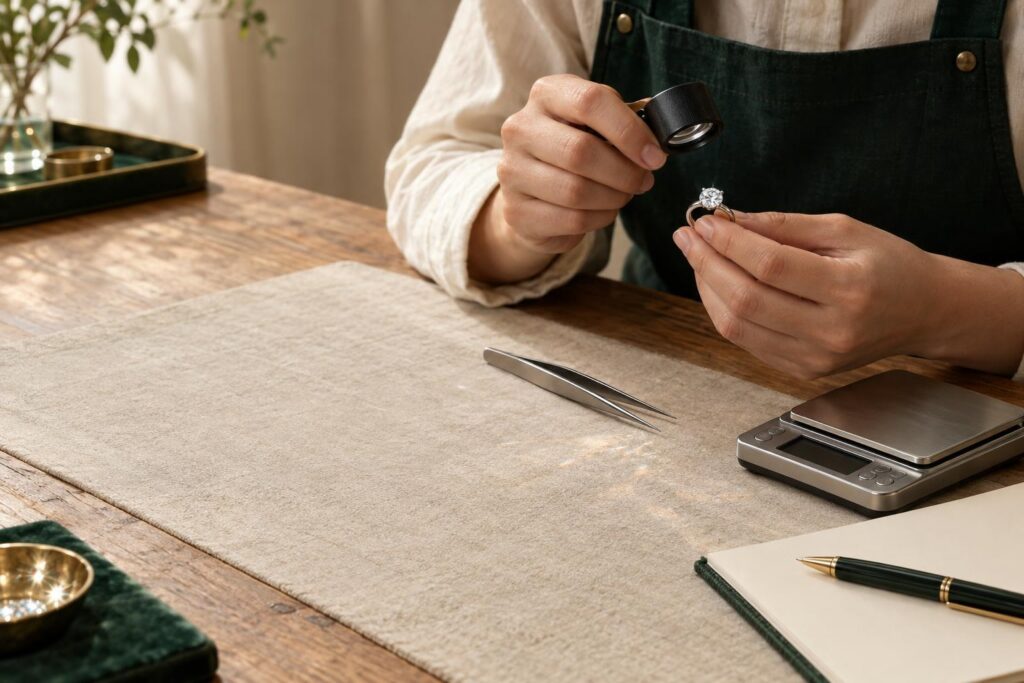
What a valuation should include
- The date it was prepared
- Its purpose, such as insurance
- A clear description of the item
- The value
- Limiting conditions and disclosures
- The appraiser’s signature and qualifications 3
Questions to ask an appraiser
- "Are you independent, or do you work for the seller?" It is a question worth asking 3.
- "What training do you have?" A gem and jewellery appraiser should also be a credentialed gemmologist, someone trained to identify and grade gems 5.
- "Can you use my grading report?" Appraisers often use the objective quality information in a GIA report 2.
How often should a valuation be updated? Many appraisers suggest every two to three years, and your insurer may have its own requirements 3. To find an appraiser, GIA directs people to appraisal associations 1.
At Ralph Jacobs, we provide insurance replacement estimates for jewellery. We prepare them ourselves, so they are not an independent valuation, and you can weigh them with that in mind. If you would like to talk through what your insurer is asking for, we offer a free consultation, online at bookings.ralphjacobs.org from any country.
Frequently asked questions
Not quite. People sometimes call it a certificate, but GIA calls its documents reports. A report is not a certificate or guarantee, and it does not indicate monetary value 2.
Many appraisers suggest every two to three years, an update may change the value based on market conditions, and your insurer may have its own requirements 3. So it is worth checking with your insurer.