
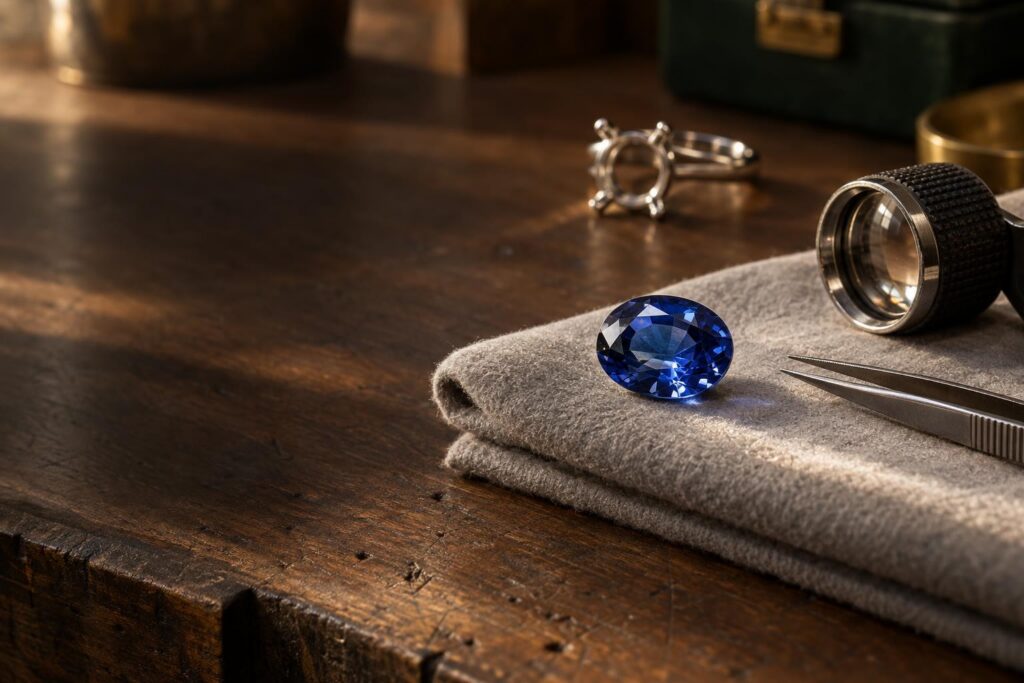
Why a stone you already own needs checking first
If you have a family gemstone, you probably want it in a new ring without putting it at risk. Before anyone works on it, you will want to know if it is suitable and safe to reset.
Why start with the stone, not the ring? Because a stone’s durability decides how it can be handled. GIA’s journal calls durability the most important factor in designing, setting, repairing or cleaning jewellery 3. Durability is a stone’s ability to withstand wear, heat and chemicals, and it has three parts: hardness, toughness and stability 1.
This guide explains what is checked, why each check matters, and how a setting can help protect your stone. It also covers the risks that stay with any reset, so you can decide with the full picture.
Why hardness alone doesn’t tell you if a stone is safe
Is a hard stone always a safe stone? Not on its own. The Mohs scale ranks scratch resistance from 1 (talc) to 10 (diamond), but hardness is only one factor in durability 2.
How do the three parts differ? Hardness is how well a stone resists scratches. Toughness is how well it resists breaking and chipping. Stability is how well it resists chemicals and thermal shock, which means a sudden change in temperature 1. Put simply, resisting a scratch and surviving a knock are two different things.
What does this mean for a diamond? Diamond is extremely hard and very stable, but only somewhat tough 1. A hard blow can still split or fracture it 2.
The scale is also not even. Ruby and sapphire sit at 9, yet diamond at 10 is many times harder 2. The Mohs scale is not the whole durability story explains this in more depth.
Why does this matter if your family stone is not a diamond? A less tough gem may need a different plan for how it is worn. For gems that aren’t very tough, such as opal or tanzanite, one option is to keep rings for special occasions 2. Which gemstones suit everyday rings? looks at this further.
Why chips, cracks and inclusions matter before setting
Why look so closely at a stone before it is set? Some inclusions make breakage during setting more likely, so it is worth examining the stone under magnification first 3.
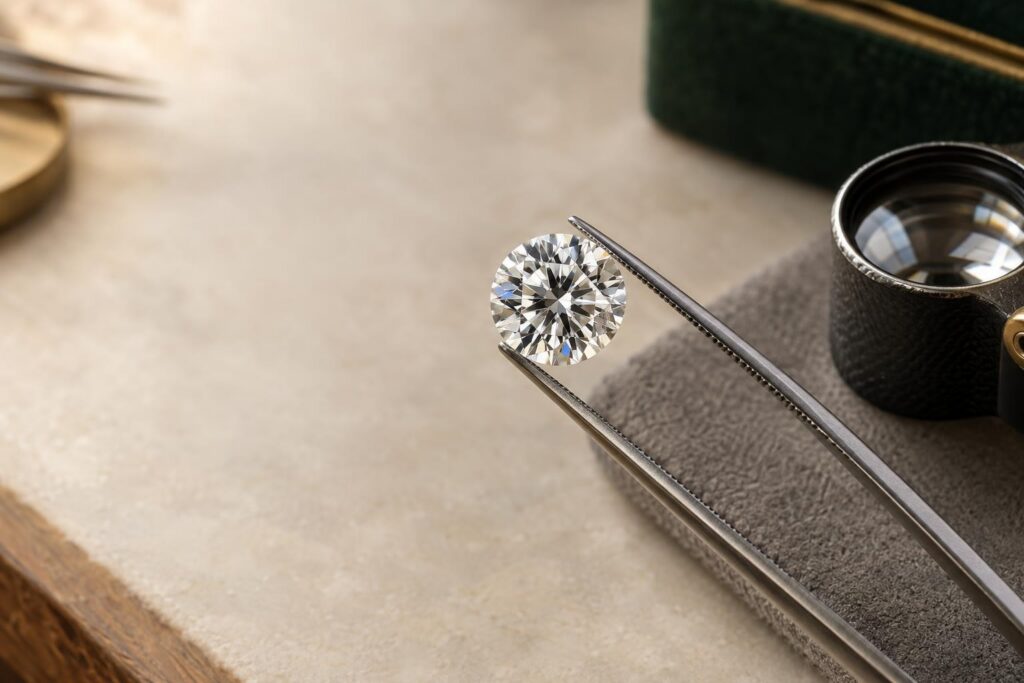
How does damage near the edge create risk? The girdle is the thin outer edge of a stone. A small feather (a crack in the stone) or another inclusion, meaning a feature inside the stone, near the girdle or a point can make a diamond vulnerable, and open cavities at the girdle behave much like chips 1. Fractures or inclusions near the girdle edge add to a stone’s fragility 3.
What if your stone is already chipped? Don’t wear a diamond that has already chipped, because the sharp, chipped edge has a very high risk of chipping much worse 1.
Why treatments change how a stone can be handled
Why does it matter if your stone was treated? Treatments are processes used to enhance a stone. They can improve its durability, or in some cases make it worse 4.
How can you tell? Not always by eye. Treatments are not always obvious and can be hard to tell apart, even for experts 4. A gem must be identified before any work beyond cleaning in warm soapy water, and if you can’t tell whether it has been enhanced, assume it has 3.
What does a common treatment involve? Fracture filling, often found in diamond, ruby, sapphire and emerald, puts glass, resin, wax or oil into cracks that reach the surface; the crack is still there, just less visible 4. Coatings and fillers are not permanent, and heat and strong chemicals can remove them 2.
Why does this matter for a reset? Jewellery work can involve a torch, a small, hot flame. Wax or plastic impregnation is likely to be damaged by a jeweller’s torch, and torch heat may damage the colour of irradiated coloured diamonds 4. Oil or resin in emeralds can also be harmed by ultrasonic cleaning or solvents 2.
There is a way to find out. A qualified gemmologist, a specialist trained to identify gems, can recognise most filled gems using magnification 4. How gemstone treatments should be disclosed explains what to ask about treatments.
Why the shape of your stone affects the setting
Why do some shapes need more care? Any shape with points or sharp corners is more likely to chip at those places, while round, oval and rounded-corner cushion shapes have no exposed points 1.
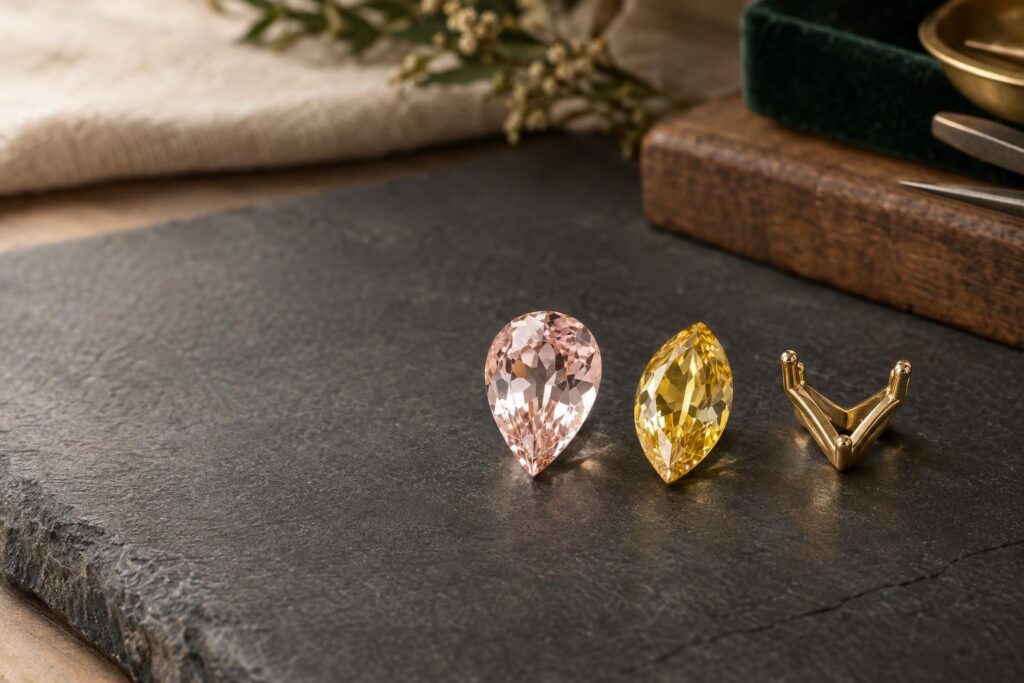
How does this play out? Diamonds with very thin girdles or exposed points, such as pears (teardrop shapes) and marquises (long shapes with a point at each end), are prone to breaking or chipping 2. V-shaped prongs are common for heart, princess, pear and marquise cuts 6. Prongs, also called claws, are small metal tips that hold a stone, and a V-shaped one wraps around a corner like a small shield.
What should you look at on your own stone? Note its shape, whether it has sharp corners, and whether any part of the edge looks very thin. Girdles with very thin sections are at much higher risk of damage 1. Choosing a diamond shape covers shapes in more detail.
Why the setting style can help protect your stone
Why does the setting matter so much? Prong setting gives less protection than other styles, so for stones that chip, wear or split easily, a setting that covers the girdle is the better option 3.
How setting styles cover your stone's edge
Switch between four settings, from least to most coverage of the girdle, to see how each holds a stone.
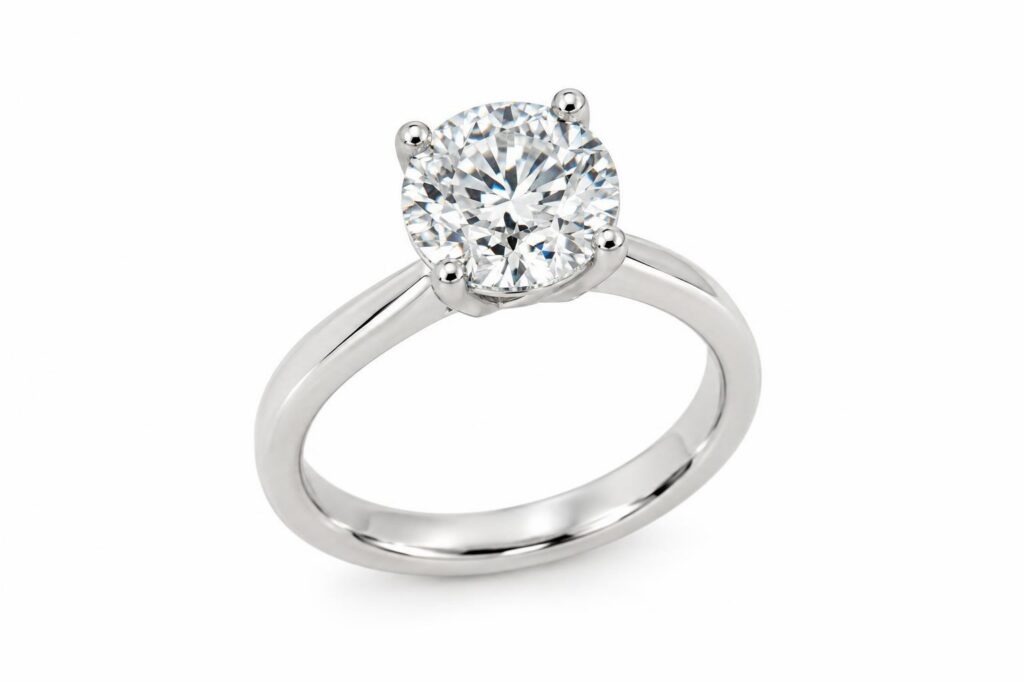
- Prong setting
- Prongs, also called claws, are small metal tips that hold a stone. A prong setting gives less protection than other styles, so for stones that chip, wear or split easily, a setting that covers the girdle is the better option.
- V-shaped prongs
- V-shaped prongs are common for heart, princess, pear and marquise cuts. A V-shaped prong wraps around a corner like a small shield, which matters because shapes with points are more likely to chip there.
- Partial bezel
- A partial bezel leaves parts of the stone exposed but still adds security, because metal holds the stone around part of its girdle.
- Full bezel
- A bezel holds the stone with a thin rim of metal around its girdle. A full bezel encircles the whole edge, helps stop the centre stone falling out and protects the girdle against knocks. It also protects the pavilion, the lower part of the stone.
These pictures show typical examples. Real settings vary, and a qualified bench jeweller can advise which one suits your particular stone. Pictures: AI-generated illustrations, checked for accuracy. They are not photographs of a real piece.
Why bezel and partial bezel settings protect edges
Why consider a bezel? A bezel holds the stone with a thin rim of metal around its girdle 6. It helps stop the centre stone falling out and protects the girdle against knocks 5.
A bezel also protects the pavilion, the lower part of the stone, and works especially well for unusual cuts 3. A full bezel encircles the whole edge, while a partial bezel leaves parts of the stone exposed but still adds security 6.
Why prong count, channels and tension settings matter
Why does the number of prongs matter? Each prong is a point of support. Six prongs can protect better than four, because if one breaks the stone is more likely to stay in place 5. V-shaped prongs protect points and corners better 1. Four claws vs six claws compares the two.
Channel-set stones sit in a row between two metal walls, so they are less exposed than prong-set ones and less likely to catch on clothing 6. A tension setting, which holds the stone by pressure from the two sides of the band, may be a riskier choice 5. Ring settings explained shows each style.
The downsides: risks that remain in any reset
Why talk about risk at all? Some risk is involved with any stone, and it is worth consulting a qualified bench jeweller, the person who sets and repairs pieces at the workbench 3.
How can a reset go wrong? Excess pressure while prongs are tightened can damage any stone, even diamond 3. Sudden temperature changes can create fractures or make existing ones spread 2.
Heat is a particular concern. Heat-sensitive stones such as emerald, tsavorite and tanzanite could be damaged by soldering (joining metal with heat) near stones already in place, so whenever possible the stone is removed before repair work 3.
When might resetting your stone not be the right choice? These are the situations to weigh carefully:
- It is a diamond that has already chipped, which should not be worn 1.
- It is a less tough gem, such as opal or tanzanite, that you hope to wear every day 2.
- It has a filler, which heat, chemicals or changes in air pressure can change or remove 4.
- You want a tension setting, which may be a riskier choice 5.
A check helps show which of these apply to your stone. A particular stone may turn out to be unsuitable, and the decision is then yours, made with the facts in front of you.
What to ask before you set your own stone in a ring
Why prepare questions? They help you cover each check above when you talk to a jeweller. These questions follow the order of this guide.
- Has the stone been identified, and could it be treated?
- Are there chips, feathers or cavities near the girdle or points?
- Which setting would cover its weakest edges or corners?
- Will the stone be removed before any soldering or heat work?
- How often should the setting be checked once the ring is made?
What happens after it is set? Have the prongs checked about every six months. Warning signs include a stone that moves when gently pushed, or gaps between the stone and the setting 5.
Ralph Jacobs can set a customer’s own stone as a centre stone. If you’d like to talk through yours, we offer a free consultation, online from anywhere at bookings.ralphjacobs.org, on WhatsApp or in our Secunda showroom. How the custom jewellery process works explains the steps of a made-to-order ring.
Frequently asked questions
Yes, some risk is involved with any stone. Excess pressure during prong setting can damage any stone, even diamond, and inclusions near the girdle make breakage more likely 3.
Often you can’t tell by eye, and treatments can be hard to tell apart even for experts. A qualified gemmologist using magnification can recognise most filled gems 4.
A bezel holds the stone with a rim of metal around its edge and protects the edges very well. A partial bezel still adds security, and V-shaped prongs are common for pointed cuts such as pear and marquise 6.