
Why does fracture filling matter when you buy a gemstone? A filled crack is still there, only less visible. If the treatment is not disclosed, a buyer could believe the gem is naturally better and worth more than it is 3. In diamonds, filling can also make the colour worse, and it is "not considered a permanent or stable treatment" 1.
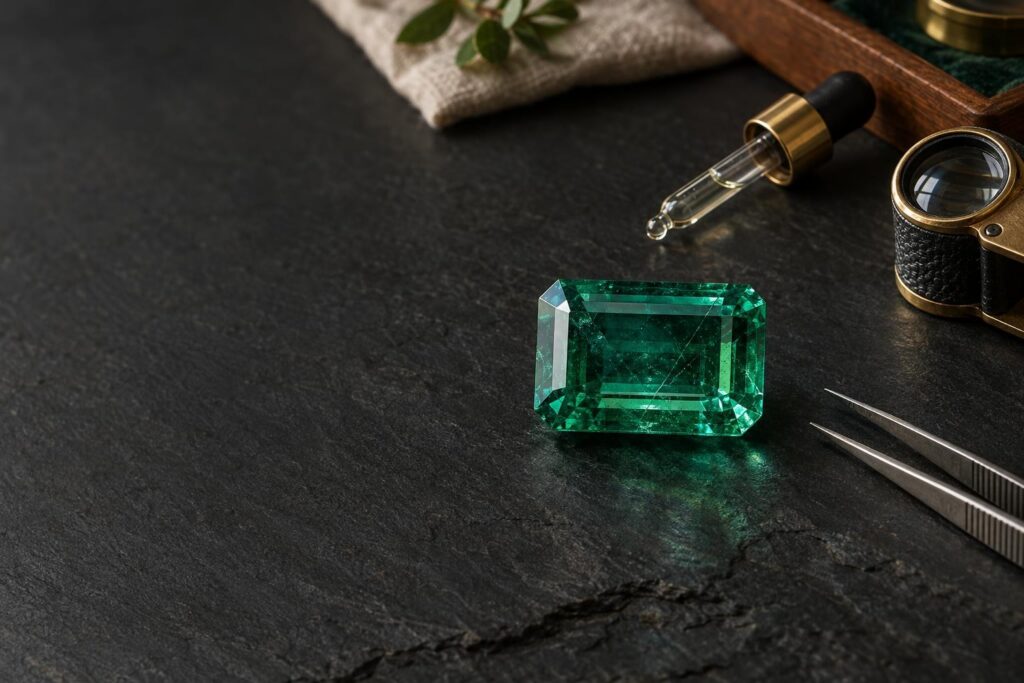
How does it work? A filler is put into cracks that reach the surface, so the stone looks clearer, or freer from inclusions (inner marks). Diamonds and rubies may be filled with lead glass, and emeralds with oils, waxes or resins 3. The filling needs care. Common repairs, and cleaning with steam, acid or ultrasonic solutions, can damage it 1. In tests on filled rubies, bleach, ammonia and even lemon juice etched the glass, making the cracks visible again 5.
How can you find out before you buy? Filling can be very hard to detect, and GIA does not issue grading reports for fracture-filled diamonds 1. Under a standard microscope, a gemmologist (a trained gem expert) can spot signs such as a blue or orange flash and tiny gas bubbles in lead-glass fillings 5. So if you are unsure, ask for the stone to be examined by a qualified gemmologist or a gem laboratory, rather than relying on its looks or a spoken answer. CIBJO, the World Jewellery Confederation, says a fracture-filled diamond "shall be disclosed as a ‘treated diamond’ and shall not be graded" 2. For more, see how gemstone treatments should be disclosed.
Example: Two emeralds look equally clear in a shop. One has cracks filled with oil or resin. GIA shows an emerald whose look changed dramatically after ultrasonic cleaning 4, so knowing whether a stone is filled tells you what you are buying and how to care for it.