
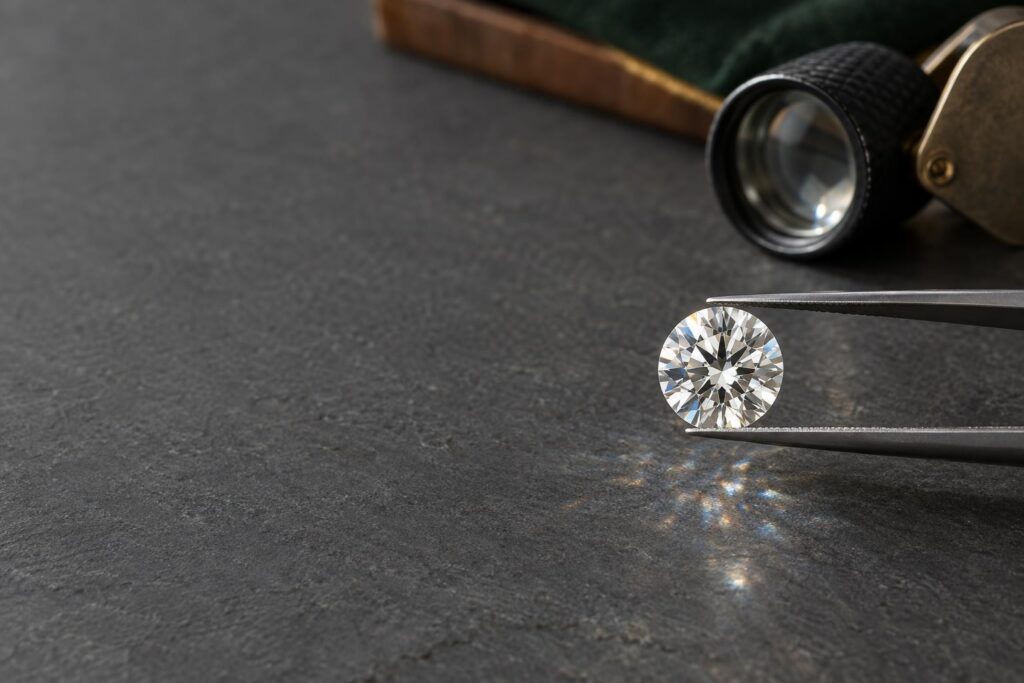
Why a diamond without a certificate can feel worrying
You have found a diamond you love, and then you learn it has no certificate. It is natural to wonder whether something is wrong with it. This guide explains how lab reports work, why a diamond may not have one, and what to ask before you decide.
First, a definition. A lab report is a document from a gemmological laboratory, a lab that studies gems. It gives technical information on one stone’s dimensions, quality and identifying features 2. Without a report, that information is not on paper in front of you. You can still ask for it in other ways.
- GIA grades only loose diamonds for its grading reports, so a stone set in a ring can’t get one while it stays set 1.
- GIA offers batch services for small diamonds, including a Melee Analysis Service 6.
- A GIA report gives technical facts, but it states no appraisal value 2.
- CIBJO, the World Jewellery Confederation, says disclosure should be written on documents such as invoices, so you can ask for key facts in writing 4.
Why it is called a report, not a certificate
Why does the word matter? Because knowing what a document claims helps you read it, and see what it does not promise. GIA says it does not certify or appraise anything sent to it for analysis. It issues "reports (not certificates)" 2.
You may hear the word certificate used for this kind of document. This article uses "report", the word GIA uses.
Why settings and size affect lab grading
Why look at how labs work? Because it helps you see whether a missing report could have a simple explanation for the stone in front of you. Two things that shape what a lab can do are the setting and the size of the stone.
Why a setting gets in the way of grading
Why can’t a lab simply grade a diamond in its ring? Because the metal around it changes what a grader can see and measure. GIA grades only loose diamonds for its grading reports. It explains that a setting can hide or influence the colour and clarity grade, and can make an exact carat weight hard to find 1.
Carat is the unit of weight for gems. Clarity is the grade for a diamond’s inclusions, tiny features inside the stone, and its blemishes, small marks on the surface. Grading a loose stone also lets GIA check for treatments, processes that change a stone’s look, without damaging the stone or the mounting 1.
CIBJO makes a similar point. Its diamond rules say grading assessments of diamonds set in jewellery "may be inaccurate" 4. A diamond may have been graded before it was set. If it was not, it would need to come out of the ring for a GIA grading report.
Why tiny diamonds are checked differently
Why would very small stones be treated differently? Melee is the trade word for very small diamonds. Large amounts of laboratory-grown diamond are made in melee sizes, using both HPHT (high pressure, high temperature) and CVD (chemical vapour deposition) methods 3. You can read about those methods in CVD vs HPHT lab-grown diamonds.
If your ring has small accent stones, the little diamonds set beside or around a main stone, they may be in this size range. GIA offers batch services for diamonds like these, including a Melee Analysis Service that uses GIA-developed technology to analyse and sort diamonds 6.
GIA has also described a melee screening service. It separates natural diamond from lab-grown diamond, from HPHT-processed natural diamond (a natural diamond that has been through the HPHT process) and from simulants. Simulants are stones that look like diamond but are not, such as cubic zirconia and moissanite 3.
Why an independent report can still matter to you
Why do people value reports? Because a report puts a stone’s grades on paper, together with a reference number, a date and a way to check that the document is authentic. A grading report usually contains 4:
- the grading standard used
- identification of the stone as diamond
- weight, colour, clarity and fluorescence
- plotted diagrams showing the stone’s features
- shape, cut, measurements, proportions and finish
- a reference number, a date and a way to check the document is authentic
Fluorescence is a glow some diamonds show under ultraviolet light; see fluorescence for more. GIA’s natural diamond grading reports also cover polish and symmetry, and standard round brilliant diamonds get a GIA Cut grade. Several security features help confirm that a GIA report is genuine 6.
A laser inscription is tiny writing made on the diamond with a laser. GIA offers it with some services, and for its Diamond Dossier follow-up services the diamond must carry the original GIA report number as a laser inscription 6. That gives a way to match a stone to its report.
Identity is the other big reason. In one parcel of 3,005 melee, GIA found 3 HPHT lab-grown diamonds, about 0.1%. Mixing a small share of lab-grown melee into natural parcels is called "salting", and dealers and manufacturers might sell or use these stones as natural without knowing. The GIA authors stress the importance of advanced testing to identify such stones 3.
When you read any document, it helps to know the words. CIBJO treats "synthetic", "laboratory-created" and "laboratory-grown" as meaning the same thing 4. For a full walk-through, see how to read a GIA diamond grading report.
The downsides of a report, and when it adds less
Why look at the limits? Because knowing what a report cannot do helps you weigh a stone that has none.
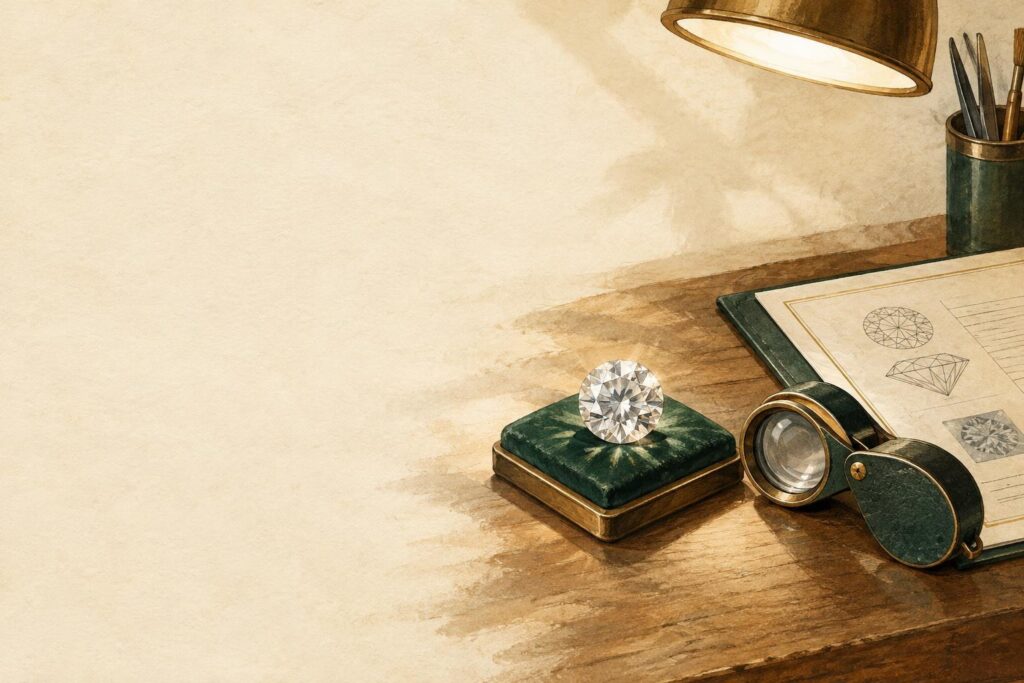
- A GIA report does not state value. Value may be worked out from the information, but the report states no appraisal value. For a valuation, appraisal associations can point you to an appraiser 2.
- Results can differ between labs. The ISO standard itself notes that labs using different standards may give different results for the same diamond 5. See GIA vs IGI diamond reports.
- A set stone may need to come out. Full grading by GIA needs the diamond to be loose 1.
- Screening is not a full report. GIA’s melee screening is described as rapid and relatively inexpensive. It sorts stones by identity and can add a colour grade from D to Z 3.
Grading standards also have a set scope. The international standard ISO 24016 covers natural, unmounted, polished diamonds of more than 0.25 ct. It does not apply to fancy coloured diamonds (coloured diamonds, such as yellow or pink ones, that are graded outside the usual D-to-Z range), lab-grown or assembled stones (made of joined pieces), or diamonds treated by methods other than laser drilling 5.
Where grading isn’t done, a lab may issue an identification report instead 4. If your question about small side stones is whether they are natural or lab-grown, screening and identification are aimed at that question. Questions about quality or condition need other answers.
What to ask when a diamond has no report
Why ask at all? Because an international trade guideline says you should have the facts that matter. Under that guideline, the seller should give the buyer all material information, whether or not the buyer asks and regardless of the effect on value 4. Material information means anything that would change value, saleability or desirability, including care needs.
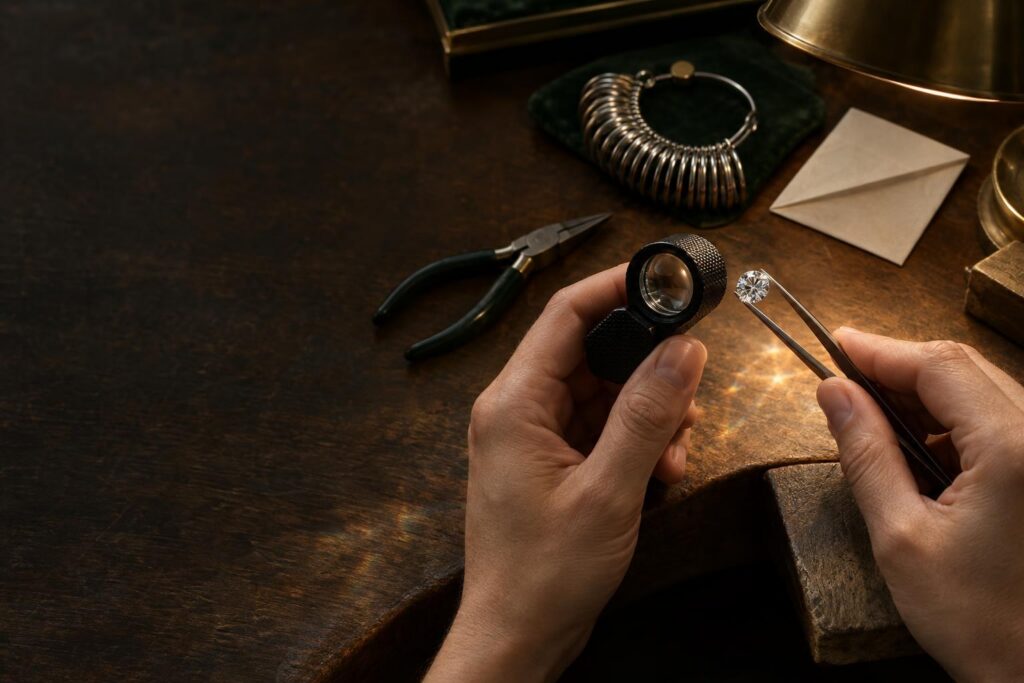
This information should be given verbally before the sale and written on documents such as the invoice 4. These questions can help you get it:
- Is this a natural or a laboratory-grown diamond, and how was that checked?
- Has the stone been treated in any way? (See how gemstone treatments should be disclosed.)
- What are its weight, colour and clarity, and were these judged loose or in the setting?
- Were the small accent diamonds screened, by whom, and what did the check cover?
- Was the stone ever reported before it was set?
- Can these details be written on the invoice?
- Does the stone need any special care?
- Could the stone be sent for a lab report, and would it need to be loose?
Written answers on the invoice give you a record of what you were told, in the form the guideline describes. To understand what each grade changes, see the 4 Cs of diamonds.
Why the final decision stays with you
Why is there no single right answer? Because what matters depends on the stone and on you. If an independent lab document matters most to you, the relevant fact is that GIA issues its grading reports for loose diamonds 1. If your concern is the identity of small accent stones, the relevant question is whether they were screened. If there is no report, written disclosure of identity, treatments, weight, colour and clarity gives you facts to weigh.
Not every stone we offer at Ralph Jacobs comes with an independent lab report. If you would like to talk through what is known about a stone, we offer a free consultation, online from any country at bookings.ralphjacobs.org, or in our Secunda showroom.
Frequently asked questions
Not on its own. A missing report tells you there is no lab document in front of you; it does not say what the stone is. Lab-grown melee can end up in natural parcels without dealers knowing 3, so ask how identity was checked, and ask for the answer in writing.
GIA grades only loose diamonds for its grading reports, because a setting can hide or influence colour and clarity and make weight hard to measure 1. The stone would usually need to come out. Ask a jeweller whether removing it is practical for your ring.
A GIA report does not. It gives technical information about dimensions, quality and identifying features, but states no appraisal value 2. If you want a valuation, appraisal associations can point you to an appraiser.
Very small diamonds are called melee. GIA offers batch services for them, including a Melee Analysis Service that analyses and sorts diamonds 6. Ask whether your accent stones were screened, by whom, and what the check covered.
You may hear both words for the same document. Strictly, though, it is a report: GIA does not certify any material sent to it, and calls its documents "reports (not certificates)" 2. A report describes the stone; it is not a guarantee.