
Gemstone encyclopedia
Every gemstone, explained
What each stone is, how it wears in jewellery, and what to ask before you choose one. Browse by colour, or go straight to a letter.
This encyclopedia is educational. Inclusion does not confirm current Ralph Jacobs stock, sourcing, availability or suitability for a particular jewellery design.
27 of 27 gemstone entries
-
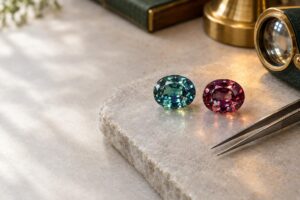 Alexandrite
Hardness 8.5
Quick view
-
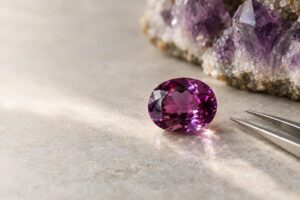 Amethyst
Hardness 7
Quick view
-
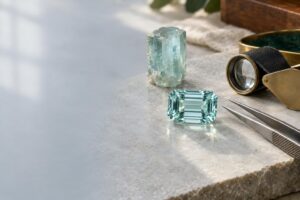 Aquamarine
Hardness 7.5–8 · March
Quick view
-
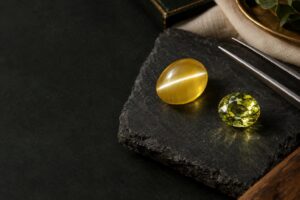 Chrysoberyl
Hardness 8.5 · June
Quick view
-
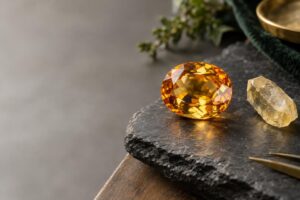 Citrine
Hardness 7 · November
Quick view
-
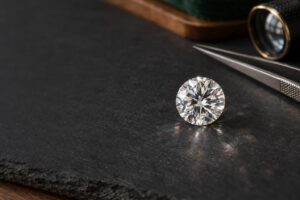 Diamond
Hardness 10 · April
Quick view
-
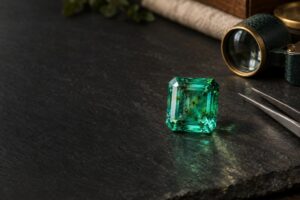 Emerald
Hardness 7.5–8
Quick view
-
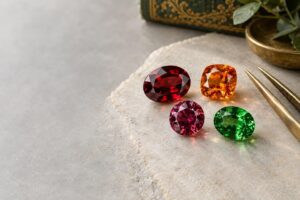 Garnet
Hardness 6.5–7.5
Quick view
-
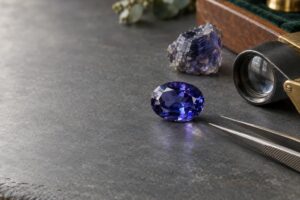 Iolite
Hardness 7–7.5
Quick view
-
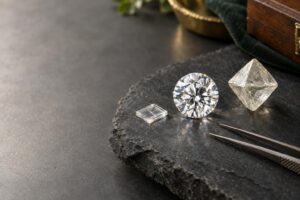 Laboratory-grown
 diamond
Hardness 10
Quick view
-
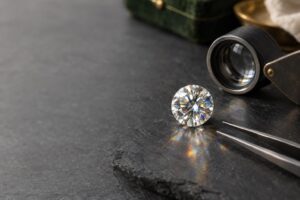 Laboratory-grown
 moissanite
Hardness 9.25
Quick view
-
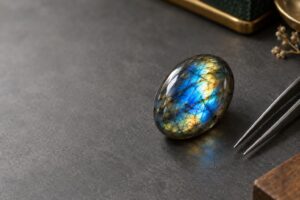 Labradorite
Hardness 6–6.5
Quick view
-
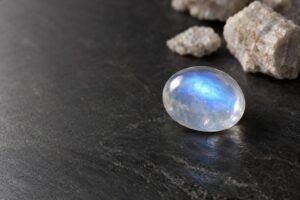 Moonstone
Hardness 6–6.5
Quick view
-
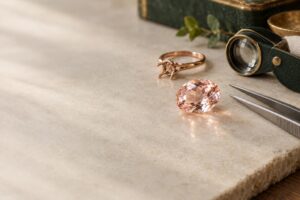 Morganite
Hardness 7.5–8
Quick view
-
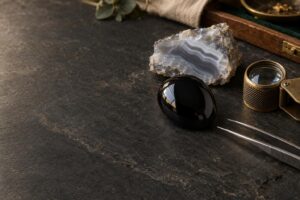 Onyx
Hardness 6.5–7
Quick view
-
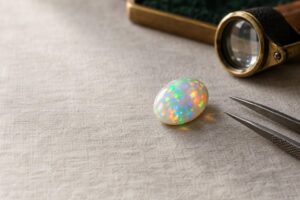 Opal
Hardness 5–6.5
Quick view
-
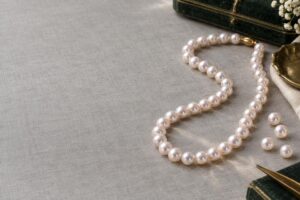 Pearl
Hardness 2.5
Quick view
-
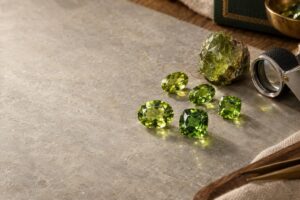 Peridot
Hardness 6.5–7 · August
Quick view
-
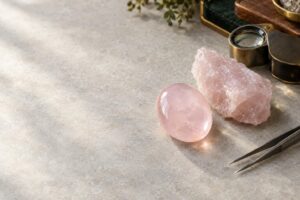 Rose quartz
Hardness 7
Quick view
-
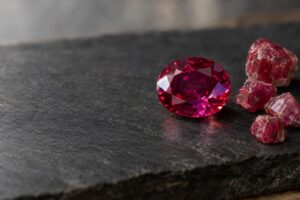 Ruby
Hardness 9
Quick view
-
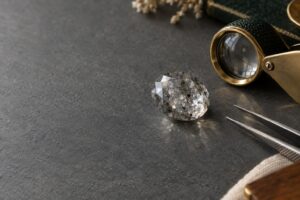 Salt-and-pepper diamond
Hardness 10
Quick view
-
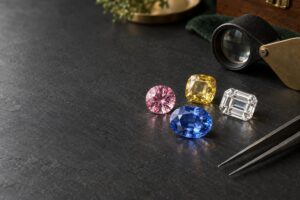 Sapphire
Hardness 9
Quick view
-
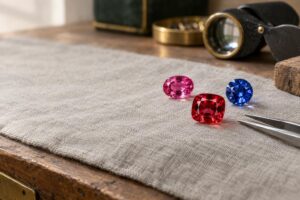 Spinel
Hardness 8
Quick view
-
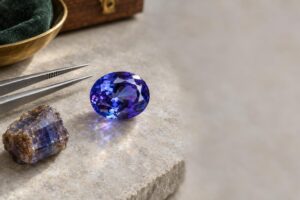 Tanzanite
Hardness 6–7 · December
Quick view
-
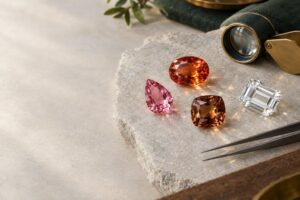 Topaz
Hardness 8
Quick view
-
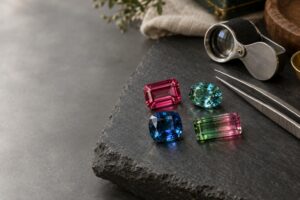 Tourmaline
Hardness 7–7.5
Quick view
-
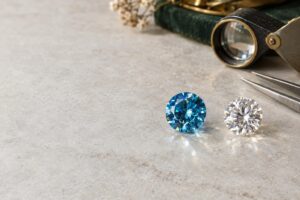 Zircon
Hardness 6–7.5 · December
Quick view
Quick overview · April · As listed by GIA
Diamond
Why diamond suits a ring worn for life, and where its limits are: how the 4Cs, cut, treatments, grading reports, setting and care shape how a diamond looks and wears.
- Classification
- Mineral species
- Mohs hardness
- 10 (scratch resistance — one part of durability)
- Wear considerations
- Diamond rates 10 on the Mohs scale, the highest rating, so only another diamond can scratch it. A hard blow along a cleavage direction can still split it, and pointed corners can chip. A loose diamond can wear through the metal prong that holds it.
- Treatment
- Heating or irradiation after growth to change colour (most CVD laboratory-grown diamonds receive such treatments)
- Care
- Diamonds can be cleaned at home with a lint-free cloth, a commercial jewellery cleaner or a household detergent. Abrasive cleansers are not recommended for home cleaning, and ultrasonic and steam cleaners can…
Individual gemstones vary. Care depends on treatment, setting and condition. Encyclopedia inclusion does not confirm availability.
Individual gemstones vary · care depends on treatment, setting and condition · birthstone traditions vary · encyclopedia inclusion does not confirm availability.