
Gemstone encyclopedia
Every gemstone, explained
What each stone is, how it wears in jewellery, and what to ask before you choose one. Browse by colour, or go straight to a letter.
This encyclopedia is educational. Inclusion does not confirm current Ralph Jacobs stock, sourcing, availability or suitability for a particular jewellery design.
27 of 27 gemstone entries
-
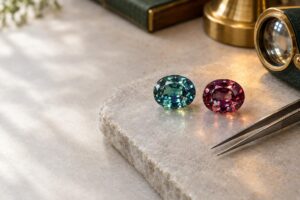 Alexandrite
Hardness 8.5
Quick view
-
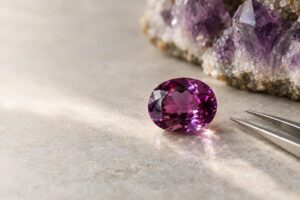 Amethyst
Hardness 7
Quick view
-
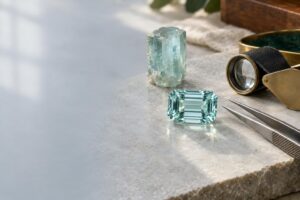 Aquamarine
Hardness 7.5–8 · March
Quick view
-
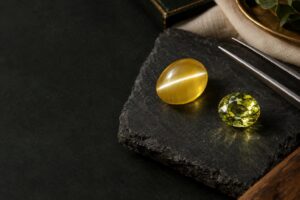 Chrysoberyl
Hardness 8.5 · June
Quick view
-
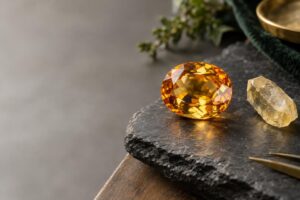 Citrine
Hardness 7 · November
Quick view
-
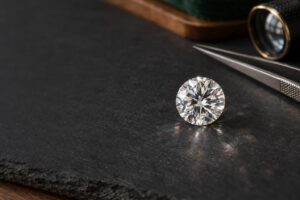 Diamond
Hardness 10 · April
Quick view
-
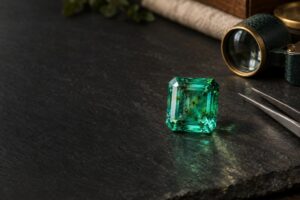 Emerald
Hardness 7.5–8
Quick view
-
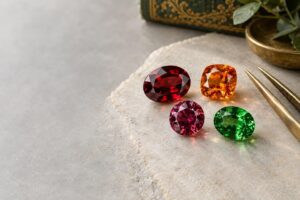 Garnet
Hardness 6.5–7.5
Quick view
-
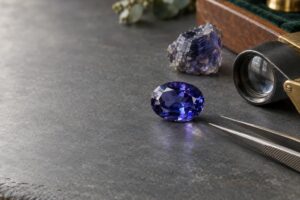 Iolite
Hardness 7–7.5
Quick view
-
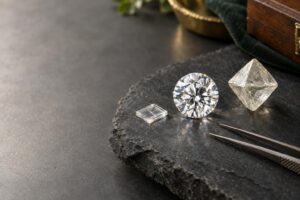 Laboratory-grown
 diamond
Hardness 10
Quick view
-
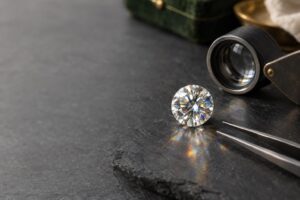 Laboratory-grown
 moissanite
Hardness 9.25
Quick view
-
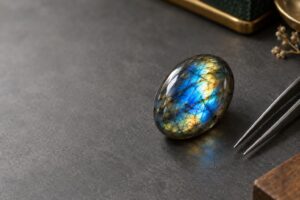 Labradorite
Hardness 6–6.5
Quick view
-
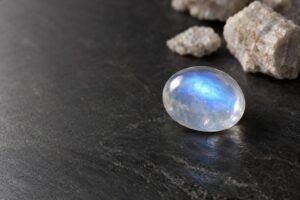 Moonstone
Hardness 6–6.5
Quick view
-
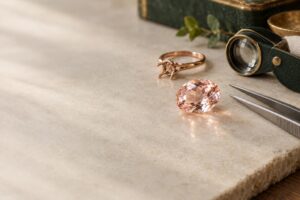 Morganite
Hardness 7.5–8
Quick view
-
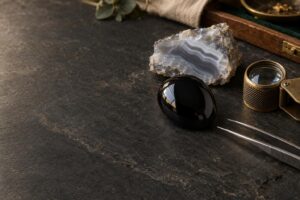 Onyx
Hardness 6.5–7
Quick view
-
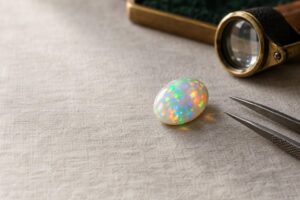 Opal
Hardness 5–6.5
Quick view
-
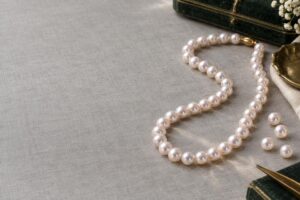 Pearl
Hardness 2.5
Quick view
-
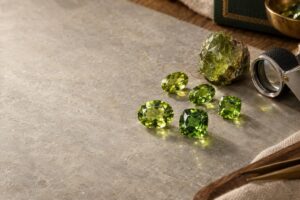 Peridot
Hardness 6.5–7 · August
Quick view
-
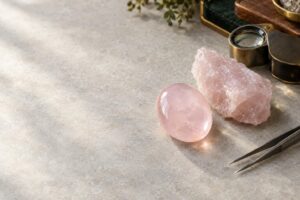 Rose quartz
Hardness 7
Quick view
-
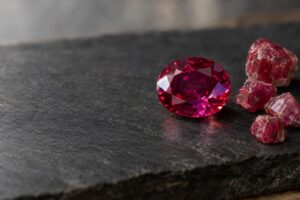 Ruby
Hardness 9
Quick view
-
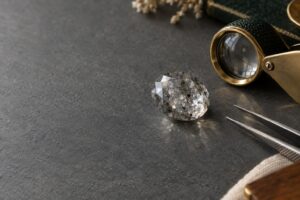 Salt-and-pepper diamond
Hardness 10
Quick view
-
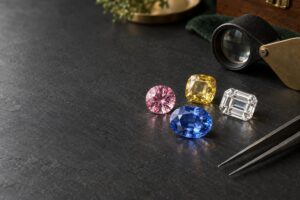 Sapphire
Hardness 9
Quick view
-
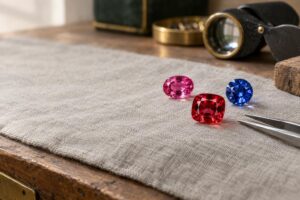 Spinel
Hardness 8
Quick view
-
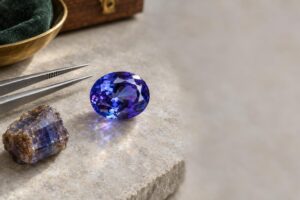 Tanzanite
Hardness 6–7 · December
Quick view
-
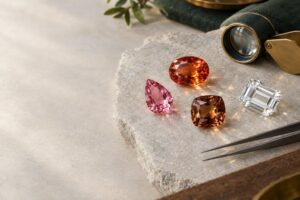 Topaz
Hardness 8
Quick view
-
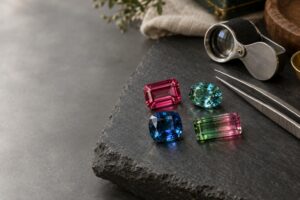 Tourmaline
Hardness 7–7.5
Quick view
-
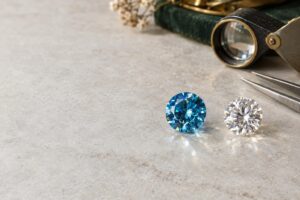 Zircon
Hardness 6–7.5 · December
Quick view
Quick overview
Opal
Opal's flashing play-of-colour comes from tiny silica spheres. This entry covers its main types, its water content and delicacy, treatments, assembled opals, settings and care.
- Classification
- Mineraloid: amorphous silica with no crystal structure, traditionally named as a mineral
- Mohs hardness
- 5–6.5 (scratch resistance — one part of durability)
- Wear considerations
- Opal has a hardness of 5 to 6.5 on the Mohs scale and toughness rated very poor to fair, so it can be scratched or broken. It can craze if it loses moisture, and heat, very dry air, bright light and sudden temperature changes can cause cracks. A protective setting can help for people who are tough on their jewellery, and hydrophane opal should be kept out of liquid.
- Treatment
- Impregnation with oil, wax or plastic. Named here as this guide's editorial practice, not as a statement of any country's law., Sugar treatment. Named here as this guide's editorial practice, not as a statement of any country's law., Smoke treatment. Named here as this guide's editorial practice, not as a statement of any country's law., Dyeing (possible in porous hydrophane opal). Named here as this guide's editorial practice, not as a statement of any country's law.
- Care
- Clean opal with warm, soapy water, the only safe method. Keep it away from strong chemicals such as hydrofluoric acid and caustic alkaline solutions. If your opal is hydrophane, avoid immersing it…
Individual gemstones vary. Care depends on treatment, setting and condition. Encyclopedia inclusion does not confirm availability.
Individual gemstones vary · care depends on treatment, setting and condition · birthstone traditions vary · encyclopedia inclusion does not confirm availability.