
Gemstone encyclopedia
Every gemstone, explained
What each stone is, how it wears in jewellery, and what to ask before you choose one. Browse by colour, or go straight to a letter.
This encyclopedia is educational. Inclusion does not confirm current Ralph Jacobs stock, sourcing, availability or suitability for a particular jewellery design.
27 of 27 gemstone entries
-
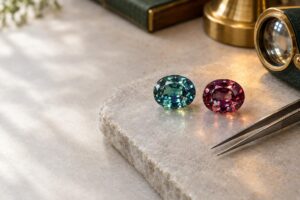 Alexandrite
Hardness 8.5
Quick view
-
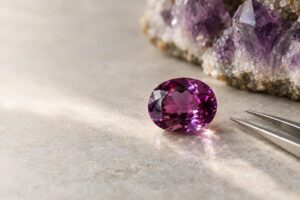 Amethyst
Hardness 7
Quick view
-
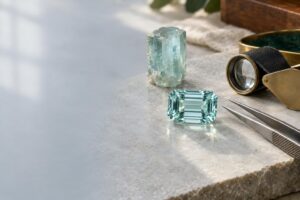 Aquamarine
Hardness 7.5–8 · March
Quick view
-
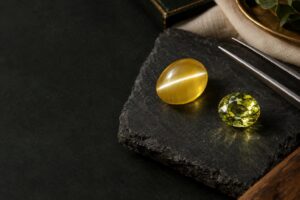 Chrysoberyl
Hardness 8.5 · June
Quick view
-
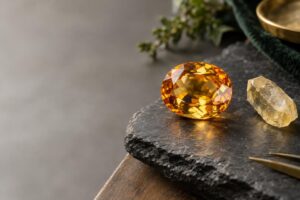 Citrine
Hardness 7 · November
Quick view
-
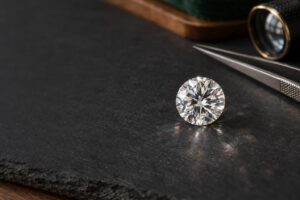 Diamond
Hardness 10 · April
Quick view
-
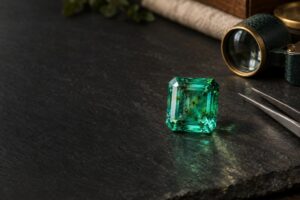 Emerald
Hardness 7.5–8
Quick view
-
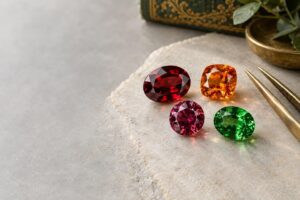 Garnet
Hardness 6.5–7.5
Quick view
-
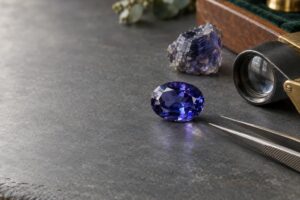 Iolite
Hardness 7–7.5
Quick view
-
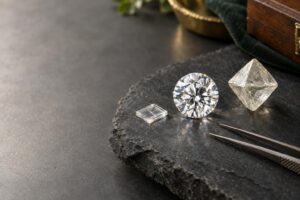 Laboratory-grown
 diamond
Hardness 10
Quick view
-
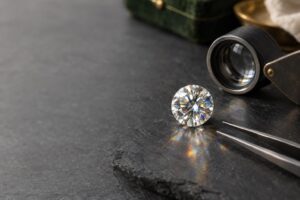 Laboratory-grown
 moissanite
Hardness 9.25
Quick view
-
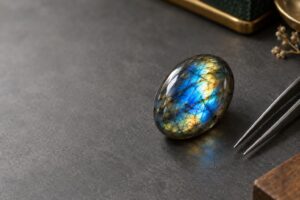 Labradorite
Hardness 6–6.5
Quick view
-
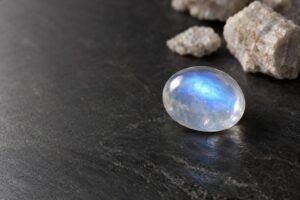 Moonstone
Hardness 6–6.5
Quick view
-
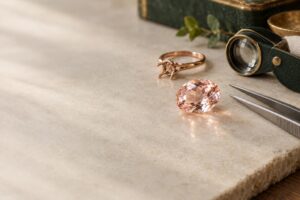 Morganite
Hardness 7.5–8
Quick view
-
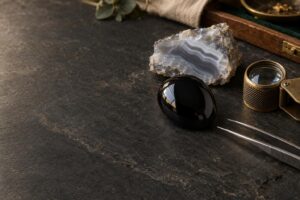 Onyx
Hardness 6.5–7
Quick view
-
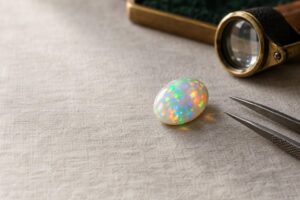 Opal
Hardness 5–6.5
Quick view
-
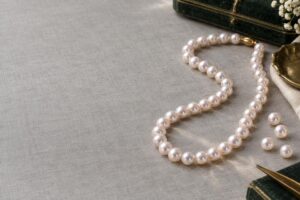 Pearl
Hardness 2.5
Quick view
-
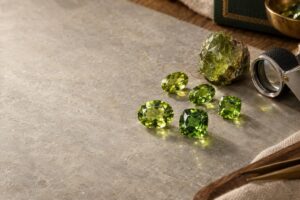 Peridot
Hardness 6.5–7 · August
Quick view
-
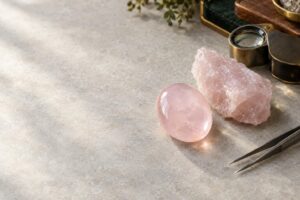 Rose quartz
Hardness 7
Quick view
-
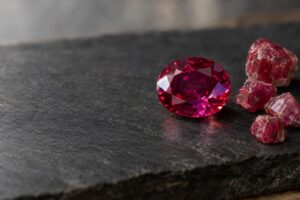 Ruby
Hardness 9
Quick view
-
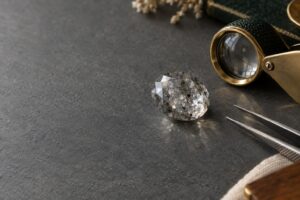 Salt-and-pepper diamond
Hardness 10
Quick view
-
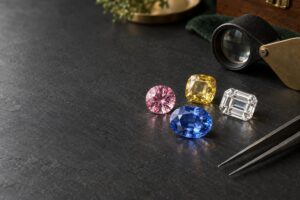 Sapphire
Hardness 9
Quick view
-
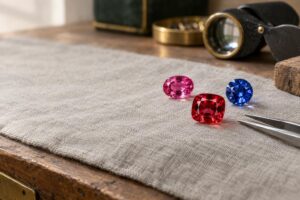 Spinel
Hardness 8
Quick view
-
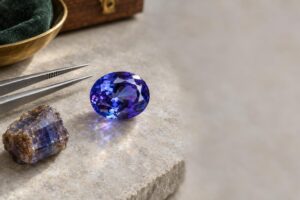 Tanzanite
Hardness 6–7 · December
Quick view
-
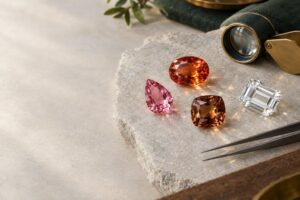 Topaz
Hardness 8
Quick view
-
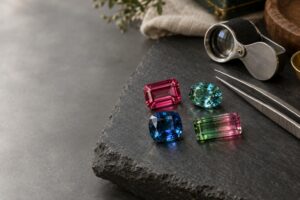 Tourmaline
Hardness 7–7.5
Quick view
-
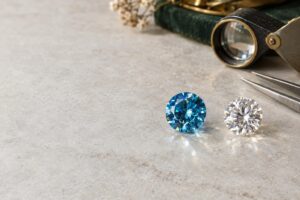 Zircon
Hardness 6–7.5 · December
Quick view
Quick overview
Onyx
Onyx is banded chalcedony, a fine-grained quartz. Most stones sold as black onyx are dyed. It rates 6.5–7 on the Mohs scale and scratches fairly easily when polished.
- Classification
- Mineral variety
- Mohs hardness
- 6.5–7 (scratch resistance — one part of durability)
- Wear considerations
- Hardness of 7 on the Mohs scale (one gem database gives 6.5–7), with fairly good toughness. Polished surfaces scratch fairly easily and the scratches show. Black onyx is sensitive to heat, so jewellers should remove it before a ring is resized or its prongs are re-tipped.
- Treatment
- Sugar-and-acid carbon treatment that turns the stone black (traditional method; the colour is permanent). Trade guidance says treated stones should technically be described as 'dyed' or 'enhanced' black chalcedony., Dyeing with organic dyes (the colour may fade in direct sunlight). Trade guidance says treated stones should technically be described as 'dyed' or 'enhanced' black chalcedony.
- Care
- Clean onyx gently with warm water, a little mild soap and a soft brush. Rinse it, then let it dry fully before you wear or store it. Polished onyx scratches fairly easily,…
Individual gemstones vary. Care depends on treatment, setting and condition. Encyclopedia inclusion does not confirm availability.
Individual gemstones vary · care depends on treatment, setting and condition · birthstone traditions vary · encyclopedia inclusion does not confirm availability.